
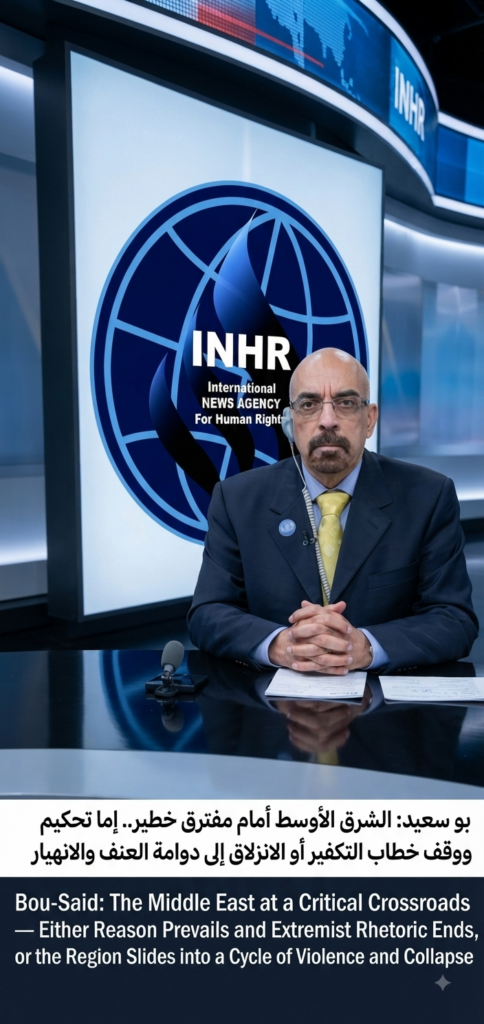
بو سعيد: الشرق الأوسط أمام مفترق خطير.. إما تحكيم العقل ووقف خطاب التكفير أو الانزلاق إلى دوامة العنف والانهيار
Bou-Said: The Middle East at a Critical Crossroads — Either Reason Prevails and Extremist Rhetoric Ends, or the Region Slides into a Cycle of Violence and Collapse
في مداخلة مع وكالة الأنباء الدولية لحقوق الإنسان، أكد الممثل الأعلى للشؤون الخارجية للمجلس الدولي لحقوق الإنسان IHRC المعتمد من الأمم المتحدة بصفة خاصة لدى المجلس الاقتصادي والاجتماعي «إيكوسوك»، ورئيس بعثتها إلى جنيف، الدكتور هيثم بو سعيد، أن الهيئات والمؤسسات في منطقة الشرق الأوسط باتت أمام مسؤولية تاريخية تفرض عليها الانكباب على عمل متقدم وجاد لمعالجة الخطابات الفقهية المتشددة والتكفيرية، وإعادة قراءة الموروث الديني والفكري ضمن سياقه التاريخي، بعيداً عن التوظيف السياسي أو التحريض المجتمعي.
وأوضح بو سعيد أن العودة إلى الأصول التاريخية لا تعني إلغاء الموروث أو المساس بالمعتقدات، بل تهدف إلى فهم تطور المفاهيم والأفكار التي تشكلت في مراحل تاريخية مختلفة، والعمل على منع استخدامها في الوقت الحاضر لتبرير العنف أو الإقصاء أو تقسيم المجتمعات على أسس دينية ومذهبية.
وأشار إلى أن منطقة الشرق الأوسط تحتاج، أكثر من أي وقت مضى، إلى خطاب عقلاني يضع الإنسان وأمن المجتمع واستقراره في مقدمة الأولويات، معتبراً أن استمرار الخطابات التي تقوم على التكفير أو التخوين أو إلغاء الآخر يساهم في تعميق الانقسامات ويضعف فرص بناء مجتمعات متماسكة قادرة على مواجهة تحدياتها السياسية والاقتصادية والاجتماعية.
وأضاف أن استعمال أي قوة ميدانية سيقابله، في نهاية المطاف، استعمال للقوة من الطرف الآخر، ما يعني الدخول في دائرة متواصلة من العنف لن تكون فيها الغلبة لمنطق العقل والحوار، وإنما لمنطق القوة وردّ الفعل. وهذا المسار، بحسب بو سعيد، لا يؤدي إلى معالجة الأزمات، بل يسرّع من انهيار المجتمعات ويزيد من معاناة المدنيين ويضعف مؤسسات الدولة.
وشدد على أن المطلوب اليوم هو تحكيم العقل وتغليب المصلحة العامة، والعمل على إنتاج مقاربات جديدة تخدم المجتمع بمختلف مكوناته، بدلاً من التمسك بتعاليم أو قراءات لا تتناسب بالضرورة مع طبيعة المجتمعات الحديثة وتنوعها الثقافي والديني والفكري.
وختم بو سعيد بالتأكيد أن مسؤولية المؤسسات الحقوقية والثقافية والدينية والأكاديمية لا تقتصر على رصد الأزمات بعد وقوعها، بل يجب أن تمتد إلى معالجة جذور التطرف وخطابات الكراهية، وتعزيز ثقافة الحوار والتعددية واحترام حقوق الإنسان، بما يساهم في بناء بيئة أكثر استقراراً وسلاماً في الشرق الأوسط.
In a statement to the International News Agency for Human Rights, Dr. Haïssam Bou-Said, High Representative for External Affairs of the International Human Rights Council (IHRC), accredited by the United Nations with Special Consultative Status with ECOSOC, and Head of its Mission to Geneva, stressed that institutions and organizations across the Middle East are facing a historic responsibility to engage in serious and advanced efforts to address extremist religious and sectarian narratives, including rhetoric based on excommunication and exclusion, and to return to their historical foundations through a balanced and objective reading of history.
Bou-Said emphasized that returning to historical roots does not mean abolishing religious heritage or questioning beliefs. Rather, it means understanding concepts, interpretations, and traditions within their historical contexts and preventing their exploitation today to justify violence, exclusion, discrimination, or the division of societies along religious and sectarian lines.
He noted that the Middle East is in urgent need of a rational and responsible discourse that places human dignity, social security, stability, and peaceful coexistence at the heart of public life. According to Bou-Said, the continued spread of narratives based on excommunication, incitement, or the rejection of the other only deepens existing divisions and undermines the ability of societies to overcome their political, economic, and social challenges.
He further warned that the use of force on the ground will inevitably be met with the use of force by the opposing side, creating a continuing cycle of confrontation in which reason and dialogue are unlikely to prevail. Instead, societies risk becoming governed by the logic of retaliation and power. Such a trajectory, he stressed, does not resolve crises but accelerates social collapse, increases civilian suffering, and weakens state institutions.
Bou-Said added that what is required today is to give priority to reason, dialogue, and the public interest, while developing new approaches capable of serving all components of society. He stressed the importance of moving beyond interpretations or approaches that may no longer correspond to the realities of modern, diverse societies.
He concluded by emphasizing that the responsibility of human rights, cultural, religious, and academic institutions should not be limited to monitoring crises after they occur. Their role must also extend to addressing the root causes of extremism and hate speech, promoting dialogue, pluralism, mutual respect, and human rights, and contributing to the establishment of a more stable and peaceful environment throughout the Middle East.
Leave a Reply