
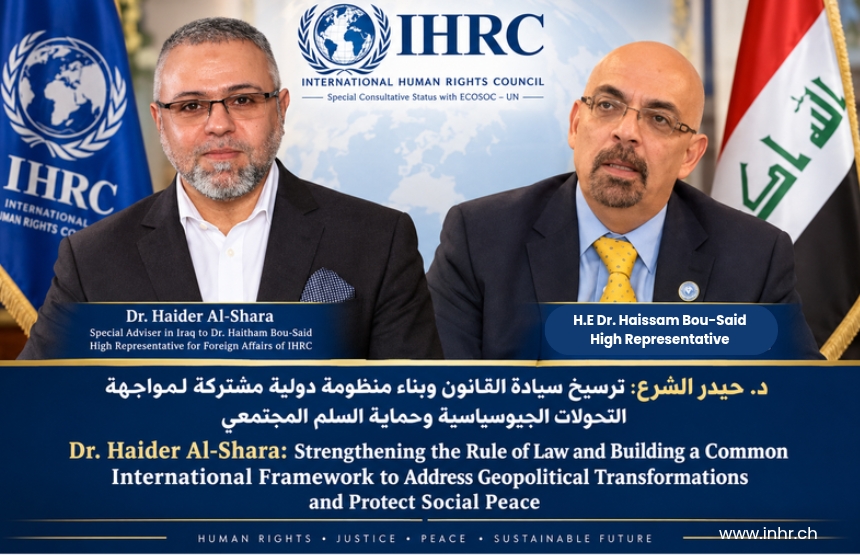
د. حيدر الشرع: ترسيخ سيادة القانون وبناء منظومة دولية مشتركة لمواجهة التحولات الجيوسياسية وحماية السلم المجتمعي
Dr. Haider Al-Shara: Strengthening the Rule of Law and Building a Common International Framework to Address Geopolitical Transformations and Protect Social Peace
أكد الدكتور حيدر الشرع، المستشار الخاص في العراق للممثل الأعلى للشؤون الخارجية للمجلس الدولي لحقوق الإنسان IHRC الدكتور هيثم بو سعيد، أن المرحلة الراهنة تتطلب العمل بصورة جدية على ترسيخ القوانين الحقيقية وتفعيلها بما ينسجم مع الواقع ومتطلبات المجتمعات، إلى جانب إيجاد منظومة عمل دولية مشتركة تقوم على مبدأ التقارب بين المدونات والآراء من جهة، والنصوص القانونية والتطبيق العملي من جهة أخرى.
وأوضح الدكتور الشرع أن القيمة الموضوعية للمشاركة في مسارات الإصلاح لا تتحقق بمجرد طرح الأفكار أو إصدار النصوص، وإنما من خلال القدرة على تحويل المبادئ القانونية إلى ممارسات وسياسات قابلة للتطبيق، بما يعزز سيادة القانون ويحفظ حقوق الإنسان ويحد من الفجوة بين التشريع والواقع.
وشدد على أهمية العمل من أجل بلورة رؤى موحدة تجاه القضايا الكبرى، واعتماد مقاربة موضوعية في فهم النظم السياسية والتحولات التي تشهدها المنطقة، بعيداً عن القراءات الأحادية أو الاختزالية. واعتبر أن فهم التحولات الجيوسياسية يستوجب دراسة متأنية للعوامل القانونية والسياسية والاجتماعية التي تؤثر في مسار الدول والمجتمعات.
وأشار الشرع إلى ضرورة قراءة الأحكام والقوانين النافذة في إطار ما وصفه بـ «الفعل التكليفي»، سواء في العناوين الأولية أو في العناوين الثانوية الناشئة، بما يسمح بالتعامل مع الوقائع المستجدة وفق قواعد قانونية واضحة، ويمنع تحول الاستثناءات والظروف الطارئة إلى مبررات دائمة لتجاوز الحقوق والحريات الأساسية.
وحذر في السياق نفسه من أن المتغيرات المتسارعة في المنطقة، إذا لم تُدار ضمن أطر قانونية ومؤسساتية واضحة، قد تؤدي إلى انتهاكات لحقوق الإنسان وتهديد السلم والأمن المجتمعي، ولا سيما عندما تتداخل الأزمات السياسية والأمنية مع الانقسامات العرقية والطائفية.
وأكد أن حماية المجتمعات من التوترات والانقسامات تتطلب تعزيز ثقافة المواطنة المتساوية، واحترام التنوع، والاحتكام إلى القانون، وفتح مساحات للحوار والتقارب بين مختلف المكونات، معتبراً أن بناء الاستقرار المستدام لا يمكن فصله عن احترام حقوق الإنسان والعدالة وسيادة القانون.
وختم الدكتور الشرع بالتأكيد على أن المرحلة المقبلة تستوجب تعاوناً أوسع بين المؤسسات الوطنية والدولية والهيئات الحقوقية والأكاديمية، بهدف تطوير مقاربات مشتركة قادرة على فهم التحولات الإقليمية والتعامل معها ضمن رؤية قانونية وحقوقية متوازنة، تحفظ السلم المجتمعي وتدعم مسارات الإصلاح المؤسسي.
Dr. Haider Al-Shara: Strengthening the Rule of Law and Building a Common International Framework to Address Geopolitical Transformations and Protect Social Peace
Dr. Haider Al-Shara, Special Adviser in Iraq to Dr. Haissam Bou-Said, High Representative for External Affairs of the International Human Rights Council (IHRC), stressed the need to genuinely strengthen the rule of law and establish an effective framework for joint international action based on greater convergence between legal texts, documented views and positions, and the realities on the ground.
Dr. Al-Shara emphasized that meaningful participation in reform cannot be achieved merely through the adoption of legal texts or the expression of political and intellectual positions. Rather, it requires translating legal principles into effective practices and institutional mechanisms capable of addressing the realities faced by societies, while narrowing the gap between legislation and implementation.
He further called for the development of common approaches to major international and regional issues, emphasizing the importance of an objective and analytical understanding of political systems and the transformations taking place across the region. He noted that the current geopolitical landscape requires a comprehensive reading of the legal, political and social factors shaping developments in states and societies.
Dr. Al-Shara also highlighted the importance of interpreting and applying existing laws within their proper legal frameworks, including both primary and emerging secondary considerations, particularly when dealing with exceptional or rapidly changing circumstances. Such an approach, he noted, can help ensure that responses to new developments remain grounded in law and do not result in unjustified restrictions on fundamental rights and freedoms.
He warned that ongoing transformations in the region, if not addressed through clear legal and institutional frameworks, could contribute to human rights violations and threats to social peace and security, particularly where political and security crises intersect with ethnic, sectarian or communal tensions.
In this context, he stressed the importance of strengthening equal citizenship, respect for diversity, dialogue among communities and adherence to the rule of law. Sustainable stability, he argued, cannot be separated from respect for human rights, justice and effective legal safeguards.
Dr. Al-Shara concluded by calling for broader cooperation among national institutions, international organizations, human rights bodies and academic institutions to develop shared legal and human-rights approaches capable of understanding and responding to regional transformations, while protecting social cohesion, strengthening institutional reform and advancing respect for human rights and the rule of law.
Leave a Reply