
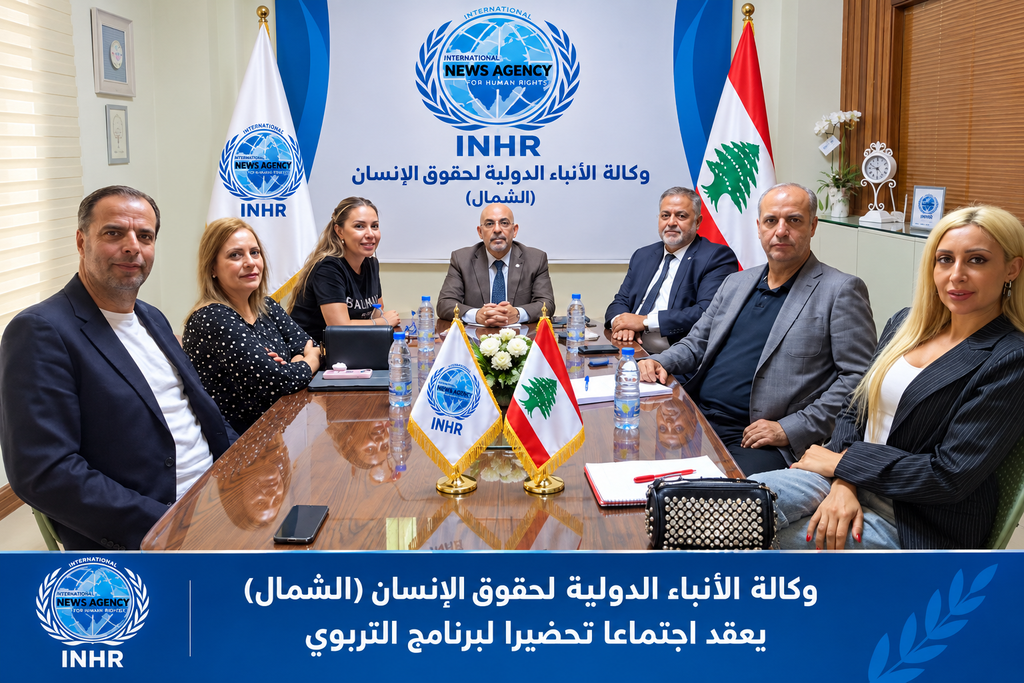
وكالة الأنباء الدولية لحقوق الإنسان – INHR تعقد اجتماع تحضيري في طرابلس لإطلاق وتطوير برنامج MUN الدولي للتعليم والتدريب
طرابلس – 26 أيلول/سبتمبر 2026
International News Agency for Human Rights (INHR) Holds Preparatory Meeting in Tripoli to Launch and Develop the International MUN Education and Training Program
Tripoli – September 26, 2026
عقد في تمام الساعة الحادية عشرة من قبل ظهر اليوم، السبت 26 أيلول/سبتمبر 2026، اجتماع تحضيري في مركز الدكتورة ماجدة الشعراني في طرابلس، خصص لبحث برنامج التعليم والتدريب المرتبط بنموذج الأمم المتحدة MUN وآليات تطويره وتوسيع نطاق المشاركة فيه، وذلك برئاسة الأمين العام الدولي للمجلس الدولي لحقوق الإنسان في جنيف الدكتور هيثم أبو سعيد.
وحضر الاجتماع كل من الاستاذ فادي عزام، رئيس اللجنة الإقليمية للشرق الأوسط وشمال أفريقيا MUN، والدكتورة ماجدة الشعراني من هيئة MUN لبنان، والسيد جاك مطر رئيس هيئة الحريات والأمن المجتمعي – لبنان، والدكتورة مايا إبراهيم رئيسة هيئة المرأة والطفل – لبنان، والدكتور محمد سلطان منسق المجلس الدولي لحقوق الإنسان في تركيا، والسيدة نعمات أكومة من هيئة MUN لبنان – فرع الإعلام، والسيد عامر مطر عضو هيئة الحريات والأمن المجتمعي – لبنان وأمين سر الاجتماع.
استهل الدكتور هيثم أبو سعيد الاجتماع بالتأكيد على أن الهدف الأساسي من برنامج الأمم المتحدة للتعليم MUN هو تقريب الناس من المبادئ الإنسانية العالمية، وليس إخضاع هذه المبادئ لتقاليد أو خصوصيات فئة معينة، مشدداً على أن معايير حقوق الإنسان يفترض أن تكون صالحة لجميع الناس دون استثناء.
وأشار إلى أن تعزيز الوعي الجماعي والضمير الإنساني أصبح ضرورة ملحة من أجل المساهمة في إنتاج جيل أكثر رقياً في التفكير والسلوك، في ظل الصعوبات المتزايدة التي تواجه البشرية.
وشدد أبو سعيد على ضرورة أن يكون الفريق التعليمي القائم على البرنامج من الكوادر المعتمدة ضمن المشروع، بما يضمن انسجام العملية التعليمية مع المبادئ الإنسانية التي يقوم عليها البرنامج.
كما تناول موضوع التطرف بمختلف أشكاله وأنواعه، مؤكداً ضرورة نبذه ومواجهته على المستوى العالمي، مشيراً إلى أهمية الجمع بين البعد القانوني والإنساني والبعد الديني من خلال التركيز على القيم والنقاط المشتركة التي تخدم الإنسان والمجتمع.
وتطرق أبو سعيد إلى التحديات الاقتصادية والاجتماعية، مشيراً إلى أن اتساع دائرة الفقر بالتوازي مع تركز الثروة لدى فئة محدودة يشكل تحدياً للمجتمعات، لأن الفقر، وفق طرحه، ينعكس على الأخلاق والقيم والاستقرار الاجتماعي.
ودعا اللبنانيين خصوصاً إلى توظيف قدراتهم وطاقاتهم وذكائهم للمصلحة العامة وخدمة المجتمع، بعيداً عن منطق السيطرة أو الإضرار بالآخرين.
وفي الجانب الأكاديمي، أوضح أبو سعيد أن هناك تواصلاً مع جهات تعليمية في لندن وجنيف في ما يتعلق بالتعليم ومعادلة الشهادات، مع إمكانية اعتماد نمط التعليم الهجين (Hybrid Education)، بما يساعد على تخفيف الأعباء اللوجستية عن الطلاب، ولا سيما تكاليف السكن والتنقل.
وأشار إلى وجود رسوم مرتبطة بتصديق الشهادات ومعادلتها، كما تحدث عن وجود تصريح تعليمي من جنيف يتعلق ببرامج التعليم وصولاً إلى مستوى الدكتوراه، مؤكداً في الوقت نفسه ضرورة تقييم كل طالب بصورة منفردة لتحديد قدراته والمسار الأكاديمي المناسب له.
وأضاف أن العمل سيبدأ بالمستويات الأولية والمتوسطة بهدف قياس مدى استيعاب الطلاب وتفاعلهم مع البرامج، على أن تتراوح مدة الدراسة بين ثلاث وأربع سنوات بحسب البرنامج والمسار الأكاديمي المطلوب.
كما أشار إلى وجود فرع للدراسات الدبلوماسية والشؤون السياسية ضمن البرامج التعليمية، يبدأ من مستوى الدبلوم وصولاً إلى الدكتوراه، وفق البرامج المخصصة للدراسة في جنيف.
وفي إطار الحديث عن التوسع التعليمي، أشار أبو سعيد إلى أن ليبيريا في أفريقيا قدمت مبنى جامعياً كاملاً للمجلس الدولي لحقوق الإنسان بهدف استخدامه في المجال التعليمي وبرامج MUN، معتبراً أن هذه التجربة يمكن أن تشكل نموذجاً مهماً لتطوير العمل التعليمي.
من جهته، أكد الأستاذ فادي عزام أن التعاون بين مختلف الجهات والكوادر المعنية يمثل عنصراً أساسياً لنجاح المشروع، معتبراً أن التعاون يرفع من القيمة المعنوية للمشروع ويعزز دور جميع المشاركين فيه.
وأكد وضع نفسه بتصرف كل الأفكار والمقترحات البناءة، والاستعداد للعمل الجدي والمفيد في مختلف الملفات المرتبطة بالبرنامج.
كما جرى التشديد على ضرورة تعميم البرنامج على مختلف فروع الجامعات والعمل خلال الأيام المقبلة على زيادة أعداد الطلاب الراغبين في الانضمام إلى برنامج MUN.
بدوره، أوضح الدكتور محمد سلطان، منسق المجلس الدولي لحقوق الإنسان في تركيا، أنه جرى التوافق مع الدكتورة ماجدة الشعراني والدكتور باسل الحاج على إقامة مجموعة من الندوات التعريفية لشرح آلية عمل برنامج MUN وأهدافه خلال الأشهر المقبلة وحتى نهاية العام.
وأشار إلى أن الندوات ستشمل عدداً من جامعات طرابلس، ومنها جامعة المدينة والشرق والجنان، بهدف تعريف الطلاب بالبرنامج وآليات الانتساب والمشاركة فيه.
من جهتها، أعلنت الدكتورة مايا إبراهيم، رئيسة هيئة المرأة والطفل – لبنان، عن التحضير لتنفيذ نشاطين قبل نهاية العام، في إطار البرامج والأنشطة المرتبطة بالعمل الحقوقي والتربوي.
كما أعلن السيد جاك مطر، رئيس هيئة الحريات والأمن المجتمعي – لبنان، أن الهيئة تعمل على التحضير لتنفيذ نشاطين قبل نهاية العام.
وكشف عن وجود تواصل مع رئيس جامعة المدينة الدكتور وليد داغر بشأن ملف التعليم وبرنامج MUN، بهدف بحث إمكانية إدراج البرنامج ضمن المناهج والبرامج التعليمية في الجامعة.
توصيات الاجتماع
وفي ختام الاجتماع، جرى التأكيد على مواصلة التنسيق بين الجهات المشاركة، والعمل على:
توسيع برنامج MUN ليشمل عدداً أكبر من الجامعات والطلاب.
تنظيم ندوات تعريفية وتدريبية خلال الأشهر المقبلة.
تطوير التعاون الأكاديمي والتعليمي مع الجهات ذات الصلة في جنيف ولندن.
اعتماد التعليم الهجين حيث يكون مناسباً للطلاب والبرامج.
تقييم الطلاب بصورة فردية قبل تحديد المسار الأكاديمي المناسب.
إعداد برامج عملية في مجالات حقوق الإنسان والدبلوماسية والشؤون السياسية.
تنفيذ النشاطات المقررة للهيئات المشاركة قبل نهاية عام 2026.
تعزيز التعاون بين المجلس الدولي لحقوق الإنسان، هيئة MUN لبنان، الجامعات والهيئات المتخصصة.
واختتم الاجتماع بالتأكيد على أن الاستثمار في التعليم والوعي الإنساني يمثل أحد المسارات الأساسية لبناء جيل قادر على فهم مبادئ حقوق الإنسان والدبلوماسية الدولية وترجمتها إلى ممارسة عملية في المجتمع.
أمانة سر الاجتماع
عامر مطر
عضو هيئة الحريات والأمن المجتمعي – لبنان
A preparatory meeting was held at 11:00 AM today, Saturday, September 26, 2026, at the Dr. Majda Al-Shaarani Center in Tripoli. Chaired by Dr. Haitham Abu Said, International Secretary-General of the International Council for Human Rights in Geneva, the meeting focused on discussing the Model United Nations (MUN) education and training program, as well as mechanisms for its development and the expansion of participation within it.
Attendees included Mr. Fadi Azzam, Head of the MUN Regional Committee for the Middle East and North Africa; Dr. Majda Al-Shaarani of the MUN Lebanon body; Mr. Jacques Matar, Head of the Freedoms and Community Security Body (Lebanon); Dr. Maya Ibrahim, Head of the Women and Children Body (Lebanon); Dr. Mohammed Sultan, Coordinator of the International Council for Human Rights in Turkey; Ms. Ni’mat Akouma of the MUN Lebanon body (Media Branch); and Mr. Amer Matar, a member of the Freedoms and Community Security Body (Lebanon) and the meeting’s secretary.
Dr. Haitham Abu Said opened the meeting by emphasizing that the primary goal of the MUN educational program is to bring people closer to universal humanitarian principles, rather than subjecting these principles to the traditions or specificities of any particular group. He stressed that human rights standards must be applicable to all people without exception. He noted that fostering collective awareness and the human conscience has become an urgent necessity to help cultivate a generation characterized by more refined thinking and behavior, especially amidst the mounting challenges facing humanity.
Abu Saeed emphasized that the educational team running the program must consist of personnel accredited by the project, ensuring the educational process aligns with the humanitarian principles upon which the program is founded.
He also addressed the issue of extremism in its various forms, stressing the need to reject and confront it globally. He highlighted the importance of integrating legal, humanitarian, and religious perspectives by focusing on shared values and common ground that benefit both the individual and society.
Abu Saeed touched upon economic and social challenges, noting that the widening scope of poverty—coupled with the concentration of wealth among a select few—poses a challenge to societies; in his view, poverty impacts ethics, values, and social stability.
He called upon the Lebanese people, in particular, to channel their capabilities, energy, and intellect toward the public good and community service, eschewing any mindset of domination or intent to harm others.
Regarding the academic aspect, Abu Saeed explained that there is ongoing communication with educational institutions in London and Geneva concerning education and degree accreditation. He mentioned the possibility of adopting a “hybrid education” model to help alleviate logistical burdens on students, particularly regarding housing and transportation costs. He noted that there are fees associated with the attestation and equivalency of certificates. He also mentioned an educational authorization from Geneva covering programs ranging up to the doctoral level, while emphasizing the necessity of individually assessing each student to determine their capabilities and the appropriate academic path.
He added that operations would begin with introductory and intermediate levels to gauge student comprehension and engagement with the programs, with study durations ranging from three to four years depending on the specific program and academic track.
He also highlighted the inclusion of a diplomatic studies and political affairs track within the educational offerings—spanning from diploma to doctoral levels—in accordance with the programs designated for study in Geneva.
In the context of educational expansion, Abu Saeed noted that Liberia has provided a complete university building to the International Council for Human Rights for use in educational activities and Model United Nations (MUN) programs, suggesting that this initiative could serve as a significant model for the development of educational efforts.
For his part, Mr. Fadi Azzam emphasized that cooperation among the various relevant entities and personnel is essential to the project’s success, noting that such collaboration enhances the project’s intrinsic value and strengthens the role of all participants.
He also expressed his readiness to support constructive ideas and proposals, affirming his commitment to serious and productive work across the various aspects of the program.
Finally, emphasis was placed on the need to roll out the program across various university branches and to work in the coming days on increasing the number of students interested in joining the MUN program. Dr. Mohamed Sultan, Coordinator of the International Council for Human Rights in Turkey, explained that an agreement had been reached with Dr. Majda Al-Shaarani and Dr. Basil Al-Hajj to hold a series of introductory seminars. These sessions will explain the MUN program’s operational mechanisms and objectives over the coming months and through the end of the year.
He noted that the seminars would take place at several universities in Tripoli—including Al-Madina University, Al-Sharq University, and Jinan University—to familiarize students with the program and the procedures for enrollment and participation.
For her part, Dr. Maya Ibrahim, Head of the Women and Child Commission (Lebanon), announced preparations for two activities to be held before the year’s end, as part of programs and activities related to human rights and educational work.
Mr. Jacques Matar, Head of the Commission on Freedoms and Community Security (Lebanon), also announced that the Commission is preparing to carry out two activities before the end of the year.
He revealed that discussions are underway with the President of Al-Madina University, Dr. Walid Dagher, regarding education and the MUN program, with the aim of exploring the possibility of integrating the program into the university’s curricula and educational offerings.
Meeting Recommendations
At the conclusion of the meeting, the participants emphasized the need for continued coordination and committed to working on the following:
Expanding the MUN program to include a larger number of universities and students.
Organizing introductory and training seminars in the coming months.
Developing academic and educational cooperation with relevant entities in Geneva and London.
Adopting hybrid learning models where appropriate for students and the programs.
Evaluating…
Leave a Reply