
INHR Reports on International Seminar on Religious Education and Human Rights Awareness
الوكالة الدولية للأنباء لحقوق الإنسان INHR تنظم ندوة دولية حول دور التربية الدينية في تعزيز الوعي بحقوق الإنسان
جنيف – 14 تشرين الأول/أكتوبر 2026
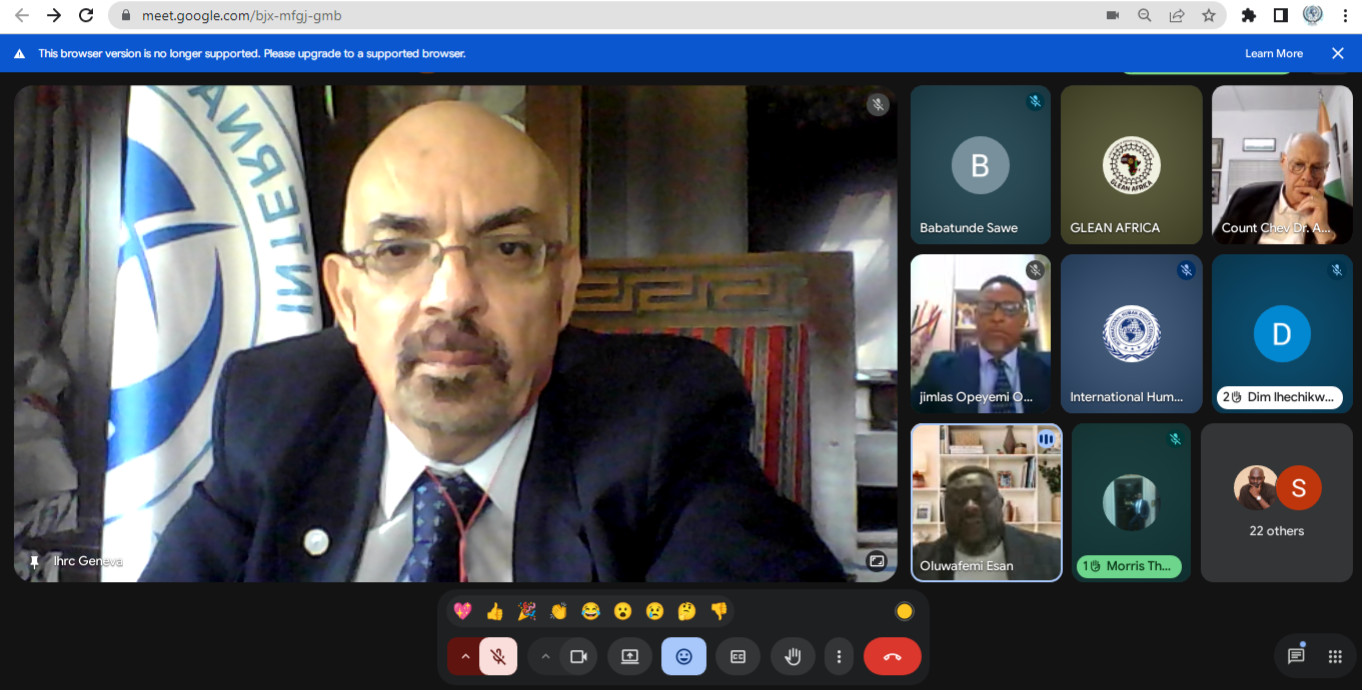
Geneva, 14 October 2026 — The International News Agency for Human Rights (INHR), accredited by the International Human Rights Council (IHRC), organised an online international seminar entitled “Role of Religious Education in Advancing Human Rights Awareness,” , Moderated by Dr.Jimlas Opeyemi Ogunsaki bringing together diplomatic representatives, academics, human rights advocates and institutional leaders to discuss the role of education in promoting dignity, equality, tolerance and peaceful coexistence.
Dr Haissam Bou-Said: Turning Human Rights Principles into Action
H.E. Dr Haissam Bou-Said, International Secretary General of the IHRC, emphasised that religious education can contribute to a more just and inclusive society when it promotes compassion, equality, mutual respect and freedom of belief.
Referring to Articles 1, 2, 18 and 26 of the Universal Declaration of Human Rights, he outlined five priorities: integrating human rights into religious education, training religious leaders and educators, encouraging youth interfaith cooperation, addressing discrimination and hate speech, and strengthening institutional partnerships.
He called on participating institutions to launch practical initiatives within 30 days, stressing that the true value of education lies not only in knowledge, but also in how people treat one another.
H.E. Mrqs. Anthony C. Coleiro: Protecting Religious Freedom and Minority Rights
H.E. Mrqs. Anthony C. Coleiro, Honorary Consul of the Republic of Côte d’Ivoire to Malta, delivered a keynote address entitled “Combating Intolerance and Discrimination: Addressing Sectarian Prejudices Through Comparative Ethics Curricula and Safeguarding Religious Freedom and Minority Rights Globally.”
He highlighted the importance of comparative ethics education, interfaith dialogue and institutional safeguards in combating sectarian prejudice and protecting religious minorities. He also called for stronger cooperation between Malta, Africa and Europe to advance intercultural understanding and peaceful coexistence.
Mrqs. Coleiro reaffirmed that human rights belong equally to every member of the human family, regardless of religious, cultural or national background.
HRM King Edmund K. Paki-Silva Jr.: Education as a Foundation for Lasting Peace
HRM King Edmund K. Paki-Silva Jr., Chancellor, stressed that lasting peace requires trust, practical cooperation and education that fosters empathy, mutual respect and peaceful conflict resolution.
He underlined the importance of empowering young people to challenge prejudice and misinformation while building resilient and inclusive communities. He also called for confronting historical injustices, including those associated with the Doctrine of Discovery, through truth, accountability and reconciliation.
His central message was that faith must never justify domination or division, but should instead serve as a bridge towards human dignity, justice and lasting peace.
Ambassador Professor Oluwafemi Esan: Human Rights Education Beyond Theory
Ambassador Rev. Professor Oluwafemi Esan, Professor of Transpersonal Psychology and Education, emphasised that human rights education must protect dignity, equality, freedom of conscience and children’s rights while respecting diversity and different beliefs.
He advocated objective, critical and pluralistic educational approaches that empower learners to recognise and challenge injustice peacefully. He also identified key challenges, including political interference, insufficient teacher training, overcrowded curricula and gaps between educational principles and institutional practice.
He concluded that human rights education must extend beyond theory to create inclusive learning environments founded on fairness, accountability and respect for human dignity.
An International Call for Cooperation
The seminar was moderated by Dr. Jimlas Opeyemi Ogunsakin, Founder of Glean Africa, and highlighted the shared responsibility of educational institutions, religious leaders, governments, diplomatic representatives and civil society to promote human rights awareness.
The discussions reaffirmed that religious education and human rights education can complement one another when grounded in freedom of conscience, equality, non-discrimination and respect for diversity.
INHR emphasises that education must become a practical instrument for preventing intolerance, protecting vulnerable communities and advancing a culture of peace. The seminar concluded with a call to transform knowledge into awareness, awareness into responsibility, and responsibility into meaningful action for the benefit of humanity.
نظّمت الوكالة الدولية للأنباء لحقوق الإنسان (INHR)، المعتمدة لدى المجلس الدولي لحقوق الإنسان (IHRC)، ندوة دولية عبر الإنترنت بعنوان «دور التربية الدينية في تعزيز الوعي بحقوق الإنسان»، بمشاركة شخصيات دبلوماسية وأكاديمية وحقوقية ومؤسساتية، بهدف تسليط الضوء على دور التعليم في ترسيخ الكرامة الإنسانية والمساواة والتسامح والتعايش السلمي.
الدكتور هيثم بو سعيد: تحويل مبادئ حقوق الإنسان إلى خطوات عملية
أكد سعادة الدكتور هيثم بو سعيد، الأمين العام الدولي للمجلس الدولي لحقوق الإنسان (IHRC)، أن التربية الدينية يمكن أن تسهم في بناء مجتمع أكثر عدالة وشمولية، شرط أن تقوم على قيم الرحمة والمساواة والاحترام المتبادل وحرية المعتقد، بعيداً عن التعصب والانقسام.
واستند في كلمته إلى المواد 1 و2 و18 و26 من الإعلان العالمي لحقوق الإنسان، محدداً خمس أولويات أساسية، تشمل دمج مبادئ حقوق الإنسان في التربية الدينية، وتأهيل القادة الدينيين والمعلمين، وتشجيع التعاون بين الشباب من مختلف الأديان، ومكافحة التمييز وخطاب الكراهية، وتعزيز الشراكات المؤسسية.
ودعا المؤسسات المشاركة إلى إطلاق مبادرات عملية خلال الثلاثين يوماً المقبلة، مؤكداً أن القيمة الحقيقية للتعليم لا تُقاس بما يكتسبه الإنسان من معرفة فحسب، بل أيضاً بكيفية تعامله مع الآخرين.
السيد أنطوني كوليرو: حماية الحرية الدينية وحقوق الأقليات
ألقى سعادة السيد أنطوني سي. كوليرو، القنصل الفخري لجمهورية كوت ديفوار لدى مالطا، كلمة رئيسية بعنوان: «مكافحة التعصب والتمييز: معالجة الأحكام المسبقة الطائفية من خلال مناهج الأخلاقيات المقارنة، وصون الحرية الدينية وحقوق الأقليات على المستوى العالمي».
وشدد على أهمية تعليم الأخلاقيات المقارنة والحوار بين الأديان وتعزيز الضمانات المؤسسية لمكافحة الأحكام المسبقة الطائفية وحماية الأقليات الدينية.
كما دعا إلى تعزيز التعاون بين مالطا وأفريقيا وأوروبا من أجل تطوير التفاهم بين الثقافات وترسيخ التعايش السلمي، مؤكداً أن حقوق الإنسان هي حق متساوٍ لكل فرد من أفراد الأسرة الإنسانية، بصرف النظر عن خلفيته الدينية أو الثقافية أو الوطنية.
جلالة الملك إدموند ك. باكي-سيلفا الابن: التعليم أساس السلام المستدام
أكد جلالة الملك إدموند ك. باكي-سيلفا الابن، المستشار الأعلى (Chancellor)، أن تحقيق السلام المستدام يتطلب أكثر من مجرد الحوار بين الأديان، إذ يستلزم بناء الثقة وتعزيز التعاون العملي وتوفير تعليم ينمّي التعاطف والاحترام المتبادل ووسائل حل النزاعات سلمياً.
وشدد على ضرورة تمكين الشباب من مواجهة الأحكام المسبقة والمعلومات المضللة، والمساهمة في بناء مجتمعات متماسكة وشاملة.
كما دعا إلى معالجة المظالم التاريخية، بما فيها تلك المرتبطة بما يُعرف بـ«مبدأ الاكتشاف» (Doctrine of Discovery)، من خلال الحقيقة والمساءلة والمصالحة.
واختتم رسالته بالتأكيد على أن الإيمان يجب ألا يُستخدم لتبرير الهيمنة أو الانقسام، بل ينبغي أن يكون جسراً نحو الكرامة الإنسانية والعدالة والسلام الدائم.
السفير البروفيسور أولوافيمي إيسان: حقوق الإنسان في التعليم والممارسة اليومية
من جهته، أكد السفير القس البروفيسور أولوافيمي إيسان، أستاذ علم النفس العابر للشخصية والتربية، أن التربية على حقوق الإنسان يجب أن تحمي الكرامة والمساواة والحرية، وتصون حرية الضمير والمعتقد لدى الأطفال، مع احترام التنوع والاختلاف.
ودعا إلى اعتماد مناهج تعليمية موضوعية ونقدية وتعددية، تُمكّن الطلاب من فهم حقوق الإنسان وممارستها والدفاع عنها بالوسائل السلمية.
كما أشار إلى تحديات رئيسية تواجه هذا المجال، من بينها التدخل السياسي، ونقص تدريب المعلمين، واكتظاظ المناهج، والفجوة بين المبادئ التعليمية وتطبيقها الفعلي داخل المؤسسات.
وأكد أن التربية على حقوق الإنسان يجب ألا تبقى في إطار النظريات، بل ينبغي أن تتحول إلى ممارسة يومية تضمن بيئة تعليمية شاملة قائمة على الإنصاف والمساءلة واحترام كرامة الإنسان.
دعوة دولية إلى التعاون والعمل المشترك
أدار الندوة الدكتور جيملاس أوبييمي أوغونساكين، مؤسس مؤسسة «غلين أفريقيا» (Glean Africa)، وشهدت مناقشاتها تأكيداً على المسؤولية المشتركة للمؤسسات التعليمية والقيادات الدينية والحكومات والبعثات الدبلوماسية ومنظمات المجتمع المدني في نشر الوعي بحقوق الإنسان.
وخلصت الندوة إلى أن التربية الدينية والتربية على حقوق الإنسان يمكن أن تتكاملا بصورة فعّالة عندما تستندان إلى حرية الضمير والمساواة وعدم التمييز واحترام التنوع.
وأكدت الوكالة الدولية للأنباء لحقوق الإنسان (INHR) أن التعليم يجب أن يتحول إلى أداة عملية للوقاية من التعصب، وحماية الفئات الأكثر ضعفاً، وترسيخ ثقافة السلام والتفاهم بين الشعوب.
واختُتمت الندوة بالدعوة إلى تحويل المعرفة إلى وعي، والوعي إلى مسؤولية، والمسؤولية إلى خطوات عملية تسهم في خدمة الإنسانية وبناء عالم أكثر عدلاً وسلاماً وشمولاً.
Leave a Reply