
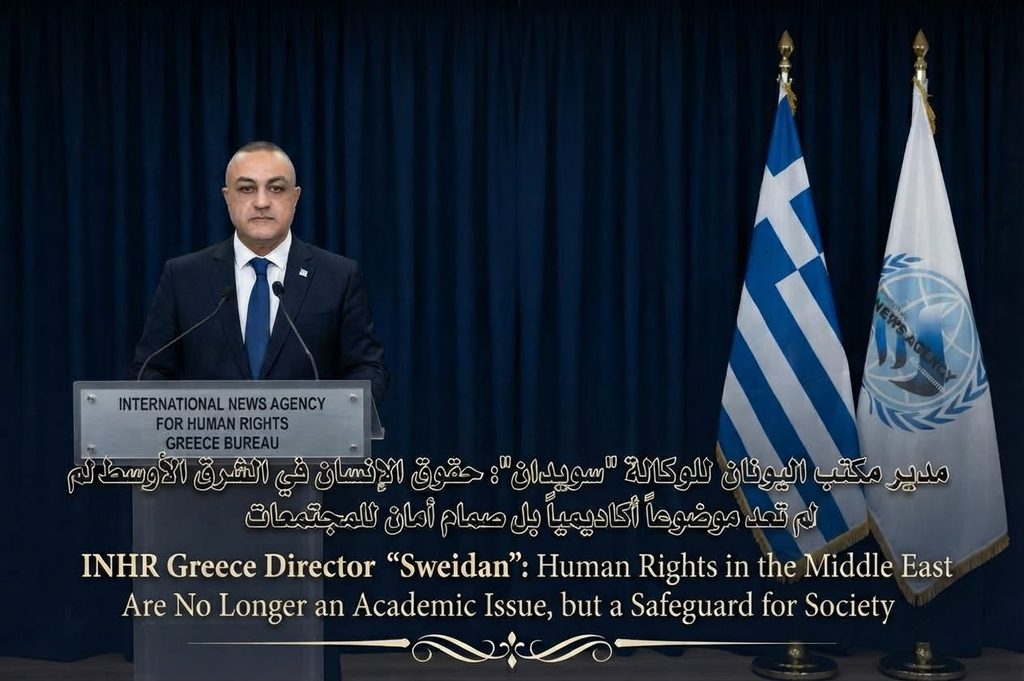
في لقاء خاص مع وكالة الأنباء الدولية لحقوق الإنسان، مدير مكتب اليونان الأستاذ مفيد سويدان: حقوق الإنسان في الشرق الأوسط لم تعد موضوعاً أكاديمياً بل صمام أمان للمجتمعات
وفي حديثه عن واقع حقوق الإنسان في الشرق الأوسط، أشار مدير مكتب اليونان في وكالة الأنباء الدولية لحقوق الإنسان، الأستاذ مفيد سويدان، إلى أن الاتجاه العام في المنطقة «لا يبشر بالخير»، معتبراً أن التحديات التي تواجه منظومة حقوق الإنسان لم تعد مرتبطة بحالات فردية أو أزمات محدودة، وإنما باتت جزءاً من مشهد سياسي وأمني واجتماعي متداخل.
وأوضح سويدان أن تقارير حقوق الإنسان ترصد، بصورة متزايدة، توسعاً في استخدام قوانين مكافحة الإرهاب والجرائم الإلكترونية بصورة قد تؤدي إلى تقييد عمل منظمات المجتمع المدني والمدافعين عن حقوق الإنسان والصحفيين، مؤكداً أن مكافحة الإرهاب والجريمة الإلكترونية لا ينبغي أن تتحول إلى أدوات للحد من الحريات العامة أو إسكات الأصوات المستقلة.
وأضاف أن الوضع يصبح أكثر خطورة في مناطق النزاع، حيث تتكرر الانتهاكات الخطيرة للقانون الدولي الإنساني، من غزة إلى السودان وسوريا واليمن، بما في ذلك استهداف المدنيين والمنشآت المدنية وتدمير المستشفيات والمدارس وعرقلة وصول المساعدات الإنسانية. ورأى أن حماية المدنيين يجب أن تبقى أولوية مطلقة، بصرف النظر عن طبيعة النزاع أو هوية الأطراف المتصارعة.
وفي سؤال حول ماذا نفعل؟ وما المطلوب؟
يرى سويدان أن المرحلة الحالية لا تحتاج إلى المزيد من البيانات والتصريحات فحسب، بل إلى خطوات عملية وواضحة وقابلة للقياس والمساءلة، تبدأ من الداخل الوطني وتمتد إلى المستوى الإقليمي والدولي.
أولاً – على المستوى اللبناني، شدد سويدان على ضرورة إقرار قانون يضمن الاستقلالية الفعلية للقضاء، ليس فقط من الناحية النصية، وإنما من خلال ضمان استقلال القاضي في التعيين والمساءلة واتخاذ القرار، بعيداً عن أي تدخل سياسي أو إداري.
كما دعا إلى إنهاء محاكمة المدنيين أمام المحاكم العسكرية، باعتبار أن ضمان المحاكمة العادلة يتطلب وجود قضاء مستقل ومتخصص، إضافة إلى ضرورة تفعيل الهيئة الوطنية لحقوق الإنسان واللجنة الوطنية لمنع التعذيب بصورة جدية، وتأمين الموارد البشرية والمالية التي تسمح لها بأداء مهامها الرقابية بصورة مستقلة وفعالة.
وقال إن الإصلاح القضائي يجب ألا يبقى عنواناً سياسياً أو مطلباً مؤجلاً، لأن «غياب القضاء المستقل يجعل الحديث عن حقوق الإنسان أقرب إلى الطرح النظري منه إلى ممارسة فعلية على الأرض».
ثانياً – على المستوى الإقليمي، دعا سويدان الدول إلى التعامل بجدية أكبر مع آلية الاستعراض الدوري الشامل أمام مجلس حقوق الإنسان، معتبراً أن قبول التوصيات في جنيف لا يكفي إذا لم يتم تحويلها إلى سياسات وتشريعات وإجراءات عملية داخل الدولة.
وأشار إلى ضرورة وضع آليات وطنية واضحة لمتابعة تنفيذ التوصيات الدولية، ونشر تقارير دورية حول ما تم إنجازه وما لم يتم تنفيذه، بما يسمح للمجتمع المدني والجهات الدولية بمتابعة الالتزامات بصورة شفافة.
كما شدد على ضرورة وقف التضييق على المدافعين عن حقوق الإنسان والصحفيين والعاملين في المجتمع المدني، وتطبيق المبادئ الواردة في إعلان الأمم المتحدة بشأن المدافعين عن حقوق الإنسان لعام 1998، بما يضمن عدم تعرضهم للتهديد أو الملاحقة بسبب نشاطهم السلمي والحقوقي.
ثالثاً – على مستوى الأمم المتحدة والمجتمع الدولي، اعتبر سويدان أن هناك حاجة إلى آليات مساءلة أكثر فعالية عندما تعجز الأنظمة القضائية الوطنية عن التحقيق الجدي في الانتهاكات أو عندما تكون غير قادرة على توفير سبل الانتصاف للضحايا.
ودعا المنظمات الدولية والدول المانحة إلى النظر في المساعدات الاقتصادية وبرامج الدعم من منظور أكثر شمولاً، بحيث لا تقتصر الإصلاحات المطلوبة على المؤشرات المالية والاقتصادية، وإنما تشمل أيضاً استقلال القضاء، والشفافية، ومكافحة الفساد، وحماية الحريات العامة، واحترام حقوق الإنسان.
وأكد أن ربط الدعم بمسار إصلاحي واضح لا ينبغي أن يُفهم على أنه عقوبة للشعوب، بل كوسيلة لضمان أن تصل المساعدات إلى المجتمعات وأن تتحول إلى مؤسسات أكثر قدرة على حماية الإنسان وتحقيق التنمية المستدامة.
وفي ختام حديثه، قال سويدان إن حقوق الإنسان في الشرق الأوسط لم تعد موضوعاً أكاديمياً أو ملفاً ثانوياً في أجندة الدول، بل أصبحت، في نظره، «صمام الأمان الوحيد لمنع انفجار اجتماعي شامل».
وأضاف أن فقدان المواطن، ولا سيما الشباب، ثقته بأن القانون قادر على حمايته وتحقيق العدالة له، يعني فقدان ثقته بالدولة ومؤسساتها بصورة تدريجية، وهو ما قد يؤدي إلى اتساع الفجوة بين المجتمع والمؤسسات العامة.
وختم بالقول إن لبنان، كما يرى، «يقترب كثيراً من هذه النقطة»، داعياً إلى التحرك قبل أن تتحول أزمة الثقة بالمؤسسات إلى أزمة أعمق تمس الاستقرار الاجتماعي والسياسي، مؤكداً أن حماية حقوق الإنسان ليست ترفاً سياسياً، بل شرط أساسي لبناء دولة قادرة على الاستمرار وحماية مواطنيها.
In an exclusive interview with the International News Agency for Human Rights (INHR), Mr. Moufied Sweidan, Director of the Agency’s Office in Greece, said that the overall human rights outlook in the Middle East “does not bode well,” stressing that the challenges facing human rights are no longer isolated incidents but part of a broader political, security and social landscape.
Sweidan noted that human rights reports are increasingly documenting the use of counter-terrorism and cybercrime legislation in ways that may restrict the work of civil society organizations, human rights defenders and journalists. He stressed that while combating terrorism and cybercrime is a legitimate responsibility of states, such legislation should not become a tool for restricting fundamental freedoms, suppressing peaceful expression or weakening independent civil society.
The situation, he added, is even more critical in areas affected by armed conflict. From Gaza to Sudan, Syria and Yemen, serious violations of international humanitarian law continue to be reported, including attacks affecting civilians and civilian infrastructure, the destruction or damage of hospitals and schools, and obstacles to the delivery of humanitarian assistance.
According to Sweidan, the protection of civilians must remain an absolute priority, regardless of the nature of the conflict or the identity of the parties involved.
Replying to answer on What should be done?
Sweidan emphasized that the current situation requires more than additional statements and declarations. What is needed, he said, are clear, practical and measurable steps accompanied by genuine accountability at the national, regional and international levels.
First – at the Lebanese level, Sweidan stressed the need to adopt legislation guaranteeing the effective independence of the judiciary. Such independence, he explained, should not remain merely a constitutional or legal principle, but must be reflected in judicial appointments, accountability mechanisms and the ability of judges to make decisions free from political or administrative interference.
He also called for ending the trial of civilians before military courts, emphasizing that fair trial guarantees require an independent and competent civilian judicial system.
At the same time, he called for the serious activation of the National Human Rights Institution and the National Preventive Mechanism against Torture, including providing the necessary financial and human resources to enable them to carry out their monitoring and preventive functions independently and effectively.
Sweidan stressed that judicial reform cannot remain a political slogan or a permanently postponed objective.
“Without an independent judiciary, every discussion about human rights remains largely theoretical.”
Second – at the regional level, Sweidan called on states to engage more seriously with the Universal Periodic Review (UPR) mechanism of the United Nations Human Rights Council.
Accepting recommendations in Geneva, he said, is not sufficient if those recommendations are subsequently ignored at the national level. States should establish effective national mechanisms for following up on UPR recommendations and publish regular progress reports indicating which commitments have been implemented and which remain outstanding.
He further emphasized the need to end restrictions and pressure against human rights defenders, journalists and civil society actors, and called for the effective implementation of the principles contained in the 1998 United Nations Declaration on Human Rights Defenders.
In his view, protecting human rights defenders is not merely a matter of protecting individuals; it is also essential for maintaining independent monitoring and accountability within society.
Third – at the United Nations and international level, Sweidan said that stronger accountability mechanisms are required when domestic judicial systems fail to investigate serious violations effectively or are unable to provide meaningful remedies to victims.
He also called on international organizations and donor states to adopt a broader approach to economic assistance and development support.
Economic and financial reforms, he argued, should not be considered in isolation from institutional reform. Support should also contribute to strengthening judicial independence, transparency, anti-corruption mechanisms, good governance, public freedoms and respect for human rights.
He stressed that linking international support to a clearly defined reform process should not be viewed as a punishment for populations. Rather, it should ensure that assistance reaches communities and contributes to building stronger institutions capable of protecting people and supporting sustainable development.
Human rights as a safeguard for social stability
Concluding his remarks, Sweidan emphasized that human rights in the Middle East can no longer be treated as an academic subject or a secondary item on the political agenda.
They have become, in his view, a fundamental safeguard against a broader social explosion.
He warned that when young people lose confidence that the law can protect them, guarantee their rights and provide access to justice, they gradually lose confidence in the state and its institutions as a whole.
This loss of trust, he explained, can deepen the gap between citizens and public institutions and ultimately undermine social and political stability.
Sweidan concluded that Lebanon is “coming dangerously close to this point,” calling for action before the crisis of confidence in institutions develops into a deeper crisis affecting society as a whole.
For him, protecting human rights is not a political luxury or an optional policy objective. It is a fundamental condition for building a functioning state, strengthening public trust and preserving long-term stability.
Leave a Reply