
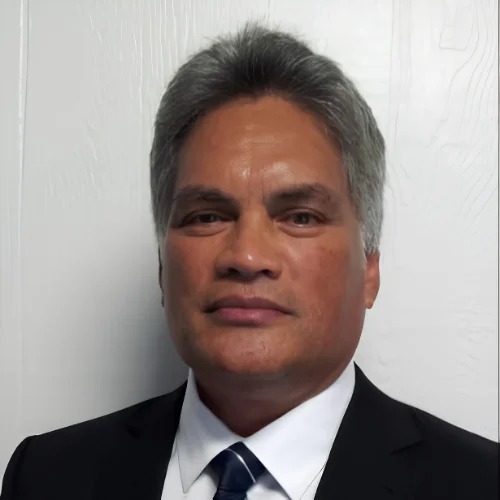
HRM King Edmund K. Silva Jr. (Keynote 2: Interfaith Dialogue and Peacebuilding)
•
From your experience, what are the critical conditions that allow interfaith coalitions
to move beyond dialogue into genuine conflict mitigation, and how can education prepare
young people to play that role?
Plain meaning: An interfaith coalition brings people from different faiths together to work for peace
and the common good. They do not need to share the same beliefs; they need mutual respect and a
willingness to act together.
Key points: Build trust before a crisis, include respected local leaders and equal voices, agree on
shared values, respond quickly to rumors, and turn dialogue into joint action. Education prepares
young people through listening, critical thinking, nonviolent communication, mediation, and service
with people from different backgrounds.
From Trust to Action: Preparing Young People to Practice Peace. “Interfaith coalitions become
effective when trust leads to action. People of different faiths must build relationships before a crisis,
respect every voice, and agree to protect human dignity. Education prepares young people by
teaching them to listen, challenge prejudice, solve conflict peacefully, and serve alongside those who
are different. Peace then becomes something they practice, not simply something they discuss.”
•
How can religious education intentionally build cultural empathy and community
resilience in societies that have experienced or remain vulnerable to identity-based conflict?
Plain meaning: How can faith education help people see the humanity in those who are different
and help communities resist division, heal, and protect peace?
Three goals:
- Replace fear with understanding.
- Replace prejudice with respect.
- Replace division with the courage to stand together.
Key terms: Cultural empathy means understanding another person’s culture and experience without
judging. Community resilience means remaining united, recovering, and rebuilding after hardship.
Identity-based conflict divides or targets people because of religion, ethnicity, race, culture, or another
part of who they are.
Building Empathy and Resilience Through Religious Education: “Religious education should
help people know their neighbors as human beings, not as labels. Students can hear how others
describe their own faith, share stories, visit one another’s communities, and serve together. It should
also teach careful listening, media awareness, and peaceful problem-solving. The goal is simple:
understand our differences, respect one another, and stand together when fear or hatred tries to
divide us.”
•
What lessons from successful interfaith peacebuilding initiatives should be
deliberately integrated into formal and non-formal religious education curricula?
Plain meaning: What have successful interfaith peace efforts taught us, and how should those
lessons be taught in schools, faith communities, youth programs, and community settings?
Education settings: - Formal education: schools, colleges, seminaries, and organized courses.
- Non-formal education: youth groups, workshops, community gatherings, service projects,
mentoring, and dialogue circles.
Lessons to remember:
- Build relationships before a crisis.
- Listen before judging.
- Turn dialogue into shared service.
- Include women, youth, elders, and marginalized voices.
- Challenge rumors, misinformation, and prejudice.
- Practice mediation, forgiveness, and nonviolent conflict resolution.
- Respect differences without demanding sameness.
- Connect every lesson to local history, needs, wounds, and hopes.
Living Peace Before Crisis Begins: “The strongest lesson is that peace must not only be practiced
but lived before a crisis begins. Religious education should teach people to build relationships, listen
before judging, serve together, challenge harmful rumors, and resolve conflict without violence. It
must include every voice and respect differences without demanding sameness. Whether learning
occurs in a classroom or a community program, it should prepare people to protect one another
when division arises.”
From a Legacy of Domination to a Future of Justice and Peace
These three questions point to one deeper issue: religion has not only been caught up in conflict; at
times, religious authority and doctrine have been used to justify domination. The Doctrine of
Discovery is a powerful example. It gave religious and moral cover to conquest, the taking of
Indigenous lands, forced conversion, and the denial of Indigenous peoples’ full humanity and
sovereignty. This left a dark stain on religious institutions and showed what can happen when claims
of divine authority merge with political power, land, and control.
That history requires more than regret. It requires truth, accountability, repair, and a clear rejection of
any teaching that treats one people as superior to another. Interfaith coalitions must turn trust into
action. Religious education must tell the truth about both the harm done in the name of religion and
the power of faith to support dignity, reconciliation, justice, and peace. These lessons must be taught
before conflict begins—among young people, faith leaders, educators, families, and communities.
In closing:
A Call to Truth, Repair, and Peace: “The Doctrine of Discovery reminds us that religion can
become destructive when sacred authority is used to justify conquest, dispossession, and human
inequality. We must tell that truth, reject doctrines of domination, and repair the harm they caused.
Our calling now is to turn belief into responsibility, dialogue into action, and difference into mutual
respect. Faith must never again be used as a weapon against the human family; it must become a
bridge toward justice and peace.”
HRM Edmund K. Silva, Jr.
Kingdom of Hawai’i
Nou Ke Akua Ke Aupuni O Hawai’i
Leave a Reply