
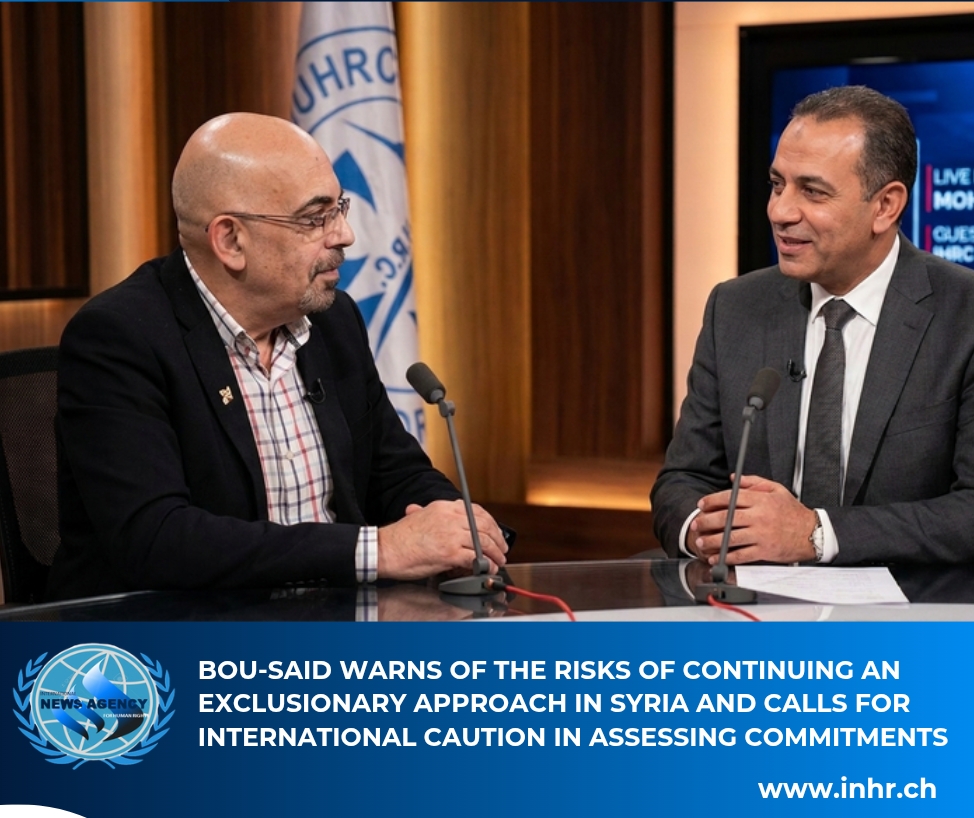
بو سعيد يحذّر من مخاطر استمرار النهج الإقصائي في سوريا ويدعو المجتمع الدولي إلى التدقيق في تعهدات السلطة المؤقتة
Bou-Said Warns of the Risks of Continuing an Exclusionary Approach in Syria and Calls for International Caution in Assessing Commitments
أشار الممثل الأعلى للشؤون الخارجية للمجلس الدولي لحقوق الإنسان IHRC المعتمد من الأمم المتحدة بصفة خاصة إيكوسوك ورئيس بعثته إلى جنيف الدكتور هيثم بو سعيد، في مداخلة مع وكالة الأنباء الدولية لحقوق الإنسان، إلى أن التطورات السياسية في سوريا تستوجب مقاربة دقيقة من قبل المجتمع الدولي، محذراً من مخاطر استمرار نهج قائم على الإقصاء وفرض رؤية أحادية على مستقبل البلاد.
وقال الدكتور بو سعيد إن الإدارة المؤقتة في دمشق تسعى، بحسب تقييمه، إلى ترسيخ نموذج سياسي ذي طابع ديني، معتبراً أن التحولات في الخطاب والممارسة لدى بعض الجهات المرتبطة سابقاً بجبهة النصرة وهيئة تحرير الشام لا تزال تثير تساؤلات حول مدى الالتزام بالتعهدات المعلنة أمام المجتمع الدولي.
وأضاف أن المراوحة السياسية والمواقف المتبدلة قد تؤدي إلى إحكام السيطرة على مفاصل الدولة وإقصاء الأصوات المخالفة، الأمر الذي قد يفاقم معاناة شرائح واسعة من الشعب السوري، مؤكداً أن أي مشروع سياسي لا يقوم على التعددية واحترام حقوق جميع المكونات لن يكون قابلاً لبناء استقرار حقيقي.
وأشار بو سعيد إلى أن أي عملية انتخابية في سوريا يجب أن تكون شفافة وحرة وتحت رقابة وضمانات واضحة، محذراً من مخاطر استخدام الضغط أو التخويف أو القمع كأدوات سياسية، ومعتبراً أن تغيير الوجوه لا يكفي إذا بقيت الأساليب التي تنتهك مبادئ المشاركة السياسية وحقوق الإنسان.
ودعا الدكتور بو سعيد الدول الغربية والمجتمع الدولي إلى اعتماد مقاربة حذرة ومسؤولة تجاه مطالب السلطة القائمة في دمشق، والتأكد من أن أي دعم أو انفتاح سياسي يرتبط بخطوات عملية تضمن حماية المدنيين، واحترام الحريات العامة، وبناء دولة تقوم على القانون والمواطنة.
وختم بالتأكيد أن مستقبل سوريا يجب أن يُبنى على أساس المصالحة الوطنية، واحترام التنوع، وضمان مشاركة جميع السوريين في صياغة مستقبل بلادهم بعيداً عن منطق الإقصاء أو فرض الأمر الواقع.
The High Representative for External Affairs of the International Human Rights Council (IHRC), accredited by the United Nations in special consultative status with ECOSOC, and Head of its Mission to Geneva, Dr. Haitham Bou-Said, stated during an interview with the International News Agency for Human Rights that the developments in Syria require a careful and responsible international approach, warning against the risks of continuing policies based on exclusion and the imposition of a single vision for the country’s future.
Dr. Bou-Said said that the interim administration in Damascus is, according to his assessment, seeking to establish a political model with a religious character, stressing that the evolution of the discourse and practices of certain groups previously linked to Jabhat al-Nusra and Hay’at Tahrir al-Sham continues to raise questions regarding the extent of their commitment to the pledges and obligations presented to the international community.
He added that political manoeuvring and changing positions could lead to attempts to control key state institutions and marginalize opposing voices, which may increase the suffering of broad segments of the Syrian people. He emphasized that any political project that does not respect pluralism, diversity, and the rights of all components of society cannot achieve genuine stability.
Dr. Bou-Said further stated that any electoral process in Syria must be transparent, free, and conducted under clear guarantees and international standards, warning against the use of intimidation, pressure, or repression as political tools. He stressed that changing leadership figures is insufficient if practices that undermine political participation and human rights remain unchanged.
He called on Western countries and the international community to adopt a cautious and responsible approach toward the demands of the current authorities in Damascus, ensuring that any political engagement or support is linked to practical steps guaranteeing the protection of civilians, respect for fundamental freedoms, and the establishment of a state based on the rule of law and citizenship.
Dr. Bou-Said concluded by emphasizing that Syria’s future must be built on national reconciliation, respect for diversity, and the participation of all Syrians in shaping their country’s future, away from exclusionary policies or imposed realities.
Leave a Reply