
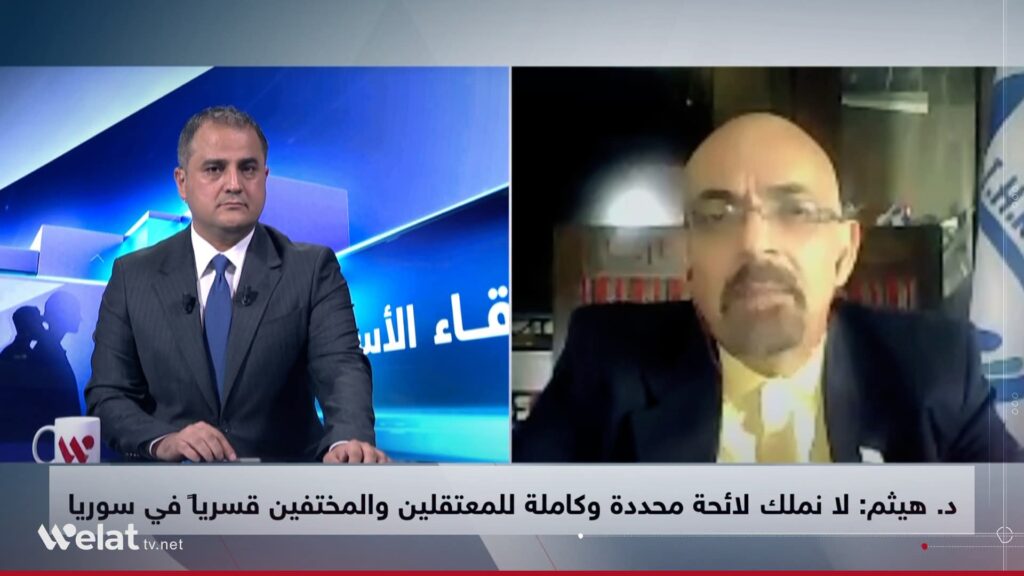
مسؤول حقوقي دولي يكشف لـ “ولات تيفي” مستقبل ملف العدالة الانتقالية وحقوق الإنسان في سوريا
ولات تيفي – أربيل
International Human Rights Official Reveals to Welat TV the Future of Transitional Justice and Human Rights in Syria
August 14, 2026
Welat TV – Erbil
أكد الممثل الأعلى للشؤون الخارجية للمجلس الدولي لحقوق الإنسان ورئيس بعثته في جنيف، السفير د. هيثم أبو سعيد، أن العمل الحقوقي المتعلق بالملف السوري يتركز على مراقبة الانتهاكات في المناطق الساخنة، وتوثيقها وإعداد التقارير اللازمة ورفعها إلى الجهات الأممية والدولية المختصة، بهدف متابعة الملفات واتخاذ الإجراءات المناسبة.
وقال أبو سعيد في حوار مع “ولات تيفي” خلال مشاركته في برنامج “لقاء الأسبوع” الخميس 13 آب 2026، إن الانتهاكات الجسيمة، ولا سيما ما قد يرقى إلى جرائم حرب أو عمليات تغيير ديمغرافي، تتطلب آليات خاصة لضمان محاسبة المسؤولين عنها، مشيراً إلى أن العمل الحقوقي يستند إلى جمع المعلومات والتحقق منها قبل الانتقال إلى المراحل ذات الطابع القضائي.
وأوضح أن الجهات الحقوقية تعمل، عند تثبيت وقوع الانتهاكات، على إنشاء لجان لتقصي الحقائق بهدف التحقق من المعطيات والمعلومات الواردة، قبل الشروع بالإجراءات ذات الصلة، وبعد الحصول على الموافقات اللازمة، ومن ثم رفع التقارير إلى الجمعية العامة والأمانة العامة للأمم المتحدة والجهات المعنية.
*لجنة تقصي الحقائق ومسار المحاسبة
أشار أبو سعيد إلى أن المجلس يلتزم بالتقرير الصادر عن لجنة تقصي الحقائق بشأن سوريا، لافتاً إلى العمل على إعداد مسودة قانونية لمقاضاة المسؤولين عن الانتهاكات، أياً كانت الجهات التي ينتمون إليها، سواء من الحكومة أو غيرها.
وشدد على أهمية الدور الذي يمكن أن يؤديه القضاء الدولي في هذا المسار، من خلال إصدار القرارات اللازمة ووضع الآليات الكفيلة بتنفيذها، معتبراً أن تحقيق العدالة والمساءلة يتطلبان مساراً قانونياً واضحاً ومستنداً إلى الأدلة والمعايير القضائية.
*جدل حول المحاكم والأحكام القضائية
لفت أبو سعيد إلى وجود فجوة بين التعاطي الحقوقي مع الجرائم والانتهاكات من جهة، والمساعي الرامية إلى التوصل لتسوية سياسية من جهة أخرى، معتبراً أن هذا التداخل يثير تساؤلات ونقاشاً حول طبيعة المسارات المعتمدة لتحقيق العدالة.
وأشار كذلك إلى وجود نقد، وصفه بالبناء، يتعلق بشرعية وماهية بعض المحاكم التي أصدرت أحكاماً بحق الرئيس السوري المخلوع بشار الأسد ورموز نظامه، في ظل النقاش المستمر حول الأطر القضائية التي ينبغي أن تتولى محاسبة المسؤولين عن الانتهاكات.
وأضاف أن هناك قضاة في الدولة السورية متورطين، بحسب ما أشار إليه، “في إصدار أحكام بالإعدام في مناطق سورية كانت تسيطر عليها الفصائل”، الأمر الذي يضيف تعقيدات أخرى إلى ملف العدالة والمحاسبة في البلاد.
*ملف المعتقلين والمختفين قسرياً
فيما يتعلق بملف المعتقلين والمختفين قسرياً، قال أبو سعيد إن الجهات الحقوقية لا تمتلك حتى الآن لائحة محددة وكاملة بأعداد المغيبين والمختفين قسرياً في سوريا، مؤكداً أن تحديد أرقام دقيقة يتطلب توافر معطيات موثوقة من لجان تقصي الحقائق والجهات المختصة.
وأوضح أن السلطات السورية السابقة لم تكن متجاوبة، وفق قوله، مع الجهود المبذولة في ملف المعتقلين والمختفين قسرياً، معرباً عن أمله في أن تتعاون الحكومة السورية في هذا الملف، معتبراً أن عدم التجاوب لا يصب في مصلحتها.
*اللاجئون والمهجرون العائدون
في ملف اللاجئين والمهجرين العائدين إلى سوريا، أعرب أبو سعيد عن اعتقاده بوجود تقصير من جانب الحكومة السورية في التعامل مع احتياجات هذه الفئات، داعياً إلى إطلاق مبادرات محلية لتوفير الدعم اللازم لهم وتأمين الظروف الملائمة لعودتهم واستقرارهم.
كما دعا الحكومة السورية والدول التي سبق أن دعمت ملف اللاجئين إلى التعاون في هذا المجال، بما يضمن توفير المساندة للعائدين ومعالجة التحديات التي تواجههم.
*تحذير من تصعيد أمني في المنطقة
في سياق أوسع، حذر أبو سعيد من مخاطر حدوث تصعيد أمني كبير في المنطقة، معرباً عن أسفه لما وصفه بغياب مساحة كافية للتسويات وصوت العقل في المرحلة الراهنة.
ودعا الدول والأطراف المتصارعة إلى تحييد المدنيين عن التجاذبات والصراعات، والالتزام بالمعايير والقواعد الدولية التي تكفل حماية السكان المدنيين.
وأكد في ختام حديثه على ضرورة العمل على تحقيق تسويات سياسية في المنطقة، والجلوس إلى طاولة المفاوضات لمعالجة الخلافات، بعيداً عن اللجوء إلى القوة العسكرية، بما يسهم في الحد من التوترات وحماية المدنيين وتهيئة الظروف أمام حلول أكثر استدامة.
The High Representative for Foreign Affairs of the International Council for Human Rights and Head of its Mission in Geneva, Ambassador Dr. Haitham Abu Said, affirmed that human rights work related to the Syrian file focuses on monitoring violations in conflict zones, documenting them, preparing the necessary reports, and submitting them to the relevant UN and international bodies, with the aim of following up on cases and taking appropriate measures.
In an interview with Welat TV during his participation in the “Meeting of the Week” program on Thursday, August 13, 2026, Abu Said stated that serious violations, particularly those that may amount to war crimes or demographic changes, require special mechanisms to ensure accountability for those responsible. He pointed out that human rights work is based on gathering and verifying information before moving to the judicial stages.
He explained that human rights organizations, upon confirming the occurrence of violations, establish fact-finding committees to verify the data and information received before initiating related procedures, after obtaining the necessary approvals. Reports are then submitted to the General Assembly, the UN Secretariat, and relevant bodies.
*The Fact-Finding Committee and the Accountability Process
Abu Saeed indicated that the Council adheres to the report issued by the Fact-Finding Committee on Syria, noting that work is underway to draft legislation to prosecute those responsible for violations, regardless of their affiliation, whether governmental or otherwise.
He emphasized the crucial role that international courts can play in this process by issuing the necessary rulings and establishing mechanisms for their implementation. He asserted that achieving justice and accountability requires a clear legal framework based on evidence and judicial standards. *Controversy Surrounding Courts and Judicial Rulings
Abu Saeed pointed to a gap between the human rights approach to crimes and violations, on the one hand, and the efforts aimed at reaching a political settlement, on the other. He considered this overlap to raise questions and spark debate about the nature of the paths adopted to achieve justice.
He also noted the existence of criticism, which he described as constructive, concerning the legitimacy and nature of some courts that issued rulings against the ousted Syrian President Bashar al-Assad and figures of his regime, amidst the ongoing debate about the judicial frameworks that should be responsible for holding those responsible for violations accountable.
He added that there are judges in the Syrian state who, according to him, are involved “in issuing death sentences in Syrian areas that were controlled by factions,” which adds further complications to the issue of justice and accountability in the country. *The File of Detainees and the Forcibly Disappeared
Regarding the file of detainees and the forcibly disappeared, Abu Saeed stated that human rights organizations do not yet possess a specific and complete list of the number of those forcibly disappeared in Syria. He emphasized that determining accurate figures requires reliable data from fact-finding committees and relevant authorities.
He explained that the previous Syrian authorities, according to him, were unresponsive to efforts concerning the file of detainees and the forcibly disappeared. He expressed his hope that the Syrian government would cooperate on this issue, considering that its lack of cooperation is not in its best interest.
*Returning Refugees and Internally Displaced Persons
On the file of refugees and internally displaced persons returning to Syria, Abu Saeed expressed his belief that the Syrian government has fallen short in addressing the needs of these groups. He called for the launch of local initiatives to provide them with the necessary support and ensure suitable conditions for their return and resettlement. He also called on the Syrian government and countries that have previously supported the refugee issue to cooperate in this area, ensuring support for returnees and addressing the challenges they face.
*Warning of a Security Escalation in the Region
In a broader context, Abu Saeed warned of the risks of a major security escalation in the region, expressing his regret at what he described as the lack of sufficient space for settlements and a voice of reason at the present stage.
He called on countries and conflicting parties to keep civilians out of the conflicts and to adhere to international standards and rules that guarantee the protection of civilian populations.
In conclusion, he emphasized the necessity of working towards political settlements in the region and sitting down at the negotiating table to address differences, avoiding the use of military force, in order to reduce tensions, protect civilians, and create conditions for more sustainable solutions.
Leave a Reply