

| Last |
Last month, after the United States successfully toppled and captured the leader of Venezuela, Nicolás Maduro, there was an immediate expectation that the White House would try something similar in Iran. But President Donald Trump reportedly held back partly because he didn’t have enough military assets in the Middle East. That is now changing. In recent weeks, the Pentagon has stationed a carrier strike group and missile defense systems in the region, even as diplomacy between Washington and Tehran has ramped up.
Is the military maneuvering a coercive strategy, or will Trump actually pull the trigger?
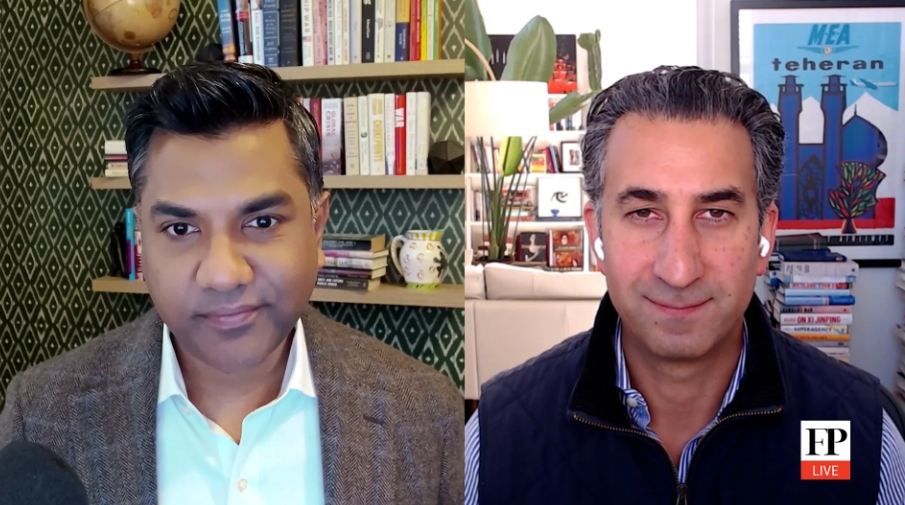
“Trump himself has telegraphed that his Iran playbook will likely be taken from his Venezuela strategy,” said Karim Sadjadpour, an Iran expert at the Carnegie Endowment for International Peace, speaking on FP Live. “But Venezuela is in the Western Hemisphere; it’s a country that we’re much more familiar with. We haven’t had any relationship or embassy in Iran since 1979, so our intelligence capabilities are much more limited compared to Venezuela.”
Now that the Iranian regime has crushed last month’s nationwide protests, what exactly does its leadership stand for? “The three pillars left of the 1979 revolution are death to America, death to Israel, and the hijab, the mandatory veiling of women,” said Sadjadpour. “It’s notable that despite most women, certainly in Tehran, no longer abiding by the hijab, the regime refuses to remove that as compulsory because they fear that if you remove hijab—which [former Supreme Leader Ruhollah] Khomeini called the flag of the Islamic revolution—then people are just going to ask for more concessions.”