
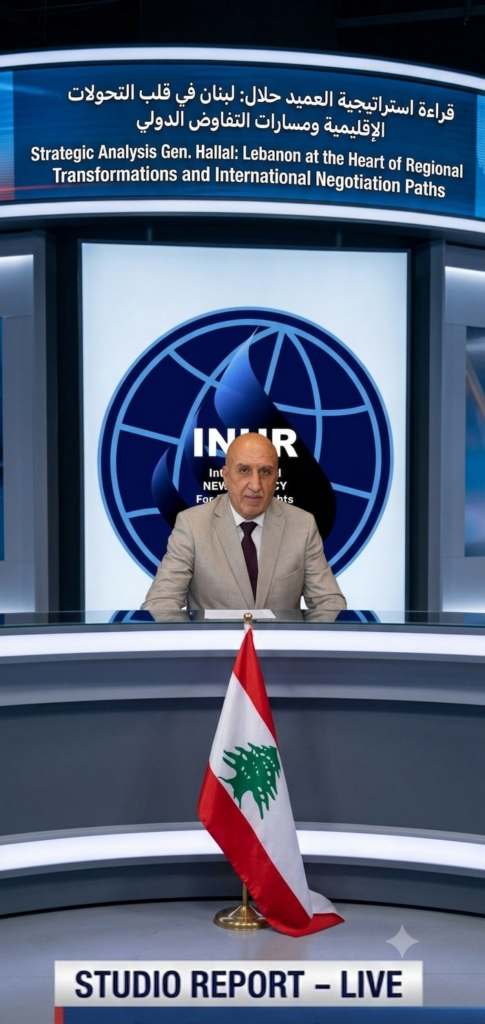
قراءة استراتيجية العميد حلال: لبنان في قلب التحولات الإقليمية ومسارات التفاوض الدولي
Strategic Analysis Gen. Hallal: Lebanon at the Heart of Regional Transformations and International Negotiation Paths
أفادت وكالة الأنباء الدولية لحقوق الإنسان بأن الشرق الأوسط يشهد مرحلة دقيقة من التحولات السياسية والأمنية، حيث ينتقل المشهد تدريجيًا من مرحلة «الحرب المفتوحة» إلى مرحلة «إدارة الصراع عبر التفاوض تحت الضغط العسكري»، ما يجعل لبنان أمام استحقاقات إقليمية ودولية تتجاوز حدوده الداخلية.
وبحسب قراءة استراتيجية أعدها العميد الركن بهاء حلال، المستشار الاستراتيجي للممثل الأعلى للشؤون الخارجية للمجلس الدولي لحقوق الإنسان IHRC المعتمد من الأمم المتحدة بصفة خاصة إيكوسوك، فإن لبنان بات يمثل نقطة تقاطع بين مسارات دولية وإقليمية أساسية، أبرزها المسار الأميركي–الإيراني، والمسار اللبناني–الإسرائيلي، إضافة إلى إعادة تشكيل البيئة الأمنية في المنطقة، وإعادة تعريف أدوار القوى غير الحكومية.
وأشار التقرير إلى أن السؤال المركزي في المرحلة المقبلة لم يعد مرتبطًا فقط بإمكانية توقف المواجهات، بل بكيفية إعادة إنتاج منظومة الأمن والاستقرار في المشرق، وعلى أي توازنات سياسية وأمنية ستُبنى المرحلة القادمة.
وأوضح أن التوازنات الإقليمية الحالية تقوم على أهداف متباينة، حيث تسعى الولايات المتحدة إلى منع اختلال ميزان القوى الإقليمي، بينما تركز إسرائيل على إزالة التهديدات الأمنية، وتسعى إيران إلى تثبيت منظومة ردع إقليمية، في وقت تبحث الدول العربية عن مسار يعزز الاستقرار والتنمية ويحد من توسع النزاعات.
ولفت التقرير إلى أن أي تطورات في مسار التفاوض الأميركي–الإيراني قد تنعكس مباشرة على لبنان، إذ إن نجاح تفاهمات واسعة قد يفتح الباب أمام مرحلة من خفض التصعيد وتعزيز دور المؤسسات الرسمية، بينما قد يؤدي الفشل إلى إعادة رفع مستويات التوتر وتوسيع دائرة المواجهة.
وفي ما يتعلق بالمسار اللبناني–الإسرائيلي، أكد التقرير أن أي ترتيبات مستقبلية في الجنوب ستبقى مرتبطة بمعادلة دقيقة بين استعادة الدولة لدورها السيادي، والاعتبارات الأمنية الإسرائيلية، ومواقف القوى التي تمتلك أدوات ردع خارج الإطار التقليدي للدولة.
وأضافت القراءة أن لبنان يواجه ثلاثة مسارات استراتيجية محتملة:
مسار تعزيز الدولة والمؤسسات عبر ترسيخ القرار السيادي.
مسار التوازن المركب بين مؤسسات الدولة وقوى التأثير غير الرسمية.
مسار استمرار الاستنزاف في حال تعثر التسويات الإقليمية.
وأكدت وكالة الأنباء الدولية لحقوق الإنسان أن المرحلة المقبلة ستشكل اختبارًا حقيقيًا لقدرة الأطراف الإقليمية والدولية على تحويل التفاهمات السياسية إلى نظام مستدام يحمي الأمن وحقوق الشعوب، مشددة على أن الاستقرار الإقليمي لا يمكن أن يتحقق دون احترام سيادة الدول وتعزيز مؤسساتها وحماية المدنيين وفق مبادئ القانون الدولي وحقوق الإنسان.
وختم التقرير بالتأكيد أن لبنان ليس فقط ساحة صراع أو تفاوض، بل يمثل مؤشرًا أساسيًا على شكل النظام الإقليمي القادم: إما انتقال نحو إدارة منظمة للخلافات عبر الحوار، أو العودة إلى منطق التصعيد والفوضى.
The International Human Rights News Agency reported that the Middle East is witnessing a critical phase of political and security transformations, as the regional landscape gradually shifts from a phase of “open warfare” to a phase of “conflict management through negotiations under military pressure,” placing Lebanon before regional and international challenges that extend beyond its internal borders.
According to a strategic assessment prepared by Brigadier General Bahaa, strategic advisor to the High Representative for Foreign Affairs of the International Human Rights Council (IHRC), accredited by the United Nations with special consultative status through ECOSOC, Lebanon has become a point of intersection between key international and regional tracks, most notably the US–Iranian track, the Lebanese–Israeli track, the restructuring of the region’s security environment, and the redefinition of the roles of non-state actors.
The report noted that the central question in the coming phase is no longer limited to whether confrontations can cease, but rather how the security and stability framework in the Levant will be rebuilt and upon which political and security balances the next phase will be based.
It explained that current regional dynamics are driven by differing objectives, with the United States seeking to prevent an imbalance in the regional balance of power, while Israel focuses on eliminating security threats, and Iran seeks to consolidate a regional deterrence framework. Meanwhile, Arab states are pursuing a path that strengthens stability and development while limiting the expansion of conflicts.
The report highlighted that any developments in the US–Iranian negotiation process could directly impact Lebanon, as the success of broader understandings may open the door to a phase of de-escalation and strengthening the role of official institutions, while failure could lead to renewed tensions and an expansion of confrontation.
Regarding the Lebanese–Israeli track, the report emphasized that any future arrangements in southern Lebanon will remain linked to a delicate balance between restoring the state’s sovereign role, Israeli security considerations, and the positions of forces that possess deterrence capabilities outside the traditional framework of the state.
The assessment added that Lebanon faces three possible strategic paths:
A path of strengthening the state and its institutions through consolidating sovereign decision-making.
A path of complex balance between state institutions and unofficial forces of influence.
A path of continued attrition if regional settlements fail.
The International Human Rights News Agency affirmed that the coming phase will represent a true test of the ability of regional and international actors to transform political understandings into a sustainable system that protects security and the rights of peoples. It stressed that regional stability cannot be achieved without respecting state sovereignty, strengthening institutions, and protecting civilians in accordance with the principles of international law and human rights.
The report concluded by emphasizing that Lebanon is not merely a field of conflict or negotiation, but rather a key indicator of the shape of the future regional order: either a transition toward organized management of disputes through dialogue, or a return to the logic of escalation and instability.
Leave a Reply