
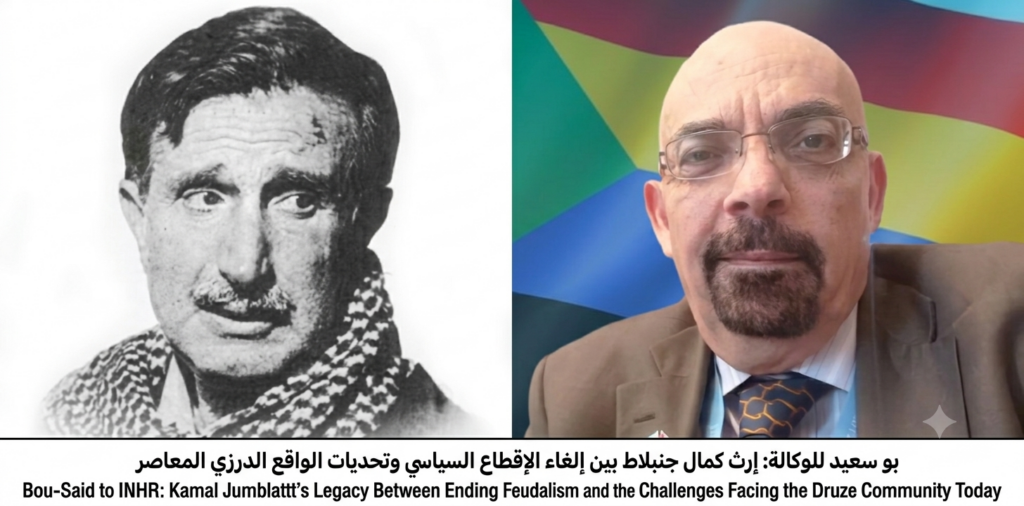
بو سعيد للوكالة: إرث كمال جنبلاط بين إلغاء الإقطاع السياسي وتحديات الواقع الدرزي المعاصر
Bou-Said to INHR: Kamal Jumblatt’s Legacy Between Ending Political Feudalism and the Challenges Facing the Druze Community Today
أشار مدير وكالة الأنباء الدولية لحقوق الإنسان ورئيس تحريرها هيثم بو سعيد، في مداخلة مع الوكالة حول الأحداث في السويداء وآخر التطورات، إلى أن مسيرة الزعيم الراحل كمال جنبلاط ارتبطت بشكل أساسي بمشروع فكري وسياسي دعا من خلاله إلى إلغاء الإقطاع السياسي بصورة جذرية، والعمل على بناء حياة سياسية قائمة على العدالة والمواطنة والمؤسسات.
وأوضح بو سعيد أن كمال جنبلاط، رغم انحداره من عائلة إقطاعية عريقة هي آل جنبلاط، اختار مواجهة هذا الواقع، واعتبر أن الإقطاع والزبائنية السياسية يشكلان عائقاً أمام قيام دولة حديثة، وقد سعى إلى ترجمة هذه الأفكار عملياً بدءاً من تجربته الشخصية والسياسية.
وأضاف أن ما تشهده بعض الأوساط الدرزية اليوم من ممارسات وتوجهات، بحسب رأيه، يطرح تساؤلات حول مدى الالتزام بالإرث الفكري الذي تركه جنبلاط، الذي تربت على أفكاره أجيال واسعة من أبناء الطائفة في مختلف المناطق، والذين رأوا فيه نموذجاً جمع بين الفكر السياسي والرؤية التوحيدية القائمة على القيم الروحية والأخلاقية.
وأشار إلى أن جنبلاط لم يكن مجرد زعيم سياسي، بل قاد مشروعاً فكرياً وسياسياً حاول من خلاله الربط بين الإصلاح الاجتماعي والنهضة الوطنية، متجاوزاً الانتماءات الضيقة نحو مفهوم أوسع للدولة والإنسان.
وختم بو سعيد بالتأكيد على أن قراءة إرث كمال جنبلاط تبقى مرتبطة بضرورة الحفاظ على قيم الإصلاح، ورفض تحويل الانتماءات الاجتماعية أو الطائفية إلى أدوات لإعادة إنتاج أنماط سياسية تجاوزها الزمن.
The Director and Editor-in-Chief of the International News Agency for Human Rights, Haissam Bou-Said, stated in an interview with the agency regarding the developments in Sweida and the latest events that the late leader Kamal Jumblatt had, throughout his political and intellectual journey, seriously advocated the complete and radical abolition of political feudalism and worked toward applying these principles starting with himself.
Bou-Said explained that Kamal Jumblatt, despite belonging to a deeply rooted feudal family, the Jumblatt family, chose to confront this reality and led an intellectual and political movement against political feudalism and clientelism, which he considered major obstacles to building a modern state based on institutions, justice, and citizenship.
He added that what is witnessed today in some Druze circles, in his view, raises questions regarding the preservation of the legacy and concepts of a leader who shaped the thinking of tens of thousands of followers across the region, who embraced his vision that combined political thought with the values of the Tawhid faith, reaching a level of spiritual and intellectual awareness recognized by scholars of the Druze community.
Bou-Said emphasized that Kamal Jumblatt was not only a political figure, but also a thinker who launched a broad reformist project aimed at linking social transformation with national renewal, moving beyond narrow affiliations toward a wider understanding of statehood and human dignity.
He concluded by stressing that preserving Kamal Jumblatt’s legacy requires adherence to the principles of reform, rejecting the return of political patterns based on inherited influence and social dependency, and strengthening the values of justice, accountability, and institutional governance.
Leave a Reply