
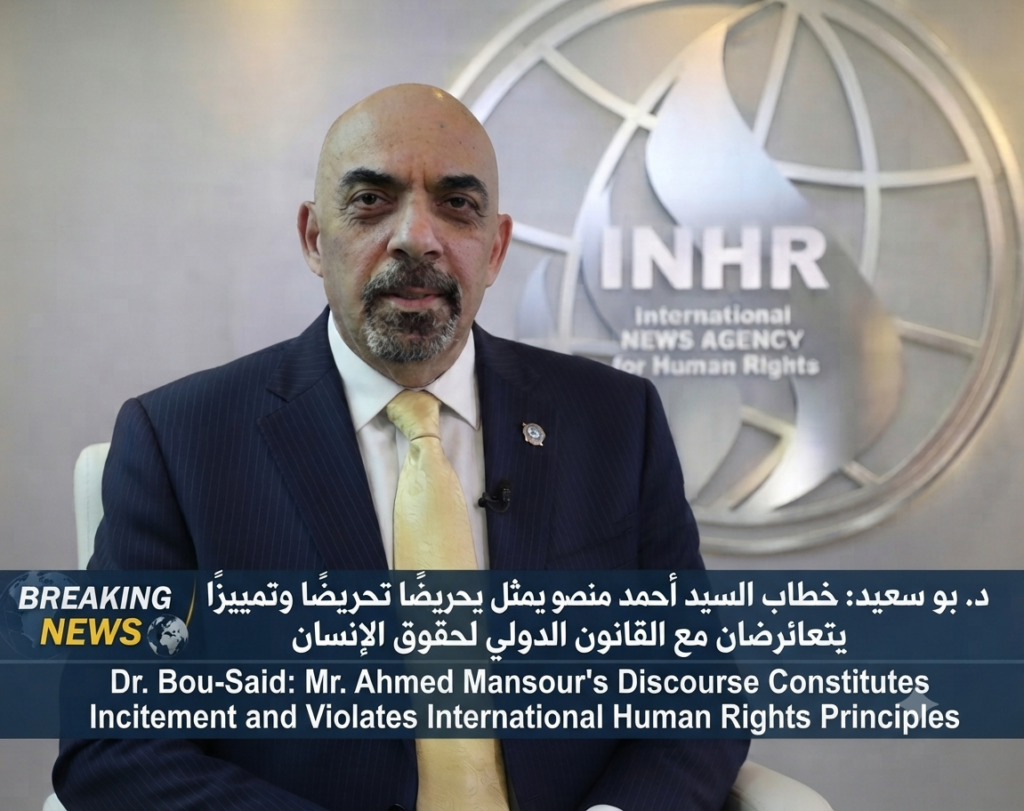
أشار الممثل الأعلى للشؤون الخارجية للمجلس الدولي لحقوق الإنسان (IHRC)، المعتمد لدى المجلس الاقتصادي والاجتماعي للأمم المتحدة (ECOSOC) بصفة استشارية خاصة، ورئيس بعثته إلى جنيف، الدكتور هيثم بو سعيد، إلى أن ما قام ويقوم به الإعلامي أحمد منصور من خلال برنامجه على قناة الجزيرة تحت عنوان “هل الدروز خونة؟”، والذي يقسّم أبناء الطائفة الدرزية إلى فئتين، يُعدّ – بحسب تقييمه – خطابًا تحريضيًا ينطوي على التمييز على أساس الانتماء الديني أو المجتمعي، ويتعارض مع المبادئ التي يكرّسها القانون الدولي لحقوق الإنسان، ولا سيما المادة (20) من العهد الدولي الخاص بالحقوق المدنية والسياسية التي تحظر الدعوة إلى الكراهية القومية أو العنصرية أو الدينية التي تشكل تحريضًا على التمييز أو العداوة أو العنف، إضافة إلى المادة (7) من الإعلان العالمي لحقوق الإنسان التي تؤكد المساواة أمام القانون وعدم التمييز.
وأضاف الدكتور بو سعيد، في مداخلة مع مدير وكالة الأنباء الدولية لحقوق الإنسان في مصر، محمد طعيمة، أن الأستاذ أحمد منصور، وفقًا لرأيه، لم يُخفِ انتماءه الفكري وتوجهاته الأيديولوجية، معتبرًا أن طرحه يعكس خطابًا إقصائيًا يركز على فئة بعينها دون غيرها.
وأشار إلى أن تناول قضية مشاركة المواطنين العرب في إسرائيل بالخدمة العسكرية يجب أن يكون موضوعيًا وشاملًا، لافتًا إلى أن المعطيات المنشورة عن الجهات الإسرائيلية تشير إلى وجود متطوعين مسلمين ومسيحيين أيضًا في الخدمة العسكرية، إلى جانب متطوعين من الطائفة الدرزية، وأن غالبية المتطوعين المسلمين ينتمون إلى التجمعات البدوية في منطقتي الجليل والنقب، وهو ما يؤكد أن حصر النقاش بطائفة واحدة يفتقر إلى الدقة والموضوعية.
وأكد الدكتور بو سعيد أن الإعلام المهني يتحمل مسؤولية احترام مبادئ حقوق الإنسان والامتناع عن بث أو نشر أي محتوى من شأنه تأجيج الانقسامات أو التحريض على الكراهية أو التمييز بين مكونات المجتمع، داعيًا إلى الالتزام بالمعايير الدولية التي تكفل حرية الرأي والتعبير في إطار احترام كرامة الإنسان وعدم المساس بحقوق الآخرين.
Dr. Haissam Bou-Said, High Representative for External Affairs of the International Human Rights Council (IHRC), accredited with Special Consultative Status with the United Nations Economic and Social Council (ECOSOC), and Head of its Mission to Geneva, stated that the content presented by journalist Ahmed Mansour in his Al Jazeera program entitled “Are the Druze Traitors?”, in which he categorizes members of the Druze community into two groups, constitutes, in his view, an inciting and discriminatory discourse based on religious and community affiliation. He stressed that such rhetoric is inconsistent with the principles of international human rights law, particularly Article 20 of the International Covenant on Civil and Political Rights (ICCPR), which prohibits advocacy of national, racial, or religious hatred that constitutes incitement to discrimination, hostility, or violence, as well as Article 7 of the Universal Declaration of Human Rights, which guarantees equality before the law and protection against discrimination.
Speaking during a discussion with Mr. Mohamed Tuaima, Director of the International News Agency for Human Rights in Egypt, Dr. Bou-Said stated that, in his opinion, Mr. Ahmed Mansour’s presentation reflects an ideological approach that selectively focuses on one community while overlooking broader facts and realities.
Dr. Bou-Said further noted that discussions concerning the participation of Arab citizens in Israel’s military service should be approached objectively and comprehensively. According to publicly available information published by the Israeli Ministry of Defense, approximately 1,200 Muslim and Christian volunteers serve annually in the Israeli military, the overwhelming majority of whom come from Bedouin communities in the Galilee and the Negev. He argued that focusing exclusively on the Druze community while ignoring these facts presents an incomplete and misleading picture.
Dr. Bou-Said concluded by emphasizing that professional media carries a responsibility to uphold human rights principles and to refrain from disseminating content that fuels hatred, discrimination, or societal division. He called on all media institutions to respect international standards that safeguard freedom of expression while ensuring respect for human dignity and the rights of all individuals.
Leave a Reply