
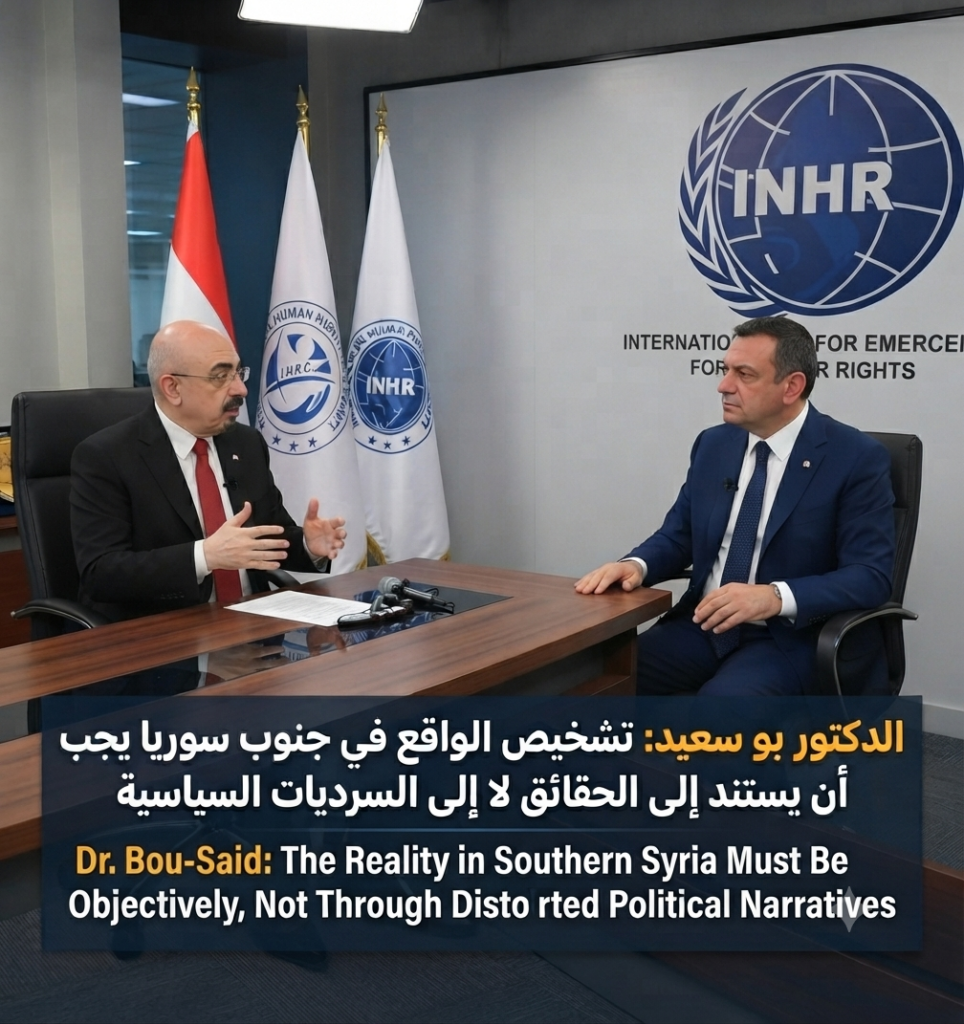
الدكتور بو سعيد: تشخيص الواقع في جنوب سوريا يجب أن يستند إلى الحقائق لا إلى السرديات السياسية
Dr. Bou-Said: The Reality in Southern Syria Must Be Assessed Objectively, Not Through Distorted Political Narratives
رأى الممثل الأعلى للشؤون الخارجية للمجلس الدولي لحقوق الإنسان (IHRC) المعتمد بصفة استشارية خاصة لدى المجلس الاقتصادي والاجتماعي للأمم المتحدة (ECOSOC)، ورئيس بعثتها إلى جنيف، الدكتور هيثم بو سعيد، أن أي مقاربة جدية للأوضاع في جنوب سوريا يجب أن تنطلق من تشخيص واقعي ودقيق للحقائق الميدانية، بعيدًا عن التزييف الإعلامي أو توظيف الوقائع لخدمة أجندات سياسية.
وأكد أن الادعاءات التي تفيد بأن الغالبية الساحقة من أهالي محافظة السويداء ترفض بشكل قاطع أي شكل من أشكال الحماية الدولية، وتؤكد في الوقت نفسه تمسكها بالبقاء ضمن وحدة الأراضي السورية تحت سلطة الإدارة المؤقتة في دمشق، لا تعكس – بحسب ما أفاد – الواقع الشعبي بصورة دقيقة. وأضاف أن جزءًا من البيانات والتقارير المتداولة في بعض المنصات الإعلامية العربية يقدم صورة أحادية لا تستند، من وجهة نظره، إلى قراءة ميدانية شاملة، بل يسهم في تكوين انطباعات سياسية لا تعبّر بالضرورة عن مختلف الآراء الموجودة على الأرض.
وفي هذا السياق، أشار الدكتور بو سعيد إلى أن هذه المسألة كانت محور نقاش مع مدير وكالة الأنباء الدولية لحقوق الإنسان في الجزائر، السيد محمد آتشي، حيث جرى التأكيد على أن معالجة الأزمة السورية تتطلب حلولًا سياسية وقانونية تستند إلى مبادئ القانون الدولي وحقوق الإنسان، بعيدًا عن أي مقاربات تقوم على فرض رؤى دينية أو أيديولوجية على مختلف مكونات المجتمع السوري.
وشدد على أن احترام التعددية الدينية والثقافية والقومية، وصون الحقوق والحريات الأساسية لجميع المواطنين دون تمييز، يمثلان ركيزة أساسية لأي تسوية مستدامة، انسجامًا مع مبادئ الشرعية الدولية والقانون الدولي لحقوق الإنسان.
وختم الدكتور بو سعيد بالتأكيد على أن الأزمة الحقيقية تكمن في غياب مقاربات واقعية وشاملة تعالج جذور النزاع وتحترم إرادة السكان وحقوقهم، داعيًا المجتمع الدولي والجهات المعنية إلى اعتماد خطاب مسؤول يستند إلى الوقائع الميدانية، بما يسهم في تعزيز فرص الاستقرار والسلام في سوريا.
Dr. Bou-Said: The Reality in Southern Syria Must Be Assessed Objectively, Not Through Distorted Political Narratives
Dr. Haissam Bou-Said, High Representative for Foreign Affairs of the International Human Rights Council (IHRC), accredited with the United Nations Economic and Social Council (ECOSOC) under Special Consultative Status, and Head of the IHRC Mission to Geneva, stated that any serious assessment of the situation in southern Syria must be based on an objective reading of the facts on the ground rather than on political narratives or manipulated media reporting.
Dr. Bou-Said stressed that claims suggesting the overwhelming majority of the population of As-Suwayda categorically rejects any form of international protection while simultaneously affirming unconditional support for remaining under the authority of the Interim Administration in Damascus do not, in his assessment, accurately reflect the diversity of public opinion within the governorate.
He further noted that a number of reports circulated by certain Arab media outlets present a selective narrative aimed at creating a political perception that is not necessarily supported by the realities observed among the local population. According to Dr. Bou-Said, any credible analysis must acknowledge the plurality of views that exist within the community instead of presenting a single, generalized position.
In this context, Dr. Bou-Said referred to his discussion with Mr. Mohamed Atchi, Director of the International News Agency for Human Rights (INHR) in Algeria, during which both emphasized that the ongoing Syrian conflict requires rational political and legal solutions grounded in international law and international human rights standards. They underlined that attempts to impose religious or ideological approaches on all components of Syrian society are incompatible with the principles of equality, non-discrimination, and respect for diversity enshrined in international law.
Dr. Bou-Said reaffirmed that protecting the rights of all communities without distinction, preserving religious, cultural, and ethnic diversity, and ensuring equal protection under the law remain essential foundations for any sustainable political settlement in Syria.
He concluded by stating that the current crisis lies not with the people of southern Syria, but with the absence of realistic, inclusive, and rights-based approaches capable of addressing the root causes of the conflict. He called upon the international community and all relevant stakeholders to adopt responsible, fact-based policies that genuinely reflect the aspirations and rights of the local population and contribute to lasting peace and stability throughout Syria.
Leave a Reply