
Bou-Said: I Never Defended Hamas and We Documented Violations Against Civilians in Gaza
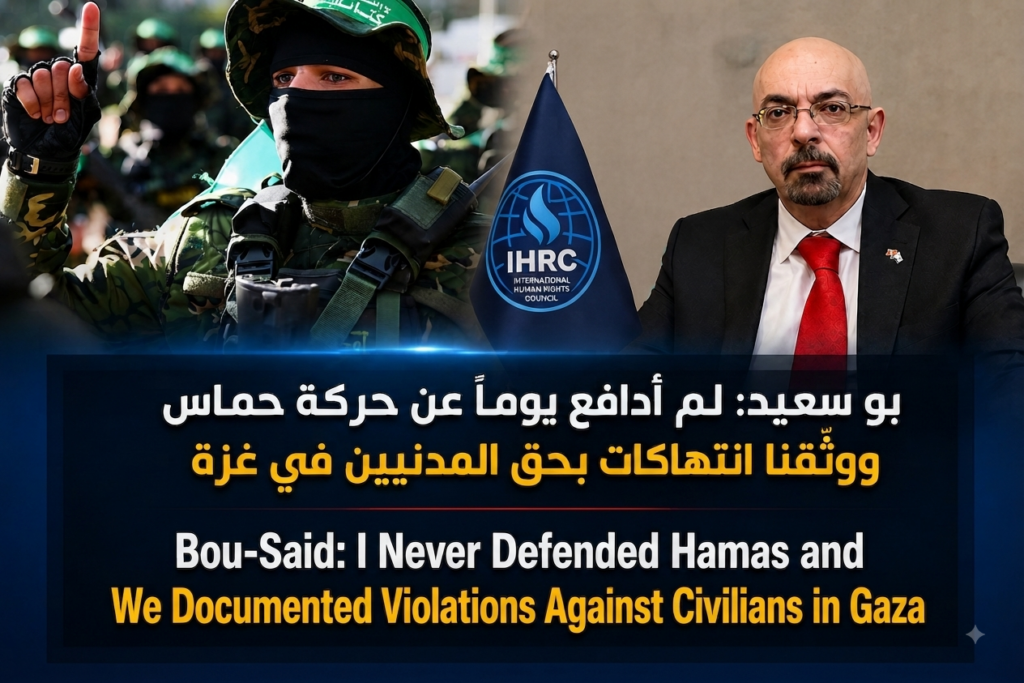
أكد الممثل الأعلى للشؤون الخارجية للمجلس الدولي لحقوق الإنسان (IHRC)، المعتمد بصفة خاصة لدى المجلس الاقتصادي والاجتماعي للأمم المتحدة (ECOSOC)، ورئيس بعثة المجلس إلى جنيف، الدكتور هيثم بو سعيد، أنه لم يدافع إطلاقاً عن حركة حماس خلال مداخلاته ولقاءاته الإعلامية التي أعقبت أحداث 7 أكتوبر 2023، مشيراً إلى أنه أوضح هذا الموقف بصورة صريحة في عدد من المقابلات التلفزيونية التي أجراها آنذاك.
وقال بو سعيد، في مداخلة مع وكالة الأنباء الدولية لحقوق الإنسان (INHR)، إن موقف المجلس الدولي لحقوق الإنسان انطلق ولا يزال من مبدأ أساسي يتمثل في رفض الانتهاكات أياً كان مرتكبها، وعدم منح أي طرف حصانة من المساءلة بسبب انتمائه السياسي أو العسكري.
وأضاف أن المجلس وثّق، وفق ما خلصت إليه أعماله ومتابعاته، جملة من الانتهاكات والممارسات القمعية المنسوبة إلى أجهزة أمنية وفصائل مرتبطة بحركة حماس في قطاع غزة، والتي طالت مدنيين فلسطينيين، مشيراً إلى أن من بين الملفات التي جرى تناولها القتل خارج نطاق القضاء أو الإعدامات الميدانية، والتعذيب وسوء المعاملة، وقمع الاحتجاجات الشعبية، والاعتقالات التعسفية، وممارسات استهدفت معارضين وناشطين سياسيين.
وشدد بو سعيد على أن الدفاع عن حقوق الإنسان لا يمكن أن يكون انتقائياً، مؤكداً أن حقوق المدنيين الفلسطينيين لا تتجزأ، وأن الانتهاكات المرتكبة بحقهم يجب أن تخضع للتحقيق والمساءلة بصرف النظر عن الجهة التي تقف وراءها.
وأشار إلى أن الموقف الحقوقي للمجلس يقوم على ضرورة محاسبة جميع الأطراف التي يثبت تورطها في انتهاكات للقانون الدولي والقانون الدولي الإنساني، سواء كانت جهات حكومية أو جماعات مسلحة أو أفراداً، باعتبار أن العدالة الحقيقية لا تتحقق إلا من خلال الموضوعية وعدم الانتقائية.
ويأتي هذا الموقف منسجماً مع تصريحات سابقة منسوبة إلى بو سعيد شدد فيها على ضرورة محاسبة جميع الأطراف التي ترتكب جرائم بحق الأبرياء دون انتقائية، وعلى أن العدالة يجب أن تكون شاملة وموضوعية.
كما سبق أن تناول بو سعيد في تصريحات منشورة قضايا حماية المدنيين والمواقع المدنية أثناء النزاعات المسلحة، مستنداً إلى قواعد القانون الدولي الإنساني واتفاقيات جنيف.
Dr. Haissam Bou-Said, High Representative for External Affairs of the International Human Rights Council (IHRC), holding Special Consultative Status with the United Nations Economic and Social Council (ECOSOC), and Head of the IHRC Mission to Geneva, affirmed that he never defended Hamas during his media appearances and interviews following the events of October 7, 2023.
He stressed that this position was clearly expressed in several televised interviews and media interventions at the time, emphasizing that his approach was based strictly on human rights principles and the protection of civilians, regardless of the identity or affiliation of the party responsible.
In a statement to the International News Agency for Human Rights (INHR), Dr. Bou-Said said that the International Human Rights Council has documented a number of alleged violations and repressive practices attributed to security bodies and factions affiliated with Hamas against Palestinian civilians in the Gaza Strip.
According to the documentation and monitoring undertaken by the Council, these allegations included extrajudicial killings or field executions, torture and ill-treatment of political opponents, suppression of public protests, and arbitrary arrests.
Dr. Bou-Said stressed that defending human rights cannot be selective, stating that the rights of Palestinian civilians are indivisible and that violations committed against them must be investigated and addressed regardless of the identity of those responsible.
He further emphasized that the Council’s position is based on the principle of accountability for all parties allegedly involved in violations of international law and international humanitarian law, whether governmental authorities, armed groups, or individuals.
“Human rights cannot be defended selectively,” Bou-Said stated, stressing that genuine justice requires objectivity, impartiality and accountability without political or ideological considerations.
He concluded by reaffirming that the IHRC’s approach is centered on the protection of civilians and the documentation of alleged violations committed by all sides, with the ultimate objective of ensuring accountability and respect for international human rights and humanitarian law.
Leave a Reply