
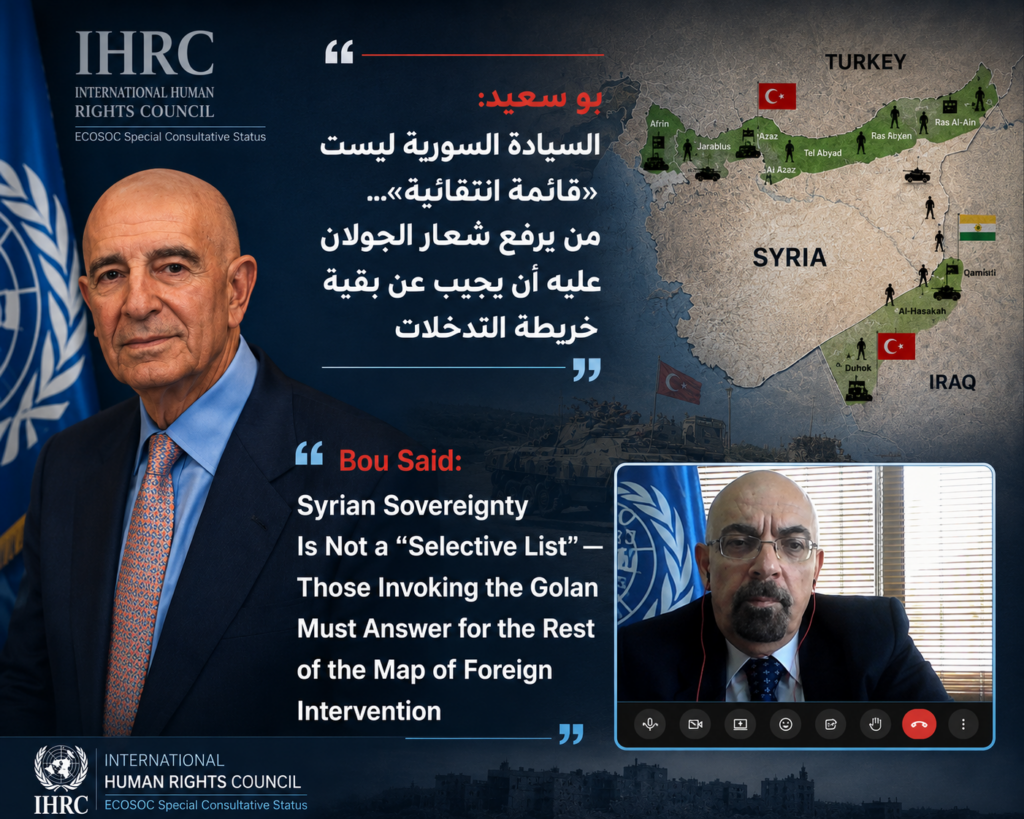
بو سعيد: السيادة السورية ليست «قائمة انتقائية»… من يرفع شعار الجولان عليه أن يجيب عن بقية خريطة التدخلات
Bou Said: Syrian Sovereignty Is Not a “Selective List” — Those Invoking the Golan Must Answer for the Rest of the Map of Foreign Intervention
اعتبر الممثل الأعلى للشؤون الخارجية للمجلس الدولي لحقوق الإنسان (IHRC)، المعتمد من الأمم المتحدة بصفة خاصة لدى المجلس الاقتصادي والاجتماعي (ECOSOC)، ورئيس بعثته إلى جنيف، الدكتور هيثم بو سعيد في مداخلة هذا المساء لوكالة الأنباء الدولية لحقوق الإنسان، أن التصريحات الأحادية الجانب المتعلقة بالسيادة السورية، ولا سيما ما صدر عن المبعوث الأميركي إلى سوريا توم برّاك، لا يمكن فصلها عن مجمل الوقائع الميدانية والإقليمية التي تمس وحدة الأراضي السورية وسيادتها.
وقال بو سعيد إن الحديث عن السيادة السورية، إذا كان قائماً على مبدأ ثابت وليس على مقاربة انتقائية، يفترض النظر إلى جميع حالات الوجود والتدخل العسكري الأجنبي داخل الأراضي السورية، وعدم التعامل مع ملف الجولان بمعزل عن بقية الأراضي السورية التي شهدت تدخلاً أو وجوداً عسكرياً خارجياً.
وأضاف: «إذا كان الحرص على السيادة السورية هو المبدأ الذي يحكم المواقف الدولية، فمن الضروري أن تكون المقاربة شاملة ومتوازنة، وأن تشمل جميع الأراضي السورية، لا أن تقتصر على ملف واحد بينما يتم تجاهل وقائع أخرى قائمة على الأرض».
وأشار بو سعيد إلى الوجود العسكري التركي في شمال سوريا، حيث تسيطر القوات التركية وفصائل سورية حليفة لها على مناطق واسعة، ولا سيما في عفرين وجرابلس والباب وأعزاز وتل أبيض ورأس العين، في إطار عمليات عسكرية وتدابير أمنية تقول أنقرة إنها تستهدف حماية أمنها القومي ومنع التهديدات القادمة من التنظيمات الكردية المسلحة على حدودها.
وأوضح أن إنشاء مناطق النفوذ الممتدة من عفرين وشمال حلب باتجاه تل أبيض ورأس العين ارتبط، في جانب أساسي منه، بهدف إبعاد وحدات حماية الشعب الكردية عن الحدود التركية ومنع قيام كيان كردي مستقل بمحاذاة الحدود، فيما نشأت في أجزاء من تلك المناطق هياكل إدارية وأمنية ومحلية مرتبطة بدرجات متفاوتة بالجانب التركي.
وتابع بو سعيد أن المشهد لا يقتصر على سوريا، إذ إن تركيا تحتفظ أيضاً بوجود عسكري واسع داخل إقليم كردستان العراق، مع انتشار قواعد ونقاط عسكرية في مناطق جبلية، وخصوصاً في محافظتي دهوك وأربيل ومناطق متاخمة لجبال قنديل ومتينا، فضلاً عن تنفيذ عمليات برية وجوية وقصف مدفعي تقول أنقرة إنه يستهدف مواقع حزب العمال الكردستاني (PKK)، الذي تصنفه تركيا منظمة إرهابية.
وأكد أن «الغاية من هذه المقاربة ليست تبرير أي تدخل عسكري أو التقليل من خطورة أي انتهاك للسيادة، بل التأكيد على ضرورة تطبيق معيار واحد على الجميع».
وأضاف: «لا يمكن أن تكون السيادة السورية مبدأً مقدساً في منطقة، ومبدأً قابلاً للتأويل أو التجزئة في منطقة أخرى. السيادة، وفق قواعد القانون الدولي، إما أن تكون مبدأً عاماً يحترم على كامل الإقليم، أو تتحول إلى شعار سياسي انتقائي».
وختم بو سعيد بالتأكيد أن قضية الجولان تبقى قضية مرتبطة بالقانون الدولي وبوضع الأراضي السورية المحتلة، ولابوضع المستجد بعد وجود قوات تكفيرية مستجدة على الساحة السورية تهدد كل المكونات السورية بالوجود، إلا أن معالجة هذا الملف لا ينبغي أن تتحول إلى غطاء لتجاهل بقية مظاهر التدخل والوجود العسكري الأجنبي على الأراضي السورية.
وقال: «المطلوب اليوم ليس انتقاء جزء من الخريطة السورية، بل قراءة الخريطة كاملة؛ وليس إصدار أحكام سياسية متفرقة، بل اعتماد معيار قانوني واحد يحمي سيادة الدول ووحدة أراضيها دون استثناء».
The High Representative for External Affairs of the International Human Rights Council (IHRC), accredited by the United Nations specifically to the Economic and Social Council (ECOSOC), and head of its mission to Geneva, Dr. Haissam Bou Said, stated in an interview this evening with the International Human Rights News Agency that unilateral statements concerning Syrian sovereignty, particularly those issued by the US Special Envoy to Syria, Tom Barrack, cannot be separated from the overall field and regional realities affecting Syria’s territorial integrity and sovereignty.
Bou Said said that discussions about Syrian sovereignty, if based on a consistent principle and not a selective approach, necessitate considering all instances of foreign military presence and intervention within Syrian territory, and not addressing the Golan Heights issue in isolation from the rest of the Syrian territories that have witnessed foreign military intervention or presence.
He added: “If respect for Syrian sovereignty is the principle governing international positions, then the approach must be comprehensive and balanced, encompassing all Syrian territory, not limited to one issue while ignoring other realities on the ground.”
Bou Said pointed to the Turkish military presence in northern Syria, where Turkish forces and allied Syrian factions control vast areas, particularly in Afrin, Jarabulus, al-Bab, Azaz, Tal Abyad, and Ras al-Ayn. This presence is part of military operations and security measures that Ankara claims are aimed at protecting its national security and preventing threats emanating from Kurdish armed groups along its borders.
He explained that the establishment of these zones of influence, stretching from Afrin and northern Aleppo towards Tal Abyad and Ras al-Ayn, was primarily intended to push the Kurdish People’s Protection Units (YPG) away from the Turkish border and prevent the establishment of an independent Kurdish entity along the border. Meanwhile, administrative, security, and local structures have emerged in parts of these areas, linked to varying degrees to the Turkish side.
Bou Said continued, noting that the situation is not limited to Syria. Turkey also maintains a significant military presence within Iraqi Kurdistan, with bases and military outposts scattered throughout mountainous regions, particularly in the governorates of Dohuk and Erbil, and areas adjacent to the Qandil and Metina mountains. Furthermore, Ankara conducts ground and air operations, as well as artillery bombardments, which it claims target positions of the Kurdistan Workers’ Party (PKK), designated a terrorist organization by Turkey.
He emphasized that “the aim of this approach is not to justify any military intervention or to downplay the seriousness of any violation of sovereignty, but rather to stress the necessity of applying a single standard to all.”
He added, “Syrian sovereignty cannot be a sacred principle in one region and a principle open to interpretation or division in another. According to the rules of international law, sovereignty is either a general principle respected throughout the entire territory, or it becomes a selective political slogan.”
Bou Said concluded by emphasizing that the Golan Heights issue remains linked to international law and the status of the occupied Syrian territories, as well as the new situation following the emergence of extremist forces on the Syrian scene that threaten the very existence of all Syrian communities. However, addressing this issue should not become a cover for ignoring other forms of foreign intervention and military presence on Syrian soil.
He said: “What is required today is not to select a part of the Syrian map, but to read the entire map; not to issue isolated political judgments, but to adopt a single legal standard that protects the sovereignty and territorial integrity of states without exception.”
Leave a Reply