
Bou Said Warns: Two States Could Face Rising Internal Unrest and Escalating Protest Demands
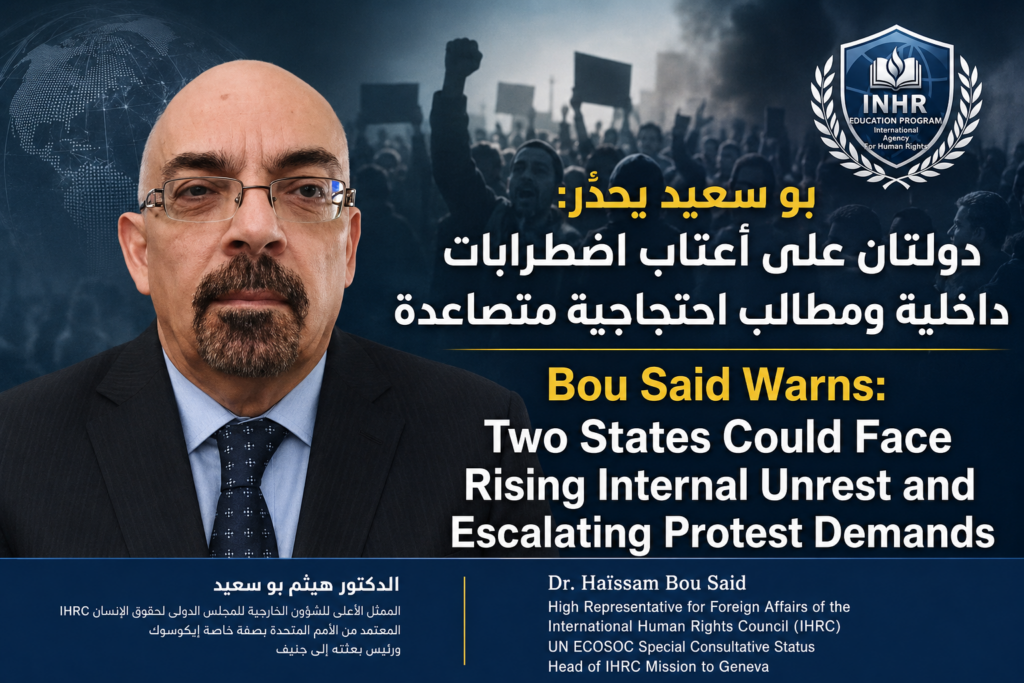
بو سعيد يحذّر: دولتان على أعتاب اضطرابات داخلية ومطالب احتجاجية متصاعدة
Bou Said Warns: Two States Could Face Rising Internal Unrest and Escalating Protest Demands
رأى الممثل الأعلى للشؤون الخارجية للمجلس الدولي لحقوق الإنسان (IHRC)، المعتمد بصفة خاصة لدى المجلس الاقتصادي والاجتماعي للأمم المتحدة (ECOSOC)، ورئيس بعثته إلى جنيف، الدكتور هيثم بو سعيد، أن المعلومات المتقاطعة التي ترد إلى مكتبه تشير إلى أن دولتين قد تشهدان خلال الأيام المقبلة تصاعدًا ملحوظًا في الاضطرابات الداخلية والمطالب الاحتجاجية.
وأوضح بو سعيد أن المعطيات المتوفرة لدى مكتبه تشير إلى أن وتيرة الاحتجاجات قد تتزايد تدريجيًا، في ظل تحركات يُعتقد أنها تهدف إلى ممارسة ضغوط سياسية متصاعدة على السلطات القائمة، ودفعها نحو تبني خيارات سياسية أو أنماط حكم مغايرة للنهج المتبع حاليًا.
وأضاف أن المشهد، في حال تأكدت هذه المؤشرات على أرض الواقع، قد لا يكون محصورًا في مطالب اجتماعية أو اقتصادية داخلية، بل قد يتخذ أبعادًا سياسية أوسع، خصوصًا إذا ترافقت الاحتجاجات مع تدخلات أو ضغوط خارجية تسعى إلى التأثير في مسار الأحداث.
وشدد بو سعيد على ضرورة التعامل مع هذه المعلومات بحذر ومسؤولية، وعدم استباق الوقائع أو تحويل المؤشرات الأمنية والسياسية إلى أحكام نهائية، داعيًا في الوقت نفسه السلطات المعنية إلى اعتماد الحوار وفتح قنوات تواصل حقيقية مع المطالب الشعبية، بما يحول دون انتقال الاحتجاجات السلمية إلى حالة من عدم الاستقرار الداخلي.
وأكد أن حماية المدنيين، واحترام الحق في التعبير والتجمع السلمي، والحفاظ على الاستقرار الداخلي، يجب أن تشكل أولويات أساسية في مواجهة أي مرحلة اضطراب سياسي، محذرًا من أن استغلال المطالب الشعبية المشروعة كأداة لإعادة تشكيل الأنظمة السياسية قد يؤدي إلى نتائج تتجاوز أهداف الاحتجاجات نفسها.
ويأتي هذا التحذير في سياق مواقف سابقة للدكتور بو سعيد شدد فيها على ضرورة قراءة التطورات الإقليمية من خلال الوقائع الميدانية، بعيدًا عن السرديات السياسية الانتقائية، وعلى أهمية اعتماد مقاربات تستند إلى القانون الدولي وحقوق الإنسان.
Dr. Haïssam Bou Said, High Representative for External Affairs of the International Human Rights Council (IHRC), holding special consultative status with the United Nations Economic and Social Council (ECOSOC), and Head of its Mission to Geneva, stated that cross-checked information received by his office indicates that two states could witness, in the coming days, a noticeable escalation in internal unrest and growing protest demands.
According to Dr. Bou Said, the information available to his office points to a possible gradual increase in the intensity of demonstrations, amid moves that appear aimed at exerting mounting political pressure on the authorities and pushing them toward adopting political options or forms of governance different from those currently pursued within their societies.
He stressed that, should these indicators materialize, the developments may extend beyond purely social or economic demands and acquire broader political dimensions, particularly if the protests become accompanied by external interventions or pressures seeking to influence the course of events.
Dr. Bou Said emphasized that such information must be handled with caution and responsibility, warning against treating preliminary indicators as established facts. At the same time, he called on the concerned authorities to pursue dialogue and establish genuine channels of communication with legitimate popular demands in order to prevent peaceful protests from developing into broader internal instability.
He further stressed that the protection of civilians, respect for the rights to freedom of expression and peaceful assembly, and the preservation of internal stability must remain fundamental priorities in confronting any period of political unrest.
Dr. Bou Said also warned that the exploitation of legitimate popular grievances as a tool for reshaping political systems could ultimately produce consequences extending far beyond the original objectives of the protests.
The warning comes within the broader framework of Dr. Bou Said’s positions calling for regional developments to be assessed through verified facts and field-based indicators, rather than selective political narratives, while emphasizing the importance of approaches grounded in international law and human rights.
Leave a Reply