
Abu Shukair: The Civil State Protects the Individual, Holds the Corrupt Accountable, and Restores Authority to Institutions
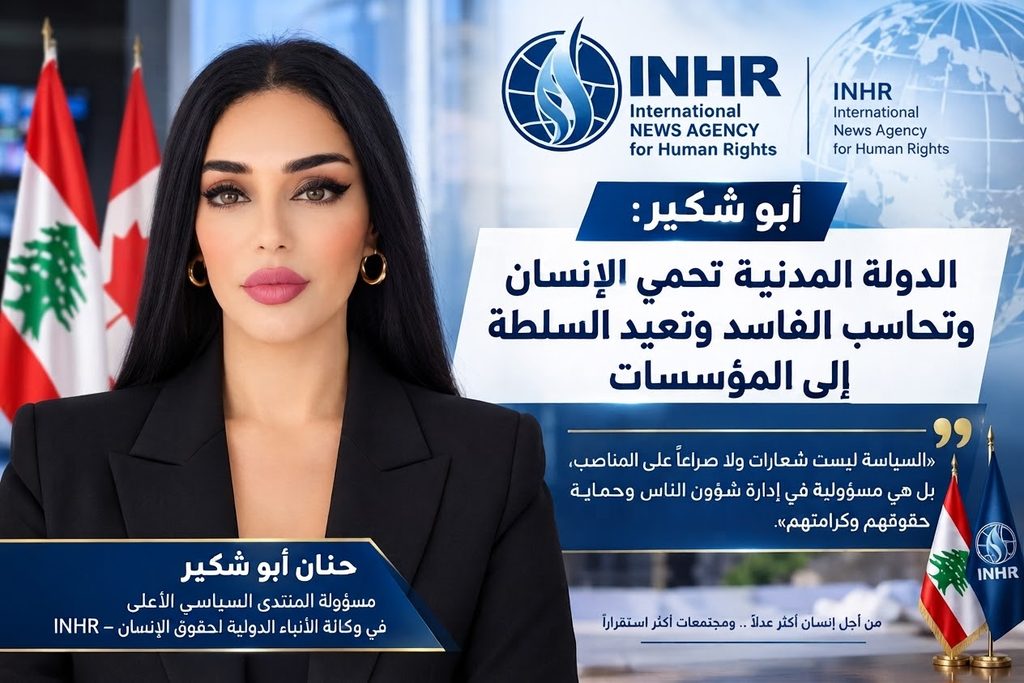
أبو شُكير: الدولة المدنية تحمي الإنسان وتحاسب الفاسد وتعيد السلطة إلى المؤسسات
Abu Shukair: The Civil State Protects the Individual, Holds the Corrupt Accountable, and Restores Authority to Institutions
في أول تعليق لها عقب تعيينها مسؤولة عن المنتدى السياسي الأعلى في وكالة الأنباء الدولية لحقوق الإنسان – INHR، عرضت السيدة حنان أبو شُكير رؤيتها للدولة والمجتمع، مؤكدة أن بناء الدولة يبدأ من الإنسان، وأن الدولة المدنية الحقيقية هي التي تحمي حقوق مواطنيها، وتصون كرامتهم، وتخضع مؤسساتها للمساءلة، وتحاسب كل من يعتدي على المال العام أو يستغل السلطة لمصالح شخصية أو فئوية.
وأكدت أبو شُكير أن السياسة، في مفهومها، «ليست شعارات ولا صراعًا على المناصب، بل مسؤولية في إدارة شؤون الناس وحماية حقوقهم وكرامتهم». ورأت أن الدولة التي ينبغي العمل من أجلها ليست دولة غائبة تترك المواطن في مواجهة أزماته وحده، كما أنها ليست دولة تتدخل في كل تفاصيل حياته، وإنما دولة قوية بمؤسساتها، عادلة بقوانينها، واضحة في مسؤولياتها، وخاضعة للمساءلة والمحاسبة.
المال العام مسؤولية وطنية لا امتياز للسلطة
وشددت أبو شُكير على أن الدولة مطالبة بالحضور الفاعل والحازم عندما يتعلق الأمر بالمال العام، معتبرة أن بناء دولة حقيقية لا يمكن أن يتحقق في ظل الهدر والفساد وغياب الرقابة.
وأكدت ضرورة وجود أجهزة رقابية مستقلة وفعالة، وإرساء آليات واضحة لتدقيق حسابات المؤسسات العامة، وتعزيز الشفافية في الإنفاق، ومحاسبة كل من يثبت تورطه في الفساد، بصرف النظر عن موقعه أو نفوذه أو انتمائه السياسي أو الطائفي.
وقالت إن المال العام «ليس ملكًا للسلطة، بل هو حق للمواطنين»، وبالتالي فإن الاعتداء عليه لا ينبغي أن يُعامل باعتباره مخالفة إدارية عابرة، بل باعتباره اعتداءً على حقوق المجتمع وعلى فرص المواطنين في الحصول على الخدمات والتنمية والعدالة الاجتماعية.
التعليم استثمار في الإنسان وليس امتيازًا اجتماعيًا
وفي الملف التعليمي، اعتبرت أبو شُكير أن الدولة تتحمل مسؤولية أساسية لا يجوز لها التخلي عنها، مؤكدة أن التعليم ليس سلعة ولا امتيازًا محصورًا بفئة اجتماعية معينة، وإنما هو أحد أهم الأسس التي يُبنى عليها المجتمع والدولة.
ودعت إلى دعم القطاع التعليمي وتطوير المؤسسات التعليمية، بالتوازي مع تطبيق معايير صارمة للشفافية والرقابة المالية والإدارية، والتأكد من أن الأموال المرصودة للتعليم تصل إلى أهدافها الفعلية وتنعكس بصورة مباشرة على الطالب والمعلم والمؤسسة التعليمية.
وأكدت أن إصلاح التعليم لا يقتصر على زيادة الموازنات، بل يحتاج أيضًا إلى إدارة رشيدة، ومساءلة، وتقييم مستمر للنتائج، وربط الإنفاق العام بتحسين نوعية التعليم والفرص المتاحة أمام الأجيال الجديدة.
اقتصاد قائم على الكفاءة وتكافؤ الفرص
وعلى المستوى الاقتصادي، أكدت أبو شُكير إيمانها بضرورة منح الإنسان مساحة حقيقية للعمل والتقدم وفق كفاءته واجتهاده، بعيدًا عن المحسوبيات والواسطة والانتماءات السياسية أو الطائفية.
وترى أن المواطن يجب أن يكون قادرًا على النجاح نتيجة قدرته وعمله وإنتاجيته، لا نتيجة علاقاته أو انتمائه.
وفي المقابل، شددت على أن الحرية الاقتصادية لا تعني غياب الدولة، بل تتطلب وجود قوانين عادلة تمنع الاحتكار والاستغلال والفساد، وتحمي المنافسة، وتضمن تكافؤ الفرص، وتوفر بيئة اقتصادية يستطيع فيها الفرد والمؤسسة أن يعملا ضمن قواعد واضحة ومستقرة.
حرية الإعلام لا تنفصل عن المسؤولية
وفي ما يتعلق بالإعلام ووسائل التواصل الاجتماعي، أكدت أبو شُكير تمسكها بحرية الرأي والتعبير، معتبرة أنها من الركائز الأساسية لأي مجتمع ديمقراطي.
إلا أنها شددت في الوقت نفسه على أن الحرية لا تعني منح الحق في نشر المعلومات المزورة أو التشهير أو استهداف الأفراد، ولا تسمح بإنتاج محتوى يعرّض الأطفال للخطر أو يسهّل استغلالهم أو يسبب لهم أذى نفسيًا أو اجتماعيًا أو إلكترونيًا.
ورأت ضرورة وجود إطار قانوني واضح ومتوازن لمواجهة الأخبار الكاذبة والمحتوى الضار وحماية الأطفال من الاستغلال الإلكتروني، مع التأكيد على أن هذه الأطر يجب ألا تتحول إلى أدوات لقمع الرأي المختلف أو منع النقد المشروع أو تقييد حرية التعبير.
دولة مدنية ومواطنة تتجاوز الانتماءات الطائفية
وفي رؤيتها لطبيعة الدولة، أعلنت أبو شُكير بوضوح تأييدها لفصل الدين عن إدارة الدولة والتشريع السياسي، موضحة أن الدين بالنسبة إلى الإنسان يمثل مسألة إيمان وقناعة شخصية يجب احترامها، بينما يجب أن تتعامل مؤسسات الدولة وقوانينها مع جميع المواطنين على أساس المساواة في الحقوق والواجبات.
ومن هذا المنطلق، أكدت تأييدها لإلغاء الطائفية السياسية في لبنان، والانتقال إلى دولة مدنية يكون فيها المواطن مواطنًا أولًا، قبل أي انتماء سياسي أو طائفي أو مذهبي.
كما أيدت إقرار الزواج المدني في لبنان، معتبرة أن من حق المواطن اختيار شكل حياته وعلاقته الزوجية ضمن إطار قانوني يحفظ حقوق الطرفين، من دون فرض انتماء ديني أو طائفي على هذا الخيار.
توزيع السلطة وتعزيز اللامركزية
وفي شكل الحكم، أكدت أبو شُكير أنها لا ترى أن تركيز السلطة في يد جهة واحدة يخدم المجتمع، مفضلة توزيع الصلاحيات بين مؤسسات متعددة، مع قيام نظام رقابة متبادلة يمنع احتكار القرار ويعزز المساءلة.
وأعطت أهمية خاصة للبلديات باعتبارها المؤسسة الأقرب إلى حياة المواطنين اليومية، مشيرة إلى أن البلدية تعرف احتياجات منطقتها وشوارعها وعائلاتها ومشكلاتها بصورة أكثر مباشرة من الإدارة المركزية البعيدة.
وترى أن تعزيز اللامركزية الإدارية ومنح البلديات صلاحيات وإمكانات أكبر، بالتوازي مع إخضاعها لمعايير الشفافية والمحاسبة، يمكن أن يجعل الإدارة العامة أكثر قربًا من المواطن وأكثر قدرة على الاستجابة لحاجاته.
تمثيل سياسي أكثر مباشرة
وفي ما يتعلق بالنظام الانتخابي، أشارت أبو شُكير إلى ميلها نحو الدائرة الفردية باعتبارها صيغة يمكن أن تجعل العلاقة بين الناخب وممثله أكثر مباشرة، وتتيح للمواطن معرفة من يمثله ومن ينبغي أن يحاسبه على أدائه.
وأكدت أن جوهر العملية الانتخابية لا ينبغي أن يكون مجرد الوصول إلى السلطة، بل إنشاء علاقة واضحة بين المسؤولية والتمثيل والمحاسبة.
حقوق الإنسان تبدأ من كرامة الإنسان
وأكدت أبو شُكير أن حقوق الإنسان ليست ملفًا ثانويًا أو عنوانًا للاستخدام السياسي، بل هي أساس الدولة والمجتمع.
وترى أن لكل إنسان الحق في العيش بكرامة وأمان، وأن معالجة الفقر والتهميش لا يمكن أن تتم عبر تجاهل الأشخاص الذين يظهرون في الشوارع أو التعامل معهم باعتبارهم مجرد مشكلة أمنية.
ودعت إلى معالجة جذور الفقر والتسول من خلال الحماية الاجتماعية، والتعليم، وفرص العمل، وإعادة التأهيل، والسياسات الاجتماعية المستدامة، بالتوازي مع مواجهة الجهات التي تستغل الأطفال والمحتاجين ضمن شبكات التسول والاستغلال.
وأكدت أن كرامة الإنسان يجب أن تكون نقطة البداية في أي سياسة اجتماعية أو أمنية، وأن حماية الفئات الأكثر ضعفًا مسؤولية مباشرة على الدولة والمجتمع.
سياسة خارجية تحمي القرار الوطني وتدافع عن حقوق الإنسان
وفي السياسة الخارجية، أقرت أبو شُكير بأن الدول تتعرض بطبيعتها للمصالح والضغوط والتدخلات الخارجية، إلا أن المسؤولية الأساسية تقع على من يدير الدولة في حماية مؤسساتها ومصالح شعبها وصيانة قرارها الوطني.
ودعت إلى بناء علاقات دولية متوازنة لا تجعل القرار الوطني تابعًا لأي جهة خارجية، مع الانفتاح على التعاون الدولي القائم على المصالح المشتركة والاحترام المتبادل.
وفي الوقت نفسه، شددت على ضرورة أن تكون للدولة مواقف واضحة من القضايا الدولية عندما يتعلق الأمر بحقوق الإنسان، مؤكدة أن حقوق الإنسان لا يجوز أن تتحول إلى موقف انتقائي يتغير تبعًا للمصالح السياسية.
وأضافت أن المعيار يجب أن يكون واحدًا: حماية الإنسان وكرامته ورفض الانتهاكات، أياً كانت هوية مرتكبها وأيًا كانت هوية الضحية.
الدولة التي نريدها: القانون فوق الجميع
وفي ختام رؤيتها، أكدت أبو شُكير أن الدولة التي تطمح إليها هي دولة مدنية، لا طائفية، تحارب الفساد والفقر، وتحمي الحريات وحقوق الإنسان، وتكافئ الإنسان على كفاءته، وتعيد السلطة إلى المؤسسات بدل الأشخاص.
وقالت إن الدولة الحقيقية هي التي يكون القانون فيها فوق الجميع، ويستطيع المواطن فيها أن يحاسب ممثليه، وأن يشعر بأن مؤسسات الدولة موجودة لخدمته وحماية حقوقه، لا للسيطرة عليه.
وختمت بالقول:
«لا أبحث عن دولة أكثر سلطة، بل عن دولة أكثر عدلًا، وأكثر شفافية، وأكثر احترامًا للإنسان.»
وترى وكالة الأنباء الدولية لحقوق الإنسان – INHR أن هذه الرؤية تندرج ضمن أهمية فتح النقاش العام حول مستقبل الدولة والمجتمع، ودور المؤسسات، ومفهوم المواطنة، وحقوق الإنسان، والإصلاح الإداري والسياسي، بما يعزز ثقافة المساءلة ويضع الإنسان وكرامته في صميم السياسات العامة.
In her first statement following her appointment as head of the High-Level Political Forum at the International News Agency for Human Rights (INHR), Ms. Hanan Abu Shukair outlined her vision for the state and society. She emphasized that state-building begins with the individual and that a true civil state is one that protects citizens’ rights, upholds their dignity, subjects its institutions to oversight, and holds accountable anyone who misappropriates public funds or exploits power for personal or factional gain.
Abu Shukair asserted that politics, in its true sense, “is neither about slogans nor a struggle for positions; rather, it is a responsibility to manage people’s affairs and protect their rights and dignity.” She argued that the state we should strive for is neither an absent state that leaves citizens to face crises alone, nor one that interferes in every detail of their lives; instead, it is a state strong in its institutions, just in its laws, clear in its responsibilities, and subject to accountability.
Public Funds: A National Responsibility, Not a Privilege of Power
Abu Shukair emphasized that the state must maintain an active and firm presence regarding public funds, noting that building a genuine state cannot be achieved amidst waste, corruption, and a lack of oversight. She emphasized the necessity of having independent and effective oversight bodies, establishing clear mechanisms for auditing public institutions’ accounts, enhancing spending transparency, and holding accountable anyone proven to be involved in corruption—regardless of their position, influence, or political or sectarian affiliation.
She stated that public funds “do not belong to the authorities but are a right of the citizens.” Consequently, the misappropriation of these funds should not be treated as a mere administrative infraction, but rather as an infringement upon society’s rights and citizens’ access to services, development, and social justice.
Education is an investment in people, not a social privilege.
Regarding the education sector, Abu Shukair maintained that the state bears a fundamental responsibility it cannot abdicate. She stressed that education is neither a commodity nor a privilege reserved for a specific social class; rather, it is one of the essential pillars upon which both society and the state are built.
She called for supporting the education sector and developing educational institutions, alongside implementing rigorous standards for transparency and financial and administrative oversight. She also urged ensuring that funds allocated for education reach their intended targets and directly benefit students, teachers, and educational institutions.
She emphasized that education reform goes beyond merely increasing budgets; it requires sound management, accountability, continuous evaluation of outcomes, and a link between public spending and improvements in the quality of education and the opportunities available to new generations. An Economy Based on Competence and Equal Opportunity
On the economic front, Abu Shukair affirmed her belief in the necessity of providing individuals with genuine opportunities to work and advance based on their competence and diligence, free from favoritism, nepotism, or political and sectarian affiliations.
She maintains that citizens should be able to succeed through their own abilities, hard work, and productivity, rather than through their connections or affiliations.
At the same time, she emphasized that economic freedom does not imply the absence of the state; rather, it requires fair laws that prevent monopolies, exploitation, and corruption, while protecting competition, ensuring equal opportunity, and fostering an economic environment where individuals and institutions can operate under clear, stable rules.
Media Freedom Inseparable from Responsibility
Regarding the media and social media, Abu Shukair reaffirmed her commitment to freedom of opinion and expression, viewing them as fundamental pillars of any democratic society.
However, she simultaneously stressed that freedom does not grant the right to disseminate false information, engage in defamation, or target individuals. Nor does it permit the creation of content that endangers children, facilitates their exploitation, or causes them psychological, social, or online harm.
She advocated for a clear and balanced legal framework to combat fake news and harmful content and to protect children from online exploitation, while emphasizing that such frameworks must not become tools for suppressing dissenting opinions, stifling legitimate criticism, or curtailing freedom of expression. A Civil State and Citizenship Transcending Sectarian Affiliations
Regarding her vision for the nature of the state, Abu Shukair clearly declared her support for separating religion from state administration and political legislation. She explained that, for the individual, religion is a matter of faith and personal conviction that must be respected, whereas state institutions and laws must treat all citizens equally regarding rights and obligations.
From this perspective, she affirmed her support for abolishing political sectarianism in Lebanon and transitioning to a civil state where the individual is a citizen first—prior to any political, sectarian, or denominational affiliation.
She also advocated for the legalization of civil marriage in Lebanon, maintaining that citizens have the right to choose the nature of their lives and marital relationships within a legal framework that safeguards the rights of both parties, without imposing religious or sectarian affiliations on that choice.
Distribution of Power and Strengthening Decentralization
Regarding the form of governance, Abu Shukair emphasized that concentrating power in the hands of a single entity does not serve society. Instead, she favors distributing authority among multiple institutions, supported by a system of checks and balances that prevents the monopolization of decision-making and enhances accountability.
She placed particular importance on municipalities as the institutions closest to citizens’ daily lives, noting that a municipality understands the needs of its area, streets, families, and problems far more directly than a distant central administration. She believes that strengthening administrative decentralization and granting municipalities greater powers and resources—while simultaneously subjecting them to standards of transparency and accountability—could bring public administration closer to citizens and enhance its ability to respond to their needs.
More Direct Political Representation
Regarding the electoral system, Abu Shukair indicated a preference for the single-member district model, viewing it as a format that fosters a more direct relationship between voters and their representatives and enables…
Leave a Reply