
Dr. Haissam Bou-Said to Sputnik: 5.8 Million Refugee Children Deprived of Education — An International Responsibility Beyond Political Considerations
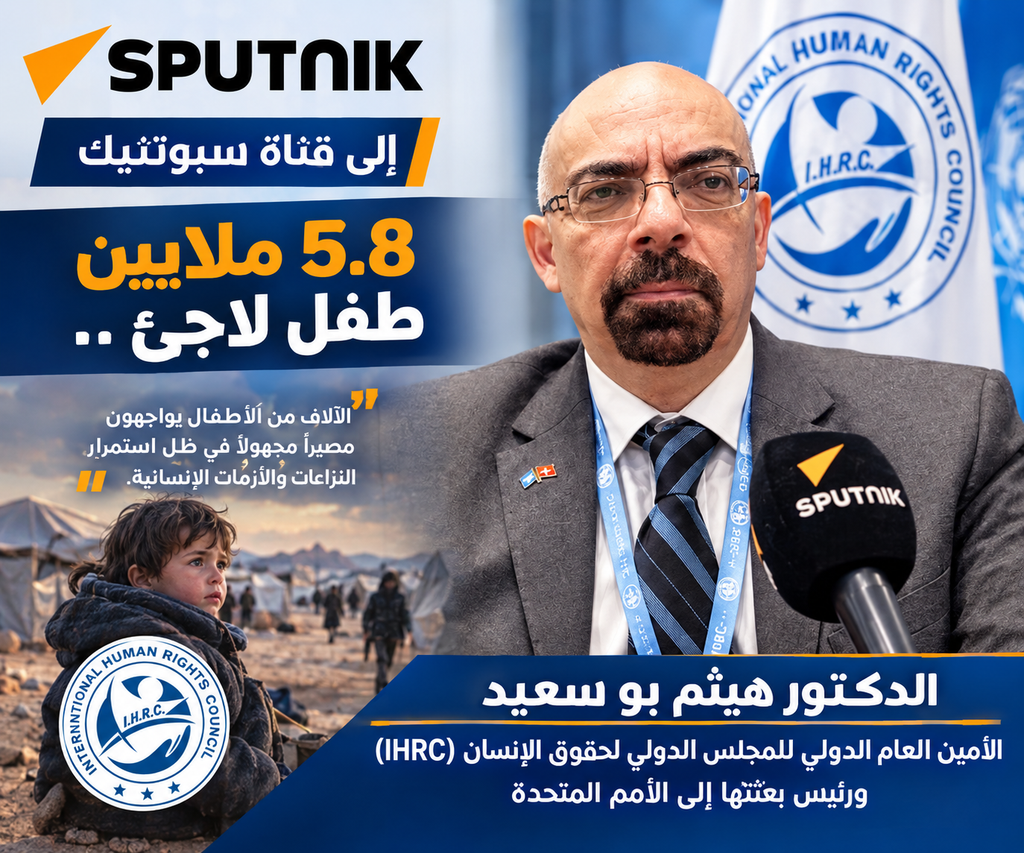
أكد الأمين العام الدولي للمجلس الدولي لحقوق الإنسان (IHRC)، المعتمد لدى الأمم المتحدة بصفة خاصة (ECOSOC)، ورئيس بعثاته إلى الأمم المتحدة، الدكتور هيثم بو سعيد، في تصريح لقناة Sputnik، أن بقاء نحو 5.8 ملايين طفل لاجئ خارج مقاعد الدراسة يشكل أزمة إنسانية وحقوقية تستدعي تحركًا دوليًا عاجلًا، مشددًا على أن تعليم الأطفال اللاجئين ليس مجرد مساعدة إنسانية، بل استثمار أساسي في الاستقرار والسلام ومنع النزاعات.
وشدد بو سعيد على أن المسؤولية تقع على عاتق المجتمع الدولي بأسره، ولا سيما الدول الكبرى والجهات المانحة والدول المضيفة والأمم المتحدة، داعيًا إلى الانتقال من النداءات الإنسانية إلى آليات عملية تضمن التمويل المستدام، وتوزيع الأعباء بصورة عادلة، وإزالة العوائق القانونية والإدارية أمام تسجيل الأطفال في المدارس.
كما دعا إلى تعزيز الرقابة والمساءلة الدولية، وضمان الشفافية في إدارة المساعدات التعليمية، ومنع تسييس ملف اللاجئين أو استغلال معاناة الأطفال لتحقيق مكاسب سياسية، مؤكدًا ضرورة توفير بيئة تعليمية آمنة تراعي احتياجات الأطفال النفسية والاجتماعية وتحميهم من الاستغلال وعمالة الأطفال والتسرّب المدرسي.
وختم بو سعيد بالتأكيد أن حق الطفل اللاجئ في التعليم ليس امتيازًا تمنحه السياسة، ولا يجوز ربطه بجواز السفر أو الوضع القانوني أو الاقتصادي، بل هو حق أساسي يجب ضمانه دون تمييز، لأن حرمان الأطفال من التعليم يهدد مستقبلهم ويضاعف مخاطر الفقر والتهميش والاستغلال، فيما يشكل الاستثمار في تعليمهم ركيزة لبناء مجتمعات أكثر استقرارًا وعدالة وسلامًا.
Dr. Haissam Bou-Said, International Secretary General of the International Human Rights Council (IHRC), holding Special Consultative Status with the United Nations Economic and Social Council (ECOSOC), and Head of its Missions to the United Nations, stated in an interview with Sputnik that the estimated 5.8 million refugee children out of school represent a pressing humanitarian and human rights crisis requiring urgent international action.
Dr. Bou-Said stressed that educating refugee children must be viewed not merely as humanitarian assistance, but as a fundamental investment in stability, peace, and conflict prevention.
He emphasized that the international community shares responsibility for addressing this crisis, particularly major powers, donor countries, host countries, and the United Nations. He called for a shift from humanitarian appeals to practical mechanisms that ensure sustainable funding, fair burden-sharing, and the removal of legal and administrative barriers preventing refugee children from enrolling in schools.
He also called for stronger international monitoring and accountability, transparent management of educational assistance, and firm safeguards against the politicization of refugee issues or the exploitation of children’s suffering for political gain. He further underlined the need for safe and inclusive learning environments that address children’s psychological and social needs while protecting them from exploitation, child labour, and school dropout.
Dr. Bou-Said concluded by emphasizing that the right to education is not a political privilege, nor should it depend on a child’s nationality, legal status, or economic circumstances. It is a fundamental right that must be guaranteed without discrimination. Denying children access to education jeopardizes their future and increases their vulnerability to poverty, marginalization, and exploitation, whereas investing in their education helps build more stable, just, and peaceful societies.
Leave a Reply