
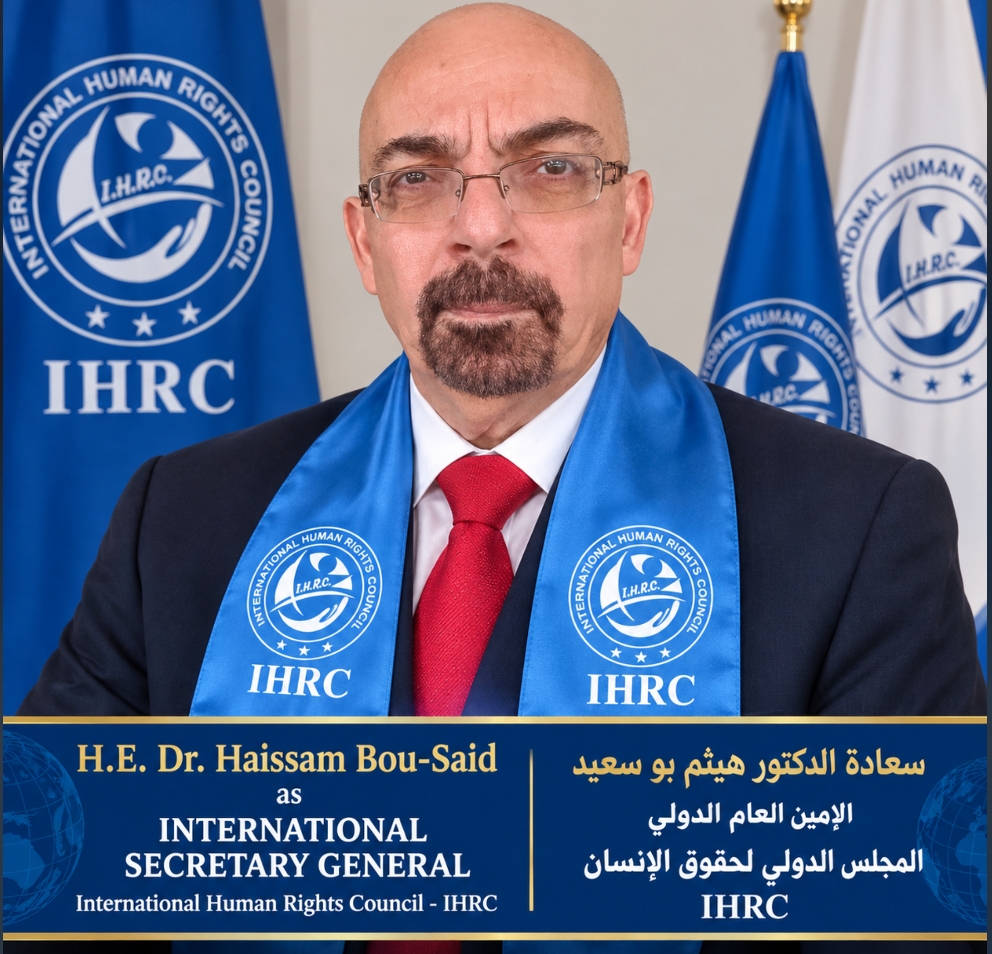
Distinguished guests, esteemed ambassadors, religious leaders, academics, representatives of civil-society organisations, ladies and gentlemen,
It is both an honour and a responsibility to address a subject that lies at the intersection of faith, education, human dignity, and our shared responsibility towards humanity.
I would like to begin with a simple but fundamental question:
Can religious education help build a society in which every human being is treated with dignity, regardless of religion, belief, nationality, gender, or social background?
I invite you to reflect on this question for a moment, because the answer carries important implications for our educational institutions, religious communities, and future generations.
Religious education should not be limited to teaching religious texts, traditions, and doctrines. It should also contribute to the development of moral responsibility, compassion, justice, respect for human dignity, peaceful coexistence, and solidarity with those who are vulnerable or marginalised.
When approached in an inclusive, responsible, and educationally sound manner, religious education can become an important means of advancing human-rights awareness, preventing discrimination, countering intolerance, and encouraging peaceful relations between individuals and communities.
Our objective is not to impose one belief upon another. Rather, it is to ensure that differences in religion and belief become opportunities for mutual understanding rather than sources of division.
2. The Central Question: How Do We Translate Values into Action?
Distinguished participants,
The central question is not simply whether religious education and human rights can coexist. It is how we can translate their shared concern for human dignity into practical and measurable action.
The Universal Declaration of Human Rights provides an essential international framework. Article 1 affirms that all human beings are born free and equal in dignity and rights. Article 2 establishes the principle of non-discrimination. Article 18 protects freedom of thought, conscience, and religion. Article 26 recognises the right to education and emphasises the role of education in promoting understanding, tolerance, and friendship among nations and religious groups.
These principles remind us that human rights must be respected universally, without discrimination, while freedom of religion and belief must be protected for everyone.
The challenge is to ensure that these principles do not remain confined to international declarations, academic discussions, or institutional documents. They must become part of our everyday conduct, educational practices, and community relationships.
Let me therefore ask our participants: What is the most important value that religious education should teach young people to help protect human rights?
Would you say equality, compassion, justice, respect for differences, or peaceful dialogue?
Each of these values is essential. However, the most important lesson is that we must teach young people not only to understand their own beliefs, but also to respect the dignity, freedom, and rights of people whose beliefs may differ from their own.
Respecting another person’s rights does not require us to abandon our own convictions. It requires us to recognise that human dignity is not dependent upon religious identity, personal beliefs, or social background.
3. What Needs to Be Done: Five Practical Actions
To move from principles to implementation, I would propose five practical actions for religious institutions, schools, universities, civil-society organisations, and human-rights bodies.
First: Integrate human-rights education into religious education.
Educational institutions should incorporate age-appropriate lessons on equality, non-discrimination, freedom of conscience and belief, child protection, human dignity, and peaceful coexistence into their educational programmes.
These lessons should connect ethical and religious teachings with internationally recognised human-rights principles. Students should be encouraged to examine real-life situations, discuss ethical dilemmas, and understand how discrimination and exclusion affect individuals and communities.
The objective is to ensure that learners can recognise violations of human rights and understand how to respond to them responsibly.
Second: Train religious leaders and educators.
Imams, priests, pastors, religious instructors, teachers, and community leaders can have a significant influence on public attitudes and behaviour.
They should therefore have access to practical training in human-rights principles, intercultural communication, conflict prevention, mediation, child safeguarding, and the peaceful resolution of disagreements.
Such training should also help educators distinguish between legitimate differences in belief and conduct that undermines the dignity or fundamental rights of others.
Equipping religious leaders with these skills can strengthen their capacity to promote tolerance, prevent tensions, and contribute to safer and more cohesive communities.
Third: Promote interfaith dialogue and cooperation among young people.
Schools, universities, and youth organisations should organise interfaith discussions, educational exchanges, cultural activities, and joint community-service initiatives.
Young people should have opportunities to meet individuals from different religious and cultural backgrounds, ask questions respectfully, challenge stereotypes, and develop an informed understanding of one another.
Dialogue should go beyond formal meetings. Young people can work together on practical initiatives such as supporting disadvantaged families, protecting children, assisting older people, and raising awareness of discrimination.
Through cooperation, they can discover that people with different beliefs can share common responsibilities and work together for the public good.
Fourth: Turn education into measurable community action.
Knowledge alone is insufficient if it does not influence behaviour.
Religious institutions and educational organisations should establish workshops, public-awareness campaigns, community projects, and reporting or referral mechanisms addressing bullying, religious discrimination, hate speech, social exclusion, and the exploitation of vulnerable people.
Particular attention should be given to children, young people, persons with disabilities, refugees, and other groups at risk of marginalisation.
Activities should be designed around the needs of the communities concerned, with appropriate safeguarding measures and cooperation with qualified protection services where necessary.
The purpose is to transform human-rights education from a theoretical subject into a practical culture of respect, protection, and accountability.
Fifth: Establish partnerships, monitor progress, and evaluate results.
Religious institutions cannot achieve these objectives in isolation. Effective implementation requires cooperation among universities, schools, civil-society organisations, human-rights bodies, youth networks, and relevant public institutions.
These partnerships should develop educational materials, organise training programmes, share good practices, and establish clear indicators for measuring progress.
For example, participating institutions could monitor the number of educators trained, educational activities conducted, young people reached, and community initiatives implemented. They could also use anonymous questionnaires before and after training to assess changes in participants’ knowledge and attitudes.
Evaluation should not focus solely on the number of activities. It should also examine whether programmes improve understanding, reduce prejudice, strengthen cooperation, and provide practical benefits to the communities they serve.
4. Closing Commitment: From Discussion to Implementation
Distinguished guests and colleagues,
I would like to conclude with one final question:
What is one concrete action that each of us can take within the next thirty days to promote human rights through education?
It could be organising a workshop on freedom of religion and belief, introducing a lesson on equality and human dignity, arranging an interfaith youth meeting, training educators in child protection, or launching a community initiative to prevent discrimination.
I encourage every participating institution to identify at least one realistic activity, appoint a responsible focal point, establish a clear deadline, and determine how the results will be evaluated.
As a practical follow-up, participating organisations could share their proposed initiatives, coordinate their efforts, and review their progress after thirty days. This would help ensure that our discussion produces tangible outcomes rather than ending with the seminar itself.
Religious education and human-rights education should not be treated as competing fields. When developed responsibly, they can complement one another in promoting dignity, justice, mutual understanding, and peaceful coexistence, while fully respecting freedom of religion, freedom of conscience, and the rights of every individual.
Our responsibility is to prepare a generation that understands not only its own rights, but also its obligations to respect the rights of others.
Let us transform knowledge into awareness, awareness into responsibility, and responsibility into action.
Because the true value of education is demonstrated not merely by what people know, but by how they treat one another.
Thank you.
Leave a Reply