
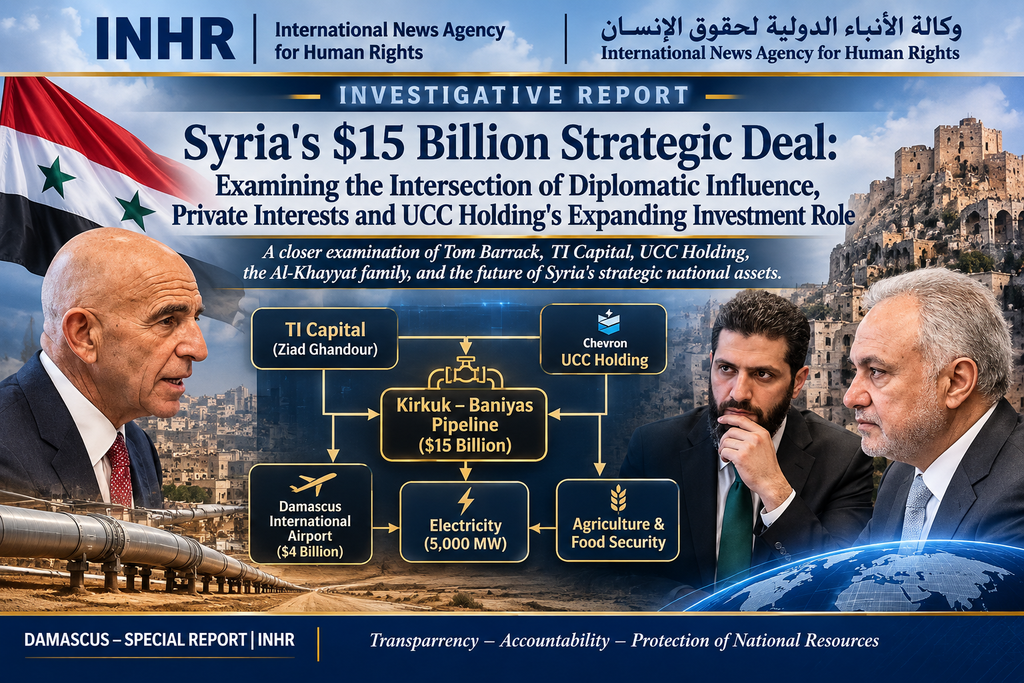
سوريا أمام اختبار الشفافية: صفقة الـ15 مليار دولار وتداخل المصالح الاقتصادية والدبلوماسية بين توم باراك وTI Capital وUCC Holding
تقرير استقصائي حول مستقبل الثروات السيادية السورية، والاستثمارات الاستراتيجية، وتضارب المصالح المحتمل، وانعكاسات التحولات السياسية على الاقتصاد الوطني.
دمشق – متابعة خاصة | INHR
INVESTIGATIVE REPORT | SYRIA – INTERNATIONAL INVESTMENT, DIPLOMATIC INTERESTS AND ECONOMIC GOVERNANCE
Syria’s $15 Billion Strategic Deal: Examining the Intersection of Diplomatic Influence, Private Interests and UCC Holding’s Expanding Investment Role
A closer examination of Tom Barrack, TI Capital, UCC Holding, the Al-Khayyat family, and the future of Syria’s strategic national assets.
DAMASCUS – SPECIAL REPORT | INHR
تتزايد التساؤلات حول طبيعة المصالح الاقتصادية والدبلوماسية التي تتقاطع مع مشاريع إعادة إعمار سوريا، ولا سيما بعد بروز مجموعة من الاتفاقيات الاستثمارية الكبرى التي تشمل قطاعات النفط والغاز والكهرباء والطيران والبنية التحتية، بقيم مالية تصل إلى مليارات الدولارات.
وفي مقدمة هذه الملفات، يبرز مشروع إعادة تأهيل خط أنابيب النفط الممتد بين كركوك العراقية وبانياس السورية، والذي تُقدّر كلفته بنحو 15 مليار دولار، باعتباره أحد أبرز المشاريع الاستراتيجية المطروحة لإعادة تشكيل خريطة الطاقة والنقل الإقليمي في المنطقة.
وقد أعاد تحقيق استقصائي نشرته وكالة رويترز في أكتوبر 2026 تسليط الضوء على العلاقة التجارية بين المبعوث الأمريكي توم باراك ورجل الأعمال زياد غندور، رئيس شركة TI Capital، وعلى طبيعة الدور الذي أدّاه باراك في دعم إشراك الشركة في المشروع، بالتزامن مع وجود مصلحة مالية له في مشروع عقاري تديره الشركة نفسها.
هذه المعطيات تفتح نقاشاً مهماً حول الحدود الفاصلة بين الدور الدبلوماسي والمصالح التجارية الخاصة، ومدى الالتزام بمعايير الإفصاح والشفافية في التعامل مع المشاريع الاستثمارية ذات الأهمية الاستراتيجية.
أولاً: توم باراك وTI Capital – أسئلة حول تضارب المصالح
بحسب ما أورده تحقيق رويترز، تربط المبعوث الأمريكي توم باراك علاقة تجارية سابقة برجل الأعمال زياد غندور، تعود إلى عام 2020، من خلال استثمار عقاري تديره شركة TI Capital، وتصل حصة باراك من أرباح المشروع، وفق المعلومات الواردة في التحقيق، إلى 20%.
وفي السياق نفسه، أشار التحقيق إلى تدخلات واتصالات دبلوماسية أجراها باراك مع مسؤولين عراقيين وسوريين لدعم مشاركة TI Capital في مشروع إعادة تأهيل خط كركوك–بانياس، إلى جانب دوره في الترويج للتفاهمات المتعلقة بالمشروع.
وتكتسب هذه المسألة أهمية خاصة بالنظر إلى طبيعة المنصب الدبلوماسي الذي يشغله باراك، وإلى المعايير الأمريكية المتعلقة بالإفصاح عن المصالح المالية وتجنب حالات تضارب المصالح.
ومن هنا، فإن القضية لا تتعلق بالضرورة بثبوت مخالفة قانونية، وإنما بضرورة توضيح طبيعة العلاقة التجارية، ومدى وجود إجراءات إفصاح أو تدابير مؤسسية لضمان الفصل بين المسؤولية العامة والمصالح الخاصة.
ثانياً: UCC Holding وآل الخيّاط – توسع استثماري في القطاعات الحيوية السورية
برزت شركة UCC Holding القطرية، بقيادة الأخوين معتز ورامز الخيّاط، كأحد الأطراف الاستثمارية الرئيسية في عدد من المشاريع الاستراتيجية المطروحة في سوريا.
ويشمل نشاط الشركة ومجموعة الشركات المرتبطة بها مشاريع واسعة في البنية التحتية والطاقة والنقل، وهو ما يجعل دورها في المرحلة المقبلة موضوعاً مهماً للنقاش الاقتصادي والحقوقي.
ومن أبرز المشاريع التي ارتبط اسم المجموعة بها:
1. مطار دمشق الدولي
مشروع تطوير وتوسعة وتشغيل مطار دمشق الدولي، باستثمارات معلنة تقارب 4 مليارات دولار، وبهدف رفع قدرته الاستيعابية إلى نحو 31 مليون مسافر سنوياً.
2. قطاع الكهرباء والطاقة
مشروع إنشاء محطات توليد كهرباء بقدرة إجمالية تصل إلى 5,000 ميغاواط، ضمن اتفاقيات استثمارية تشمل محطات غازية ومشاريع للطاقة المتجددة، وباستثمارات بمليارات الدولارات.
3. خط كركوك–بانياس
مشاركة UCC Holding في الائتلاف المرتبط بمشروع إعادة تأهيل خط الأنابيب، إلى جانب TI Capital وشركات دولية أخرى، بما فيها Chevron، في إطار التفاهمات المتعلقة بمستقبل نقل النفط العراقي عبر الأراضي السورية.
4. الاستثمار الزراعي والأمن الغذائي
تتصل استثمارات المجموعة كذلك بقطاعات الإنتاج الغذائي والزراعة وتطوير الأراضي، بما يطرح أهمية ضمان حماية الموارد الزراعية السورية، وتشجيع الإنتاج المحلي، وتوفير فرص عمل مستدامة.
إن اتساع نطاق هذه المشاريع يفرض ضرورة وجود إطار رقابي واضح يضمن المنافسة العادلة، والإفصاح عن شروط التعاقد، وتحديد الالتزامات المالية، وضمان عدم تركّز الامتيازات الاستراتيجية دون رقابة مؤسسية كافية.
ثالثاً: العلاقات التجارية والعائلية – أهمية الإفصاح عن الملكية المستفيدة
من الملفات التي تستحق مزيداً من التوضيح الإعلامي والقانوني ما يُتداول بشأن وجود صلات عائلية بين الأخوين الخيّاط ورجل الأعمال السوري محمد حمشو، الذي سبق أن أدرجته جهات دولية ضمن قوائم العقوبات.
وتبرز أهمية هذه المسألة في ضوء ضرورة تحديد الملكية المستفيدة الحقيقية للشركات المشاركة في مشاريع إعادة الإعمار، والتحقق من أي علاقات تجارية أو مالية قد تكون ذات صلة بالأطراف الخاضعة للعقوبات.
ولا ينبغي اعتبار العلاقات العائلية دليلاً على وجود ملكية مشتركة أو سيطرة مالية، ما لم تدعمها وثائق رسمية وسجلات تجارية وأدلة مالية واضحة.
كما أن المعلومات المتعلقة بالعفو الخاص الذي يُقال إنه صدر بحق حمشو تستدعي توضيحاً رسمياً بشأن أساسه القانوني وتوقيته وآثاره، ومدى علاقته بالوضع الاقتصادي والتجاري للأطراف المعنية.
وتؤكد الوكالة أن الشفافية في هذا الملف تمثل ضمانة أساسية لحماية الاستثمار المشروع، ومنع أي التباس بشأن المستفيدين الحقيقيين من العقود العامة.
رابعاً: إزالة اسم أحمد الشرع من قوائم العقوبات الأممية – التحول السياسي والاقتصادي
شكّل قرار مجلس الأمن الدولي رقم 2799 الصادر في 6 نوفمبر 2025 محطة مهمة في مسار التحولات السياسية والدبلوماسية السورية، حيث تقررت إزالة اسم الرئيس السوري الانتقالي أحمد الشرع واسم وزير الداخلية أنس خطاب من قائمة العقوبات الأممية المرتبطة بتنظيم داعش والقاعدة.
وقد عكس القرار توجهاً دولياً نحو التعامل مع المرحلة الانتقالية السورية، وفتح المجال أمام مسارات جديدة للتعاون الدبلوماسي والاقتصادي.
وتزامن هذا التحول مع الإعلان عن مشاريع استثمارية ضخمة في قطاعات الطاقة والنقل والبنية التحتية، ما أعاد طرح تساؤلات حول العلاقة بين الانفتاح السياسي وإعادة تنظيم المصالح الاقتصادية الدولية في سوريا.
ومن الضروري، في هذا السياق، التمييز بين التزامن السياسي والاقتصادي وبين وجود علاقة سببية أو تفاهمات متبادلة مثبتة؛ إذ لا تتوافر، ضمن المعلومات المشار إليها، أدلة كافية للجزم بوجود مقايضة مباشرة بين إزالة الأسماء من قوائم العقوبات ومنح الامتيازات الاستثمارية.
ومع ذلك، فإن حجم المشاريع وأهميتها الاستراتيجية يجعلان من حق الرأي العام السوري معرفة الأسس التي استندت إليها الاتفاقيات، والجهات التي شاركت في إعدادها، والضمانات التي تحمي المصالح الوطنية.
خامساً: إعادة الإعمار بين جذب الاستثمارات وحماية السيادة الاقتصادية
تحتاج سوريا إلى استثمارات دولية واسعة لإعادة بناء البنية التحتية واستعادة الخدمات الأساسية وتحريك الاقتصاد الوطني.
لكن نجاح هذه العملية لا يقاس بحجم الأموال المعلنة وحده، بل بمدى انعكاسها على حياة المواطنين، وقدرتها على توفير فرص العمل، وتحسين الخدمات، وضمان الاستخدام المستدام للموارد الوطنية.
ومن هذا المنطلق، تبرز مجموعة من المبادئ التي ينبغي أن تحكم جميع الاتفاقيات الاستثمارية الكبرى:
نشر العقود والاتفاقيات الأساسية المتعلقة بالمشاريع الاستراتيجية.
الإفصاح عن المالكين المستفيدين الحقيقيين للشركات والائتلافات.
ضمان عدم تضارب المصالح بين المسؤوليات الرسمية والعلاقات التجارية الخاصة.
اعتماد إجراءات تنافسية وعادلة في منح الامتيازات.
إخضاع المشاريع لرقابة مالية وقانونية مستقلة.
حماية حقوق الدولة السورية في موارد النفط والغاز والأراضي والمرافق العامة.
ضمان توزيع عادل للمنافع الاقتصادية على المجتمعات المحلية.
توفير ضمانات واضحة للعمالة الوطنية ونقل التكنولوجيا والخبرات.
فإعادة الإعمار ينبغي أن تكون مشروعاً وطنياً يشارك فيه الاستثمار الدولي ضمن قواعد واضحة، وليس مجرد عملية لإعادة توزيع النفوذ الاقتصادي.
سادساً: موقف وكالة الأنباء الدولية لحقوق الإنسان (INHR)
ترى وكالة الأنباء الدولية لحقوق الإنسان أن التطورات المتعلقة بمشاريع الطاقة والبنية التحتية في سوريا تستوجب متابعة إعلامية وحقوقية مستقلة، نظراً لارتباطها المباشر بالحقوق الاقتصادية والاجتماعية للشعب السوري وبمستقبل إدارة الموارد الوطنية.
وتؤكد الوكالة أن جذب الاستثمارات الأجنبية لا يتعارض مع السيادة الوطنية، شرط أن تتم الاتفاقيات في إطار من الشفافية والمساءلة واحترام القانون.
وفي هذا السياق، تدعو INHR إلى:
توضيح طبيعة المصالح التجارية المرتبطة بالأطراف المشاركة في المفاوضات الدبلوماسية والاستثمارية.
نشر الأسس القانونية والمالية للعقود المتعلقة بالنفط والغاز والمطارات والكهرباء.
توفير معلومات موثقة حول الملكية المستفيدة للشركات المشاركة.
توضيح الإجراءات القانونية المتعلقة بالعفو والقرارات المرتبطة بالأشخاص الخاضعين للعقوبات.
ضمان وجود رقابة مستقلة على الاتفاقيات ذات الأثر الاستراتيجي طويل الأمد.
إشراك المؤسسات الرقابية والجهات المدنية المختصة في متابعة أثر الاستثمارات على حقوق المواطنين.
الخلاصة: ثروات سوريا ليست مجرد فرص استثمارية
إن مستقبل سوريا الاقتصادي لا ينبغي أن يُقاس فقط بعدد الاتفاقيات الموقعة أو بحجم الاستثمارات المعلنة، بل بمدى قدرة هذه المشاريع على بناء دولة مؤسسات، وتعزيز سيادة القانون، وحماية حقوق المواطنين في موارد بلادهم.
إن التساؤل المشروع اليوم ليس حول ضرورة الاستثمار الدولي، فالحاجة إليه واضحة، وإنما حول شروطه، وشفافيته، والجهات المستفيدة منه، والضمانات التي تكفل ألا تتحول الأصول الاستراتيجية إلى امتيازات مغلقة بعيدة عن الرقابة العامة.
فسوريا التي تسعى إلى استعادة موقعها الإقليمي والدولي تحتاج إلى نموذج اقتصادي قائم على الشفافية والعدالة والمساءلة، بحيث تكون إعادة الإعمار استثماراً في الإنسان والدولة والمستقبل، لا مجرد إعادة توزيع للمصالح والنفوذ.
وكالة الأنباء الدولية لحقوق الإنسان – INHR
International News Agency for Human Rights
الشفافية، المساءلة، وحماية الكرامة الإنسانية.
The growing number of major investment agreements involving Syria’s energy, aviation, electricity and infrastructure sectors has raised important questions about the relationship between international diplomacy, private commercial interests and the management of national resources during the country’s transitional period.
At the centre of this debate is the proposed rehabilitation of the Kirkuk–Baniyas oil pipeline, a strategic regional project estimated to require approximately US$15 billion in investment. The project could significantly reshape regional energy transportation routes by connecting Iraqi oil resources to Mediterranean export facilities through Syrian territory.
An investigative report published by Reuters in October 2026 brought renewed attention to the commercial relationship between US Special Envoy Tom Barrack and businessman Ziad Ghandour, associated with TI Capital, as well as Barrack’s diplomatic involvement in encouraging the company’s participation in the proposed pipeline project.
According to the Reuters investigation, Barrack maintained a financial interest in a real estate development managed by TI Capital, reportedly entitling him to as much as 20% of the project’s profits.
These circumstances raise important questions concerning transparency, disclosure obligations and the potential overlap between official diplomatic responsibilities and private commercial interests.
The issue deserves particular attention because projects of this magnitude involve public resources, long-term economic commitments and strategic infrastructure that may influence Syria’s economic future for decades.
1. Tom Barrack and TI Capital: Examining Potential Conflicts of Interest
According to Reuters, Tom Barrack has maintained a commercial relationship with businessman Ziad Ghandour dating back to 2020 through a real estate investment managed by TI Capital.
The investigation reported that Barrack holds a financial interest in the development, potentially entitling him to 20% of its profits.
At the same time, Reuters reported that Barrack engaged with Iraqi and Syrian officials in support of TI Capital’s participation in the proposed rehabilitation of the Kirkuk–Baniyas pipeline.
The matter subsequently attracted further attention following official announcements concerning progress towards an agreement involving TI Capital and the broader international investment consortium.
The central question is whether sufficient institutional safeguards were established to separate Barrack’s diplomatic responsibilities from his private financial interests.
Under established principles of public-sector ethics, government representatives are expected to avoid situations in which personal financial interests could influence, or reasonably appear to influence, their official responsibilities.
The US State Department has maintained that Barrack has no direct financial interest in the pipeline project itself and that his actions are consistent with applicable government ethics requirements and US regional policy.
Reuters did not establish that Barrack would receive direct profits from the pipeline agreement.
Nevertheless, the circumstances underline the importance of transparency, independent scrutiny and appropriate disclosure mechanisms whenever diplomatic influence intersects with private commercial relationships.
2. UCC Holding and the Al-Khayyat Family: An Expanding Presence in Syria’s Strategic Sectors
Another major participant in Syria’s emerging investment landscape is Qatar-based UCC Holding, associated with businessmen brothers Moataz and Ramez Al-Khayyat.
The company’s expanding involvement in strategic infrastructure projects has placed it among the prominent private-sector participants in Syria’s proposed reconstruction and economic development programmes.
Its reported areas of involvement include:
A. Damascus International Airport
The airport development and expansion project represents one of the most significant infrastructure initiatives announced during Syria’s transitional period.
The proposed investment is valued at approximately US$4 billion, with the objective of increasing the airport’s annual passenger capacity to approximately 31 million.
Given the strategic importance of national aviation infrastructure, transparency regarding concession arrangements, financing structures, operational responsibilities and long-term revenue distribution is essential.
B. Electricity and Energy Infrastructure
UCC Holding has also been associated with agreements involving electricity-generation projects with a proposed combined capacity of approximately 5,000 megawatts.
These initiatives include gas-fired power stations and renewable energy components, representing investments worth several billion dollars.
The implementation of these projects will require clear contractual obligations, independent financial oversight and guarantees that the resulting infrastructure serves the broader public interest.
C. The Kirkuk–Baniyas Pipeline
UCC Holding has emerged as a participant in the international consortium associated with the proposed rehabilitation of the Kirkuk–Baniyas oil pipeline.
The consortium has involved TI Capital and other international energy-sector participants, including Chevron.
The project is particularly significant because it could establish a strategic oil transportation corridor connecting Iraq’s energy resources to Mediterranean markets through Syria.
Its estimated investment requirements, long implementation period and geopolitical significance make public disclosure of the contractual framework especially important.
D. Agriculture and Food Security
Investment activities associated with the wider business group also extend into agricultural production, food security and related commercial sectors.
Such projects could contribute positively to Syria’s economic recovery, provided that investment arrangements protect agricultural resources, encourage local production, create employment opportunities and maintain fair market competition.
The expanding presence of a single investment group across several strategic sectors does not, by itself, establish wrongdoing or improper conduct. However, it reinforces the importance of competitive procurement, transparent concessions and effective institutional oversight.
3. The Al-Khayyat Family and Mohamed Hamsho: The Importance of Beneficial Ownership Transparency
Another issue attracting attention in political and economic discussions concerns reported family connections between the Al-Khayyat brothers and Syrian businessman Mohamed Hamsho, who has previously been subject to international sanctions.
This subject deserves careful examination, particularly in relation to beneficial ownership, corporate governance, financial relationships and the participation of companies in major public-sector contracts.
However, family relationships alone cannot establish shared ownership, financial control or the use of one company as a commercial intermediary for another individual.
Such conclusions require verifiable corporate records, financial documentation and evidence of actual ownership or control.
There have also been reports concerning a possible special pardon granted to Mohamed Hamsho by President Ahmad Al-Sharaa.
The legal basis, timing and implications of any such decision should be clarified through official documentation.
In particular, it would be important to establish whether any relevant commercial or contractual relationships exist between the individuals concerned and the investment projects currently under consideration.
For INHR, the fundamental issue is not personal or family association, but whether Syria’s investment framework provides sufficient safeguards against undisclosed beneficial ownership, conflicts of interest and preferential treatment.
4. Ahmad Al-Sharaa’s Removal from UN Sanctions Lists: Political Transition and Economic Implications
On 6 November 2025, the United Nations Security Council adopted Resolution 2799, providing for the removal of Syrian transitional President Ahmad Al-Sharaa and Interior Minister Anas Khattab from the UN sanctions list associated with ISIL (Da’esh) and Al-Qaida.
The resolution received 14 votes in favour, with China abstaining.
This decision represented a significant diplomatic development in Syria’s transitional political process and contributed to the changing international environment surrounding the country’s new authorities.
The removal of these names from the relevant UN sanctions list must, however, be understood within its precise legal scope. It did not automatically eliminate every other international or national sanctions measure that might apply.
The diplomatic development coincided with announcements of major investment agreements involving energy, infrastructure, aviation and transportation.
This timing has encouraged discussion about the relationship between international political engagement and the restructuring of economic interests in Syria.
Nevertheless, temporal coincidence should not be treated as proof of a direct political or financial exchange.
There is currently insufficient evidence in the information examined to establish that the removal of names from UN sanctions lists was directly conditional upon the awarding of specific investment contracts.
Nonetheless, the scale and strategic importance of these agreements justify greater public scrutiny, particularly regarding the decision-making processes, contractual obligations and protections afforded to Syria’s national economic interests.
5. Syria’s Reconstruction: Balancing Foreign Investment with Economic Sovereignty
Syria urgently requires substantial international investment to rebuild infrastructure, restore essential services, revitalise its economy and improve living conditions for its population.
However, successful reconstruction cannot be measured solely by the announced value of investment agreements.
It must also be assessed according to the extent to which these projects generate employment, improve public services, strengthen national institutions and create sustainable economic opportunities for Syrian citizens.
INHR considers the following principles essential to any major investment agreement involving strategic national assets:
Full transparency concerning major investment contracts and concession agreements.
Disclosure of the ultimate beneficial owners of participating companies and investment consortia.
Appropriate safeguards against potential conflicts between official responsibilities and private financial interests.
Fair and competitive procedures for awarding strategic projects.
Independent financial, legal and institutional oversight.
Protection of Syria’s sovereign rights over its oil, gas, land and public infrastructure.
Fair distribution of economic benefits among local communities.
Clear commitments regarding local employment, technology transfer and professional development.
Foreign investment and national sovereignty are not contradictory objectives.
On the contrary, a transparent investment framework can strengthen both economic recovery and international confidence.
The challenge is to ensure that the reconstruction process serves the Syrian population rather than becoming an arrangement in which strategic economic opportunities are concentrated without adequate public accountability.
6. INHR’s Position: Transparency, Accountability and the Protection of National Resources
The International News Agency for Human Rights considers the developments surrounding Syria’s strategic investment projects a matter of significant economic, institutional and human rights importance.
The management of national resources is directly connected to the economic and social rights of citizens, the principle of equality before the law and the responsibility of public institutions to act in the public interest.
INHR therefore calls for:
Greater transparency concerning the commercial interests of individuals involved in diplomatic and investment negotiations.
Publication of the principal legal and financial terms governing major oil, gas, aviation and electricity agreements.
Clear identification of the beneficial owners of companies participating in strategic national projects.
Official clarification of relevant legal decisions concerning pardons and sanctions-related developments.
Independent oversight of agreements with long-term implications for national resources.
Greater participation by institutional oversight bodies and qualified civil society organisations in monitoring the social and economic impact of reconstruction projects.
The objective is not to discourage international investment or question the legitimacy of private-sector participation.
Rather, it is to ensure that investment takes place within a framework of legality, transparency, fair competition and respect for the public interest.
Conclusion: Syria’s National Wealth Must Serve Its People
Syria’s economic future should not be assessed solely through the number of agreements signed or the billions of dollars announced in investment commitments.
Its real success must be measured by the ability of these projects to rebuild public institutions, improve living conditions, restore economic confidence and protect the rights of future generations.
The central question is therefore not whether Syria needs international investment. It clearly does.
The more important questions concern the conditions under which these investments are awarded, the transparency of the decision-making process, the identity of their ultimate beneficiaries and the safeguards protecting the country’s strategic national assets.
Syria’s reconstruction must become an investment in its people, institutions and future. It must be founded on transparency rather than uncertainty, accountability rather than privilege, and national development rather than the concentration of economic influence.
National resources are not merely commercial opportunities. They are part of the collective wealth and future of the Syrian people.
International News Agency for Human Rights (INHR)
Transparency – Accountability – Protection of Human Dignity
END OF REPORT
Leave a Reply