
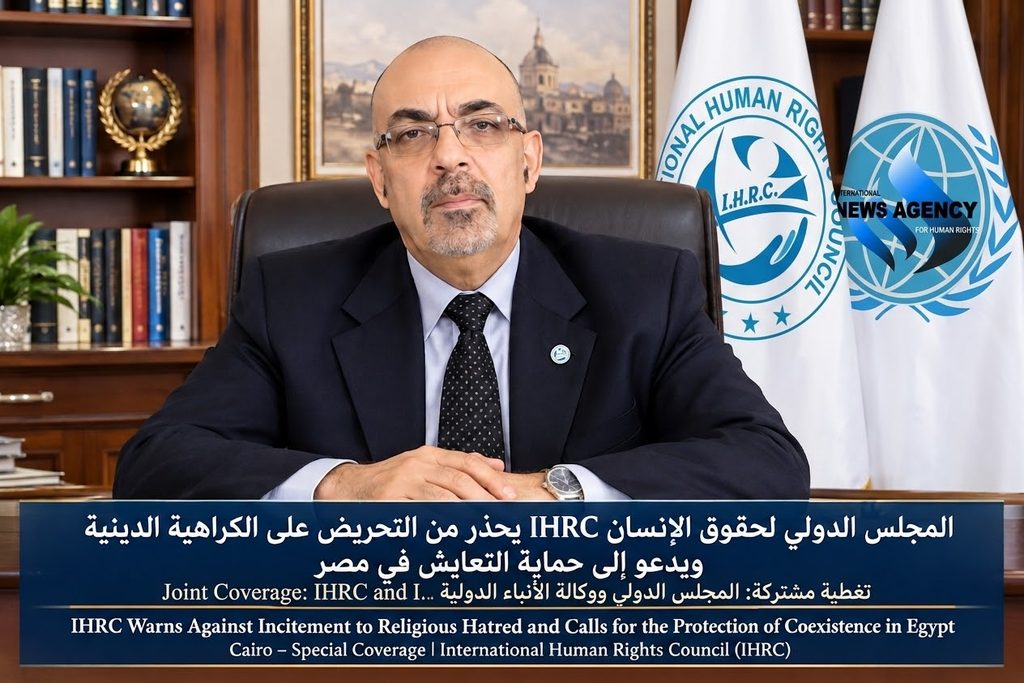
المجلس الدولي لحقوق الإنسان IHRC يحذّر من التحريض على الكراهية الدينية ويدعو إلى حماية التعايش في مصر
القاهرة – متابعة خاصة | المجلس الدولي لحقوق الإنسان IHRC
IHRC Warns Against Incitement to Religious Hatred and Calls for the Protection of Coexistence in Egypt
Cairo – Special Coverage | International Human Rights Council (IHRC)
رأى الأمين العام الدولي للمجلس الدولي لحقوق الإنسان (IHRC)، المعتمد لدى الأمم المتحدة بصفة خاصة (ECOSOC)، ورئيس بعثته إلى الأمم المتحدة، الدكتور هيثم بو سعيد، أن ما شهدته مصر مؤخراً من تصريحات ومواقف صدرت عن أحد الدعاة الإسلاميين، والتي من شأنها إثارة الفتنة والانقسام بين أتباع الدين الإسلامي وسائر أتباع الديانات الأخرى، يستدعي موقفاً مسؤولاً وحازماً يحفظ السلم الأهلي ويصون أسس التعايش الديني والمجتمعي.
وأكد الدكتور بو سعيد أن حرية الرأي والتعبير تشكل إحدى الركائز الأساسية للمنظومة الدولية لحقوق الإنسان، إلا أن ممارستها يجب أن تتم في إطار المسؤولية واحترام حقوق الآخرين وحرياتهم، وألا تتحول إلى وسيلة للإساءة إلى المعتقدات الدينية أو إثارة العداوات والانقسامات بين مكونات المجتمع.
وأشار إلى أن المادة 19 من الإعلان العالمي لحقوق الإنسان تكفل لكل إنسان الحق في حرية الرأي والتعبير، بما يشمل حرية اعتناق الآراء دون مضايقة، والتعبير عنها ونقل الأفكار والمعلومات بمختلف الوسائل. كما تتيح المادة 19 من العهد الدولي الخاص بالحقوق المدنية والسياسية حماية الحق في التعبير، بما في ذلك مناقشة الأفكار السياسية والفلسفية والدينية ونقدها، ضمن الحدود التي يحددها القانون الدولي.
إلا أن هذا الحق لا يمكن تفسيره على أنه ترخيص بالتحريض على الكراهية أو التمييز أو العداء، إذ تنص المادة 20، الفقرة الثانية، من العهد الدولي الخاص بالحقوق المدنية والسياسية بوضوح على أن:
«تحظر بالقانون أية دعوة إلى الكراهية القومية أو العنصرية أو الدينية تشكل تحريضاً على التمييز أو العداء أو العنف».
وشدد الدكتور بو سعيد على أن هناك فرقاً جوهرياً بين حرية مناقشة المعتقدات والأفكار الدينية ونقدها، وبين استخدام الخطاب الديني لإثارة الكراهية أو التحريض ضد أتباع ديانة أخرى. فحرية التعبير لا تلغي واجب احترام الكرامة الإنسانية، كما أن حرية المعتقد لا يجوز أن تكون موضع انتقاص أو استهداف بسبب الاختلاف الديني.
وأضاف أن مصر، بما تمثله من مكانة تاريخية وحضارية ودينية في المنطقة، وبما تمتلكه من إرث عريق في التعدد والتفاعل بين مكوناتها المجتمعية، مطالبة بالحفاظ على قيم المواطنة والتسامح والاحترام المتبادل، ومنع أي خطاب من شأنه تهديد الوحدة الوطنية أو المساس بالسلم المجتمعي.
وعليه، دعا الدكتور بو سعيد السلطات المصرية المعنية إلى التدخل في إطار اختصاصاتها القانونية، والتحقق من طبيعة التصريحات والمواقف المثارة، واتخاذ الإجراءات المناسبة التي ثبت أنها تشكل تحريضاً على الكراهية الدينية أو التمييز أو العداء، وذلك وفقاً للقوانين الوطنية والالتزامات الدولية ذات الصلة، مع ضمان عدم المساس بحرية التعبير والنقد المشروع.
كما دعا المؤسسات الدينية والإعلامية والثقافية، والشخصيات العامة وأصحاب المنابر، إلى تحمل مسؤولياتهم في نشر ثقافة الاعتدال والحوار وقبول الآخر، والابتعاد عن كل خطاب من شأنه وضع الأديان في مواجهة بعضها البعض أو تحويل الاختلاف العقائدي إلى مصدر للتوتر والفتنة.
واختتم الدكتور هيثم بو سعيد بالتأكيد على أن احترام جميع الأديان والمعتقدات لا يعني منع الحوار أو النقد أو الاختلاف، بل يعني ضمان ممارستها في إطار من الاحترام المتبادل والمسؤولية الإنسانية والقانونية.
**إن حرية التعبير حق أساسي، وحرية المعتقد حق أصيل، لكن التحريض على الكراهية الدينية لا يمكن أن يتخذ من حرية التعبير غطاءً لتبرير التمييز أو العداء أو العنف. وعلى الجميع أن يدرك أن حماية التعددية الدينية وصون كرامة الإنسان مسؤولية مشتركة، وأن الاختلاف بين الأديان يجب أن يكون مدخلاً للحوار والتفاهم، لا سبباً للفتنة والانقسام.**
Dr Haissam Bou-Said, International Secretary-General of the International Human Rights Council (IHRC), holding Special Consultative Status with the United Nations Economic and Social Council (ECOSOC), and Head of its Mission to the United Nations, expressed concern over recent statements and positions made in Egypt by an Islamic preacher, which could potentially fuel religious tensions and create division between Muslims and followers of other religions.
Dr Bou-Said stressed that such developments require a responsible and firm approach to safeguarding civil peace, social stability and the principles of religious coexistence.
He emphasised that freedom of opinion and expression is one of the fundamental pillars of the international human rights system. However, the exercise of this freedom must be accompanied by responsibility and respect for the rights and freedoms of others. It must not become a means of attacking religious beliefs, promoting hostility or creating divisions within society.
In this regard, Dr Bou-Said recalled that Article 19 of the Universal Declaration of Human Rights guarantees everyone the right to freedom of opinion and expression, including the freedom to hold opinions without interference and to seek, receive and impart information and ideas through any media and regardless of frontiers.
Furthermore, Article 19 of the International Covenant on Civil and Political Rights protects freedom of expression, including the discussion, examination and criticism of political, philosophical and religious ideas, subject to the limitations established under international law.
Nevertheless, this right cannot be interpreted as permission to incite hatred, discrimination or hostility. Article 20, paragraph 2, of the International Covenant on Civil and Political Rights explicitly provides:
“Any advocacy of national, racial or religious hatred that constitutes incitement to discrimination, hostility or violence shall be prohibited by law.”
Dr Bou-Said underlined the fundamental distinction between the freedom to discuss, examine and criticise religious beliefs and the use of religious discourse to promote hatred or incite hostility against followers of another faith.
Freedom of expression does not eliminate the obligation to respect human dignity, just as freedom of religion and belief must never be undermined or targeted on the grounds of religious differences.
He further noted that Egypt, given its historical, cultural and religious significance in the region, as well as its longstanding heritage of social and religious diversity, has an important responsibility to uphold the principles of citizenship, tolerance and mutual respect, while preventing any discourse that could threaten national unity or undermine social peace.
Accordingly, Dr Bou-Said called upon the competent Egyptian authorities to address the matter within their legal mandates, examine the nature and context of the statements in question, and take appropriate measures should they be established as constituting incitement to religious hatred, discrimination or hostility, in accordance with national legislation and relevant international obligations, while safeguarding the legitimate exercise of freedom of expression.
He also called upon religious institutions, media organisations, cultural bodies, public figures and religious leaders to assume their responsibilities in promoting moderation, dialogue and acceptance of others. He stressed the importance of avoiding rhetoric that places religions in confrontation with one another or transforms differences in belief into sources of social tension and division.
Dr Haitham Bou-Said concluded by affirming that respecting all religions and beliefs does not mean prohibiting dialogue, criticism or disagreement. Rather, it means ensuring that these are exercised within a framework of mutual respect, human responsibility and the rule of law.
“Freedom of expression is a fundamental right, and freedom of religion and belief is an inherent human right. However, incitement to religious hatred cannot use freedom of expression as a justification for discrimination, hostility or violence. Protecting religious diversity and safeguarding human dignity are shared responsibilities. Differences between religions must serve as an opportunity for dialogue and mutual understanding, not as a cause of discord, division or conflict.”
Leave a Reply