
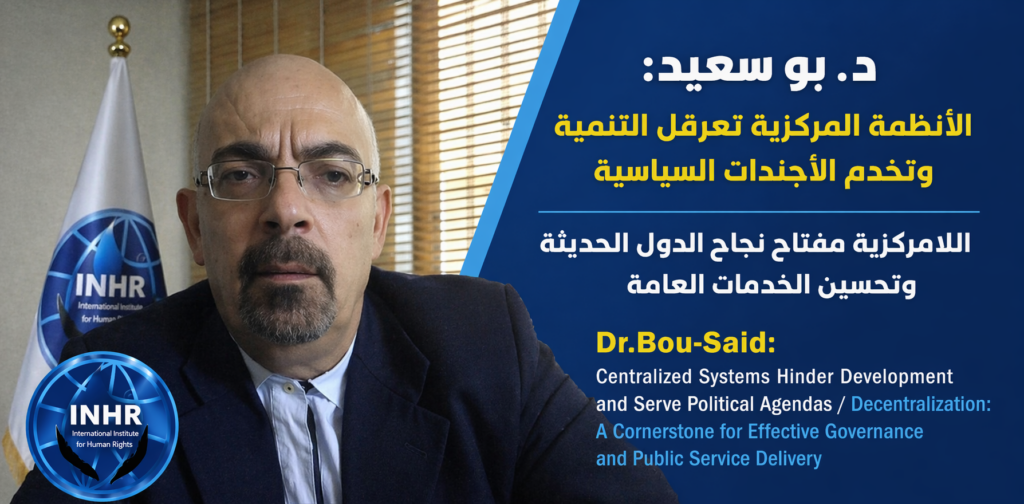
اعتبر الدكتور هيثم بو سعيد، الممثل الأعلى للشؤون الخارجية في المجلس الدولي لحقوق الإنسان (IHRC)، أن الإصرار على أنظمة الحكم المركزي في بعض الدول العربية والإفريقية لم يعد مبررًا، بل بات يشكّل عائقًا مباشرًا أمام التنمية ووسيلة لتكريس السيطرة السياسية.
وأكد أن الدول التي حققت تقدمًا فعليًا في إدارة شؤونها اعتمدت اللامركزية كخيار استراتيجي، ما مكّنها من تحسين الخدمات وتعزيز الشفافية والمساءلة. في المقابل، فإن استمرار المركزية يؤدي إلى تعطيل قدرات المؤسسات المحلية وإقصاء المجتمعات عن المشاركة الفعلية في صنع القرار.
وشدد على أن استخدام المركزية كأداة لفرض الأجندات السياسية يفاقم الأزمات الداخلية ويقوّض فرص الإصلاح الحقيقي، داعيًا إلى مراجعة جذرية لهذا النهج بما يتماشى مع المعايير الدولية للحكم الرشيد.
Dr. Haissam Bou-Said, High Representative for External Affairs at the International Human Rights Council (IHRC), stated that the continued reliance on centralized governance in some Arab and African countries is no longer justifiable and has become a direct obstacle to development, as well as a mechanism for consolidating political control.
He affirmed that nations achieving tangible progress have embraced decentralization as a strategic choice, enabling improved service delivery, greater transparency, and stronger accountability. In contrast, centralized systems continue to undermine local institutions and exclude communities from meaningful participation in decision-making processes.
He warned that the use of centralization to impose political agendas exacerbates internal crises and undermines prospects for genuine reform, calling for a fundamental reassessment of such approaches in line with international standards of good governance.
Leave a Reply