
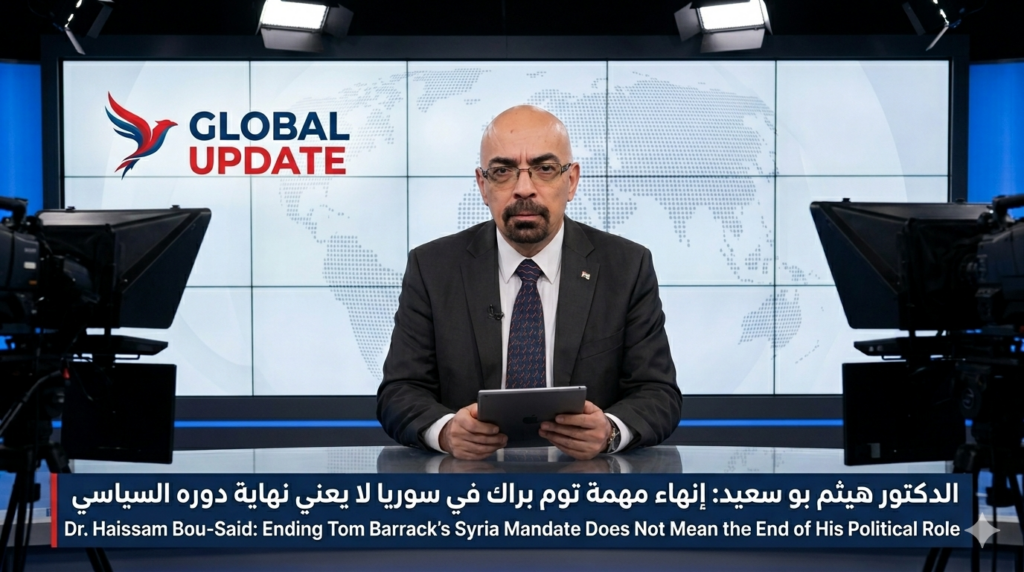
الدكتور هيثم بو سعيد: إنهاء مهمة توم براك في سوريا لا يعني نهاية دوره السياسي
رأى الممثل الأعلى للشؤون الخارجية للمجلس الدولي لحقوق الإنسان (IHRC) المعتمد من الأمم المتحدة بصفة خاصة لدى المجلس الاقتصادي والاجتماعي (ECOSOC) ورئيس بعثته إلى جنيف، الدكتور هيثم بو سعيد لوكالة الأنباء الدولية لحقوق الإنسان، أن إنهاء مهمة السيد توم براك كمبعوث خاص إلى سوريا لا ينبغي تفسيره على أنه نهاية لمساره السياسي أو الدبلوماسي، كما يحاول البعض تصويره، إذ تم تكليفه بمتابعة الملف العراقي، ما يعني أن مسؤولياته انتقلت إلى ساحة أخرى ذات أهمية في السياسة الأميركية الإقليمية.
وأوضح الدكتور بو سعيد أن براك لم يتمكن من تحقيق الأهداف المرجوة من مهمته في سوريا لأسباب متعددة ومعقدة، الأمر الذي دفع الإدارة الأميركية إلى إعادة الملف السوري إلى عهدة وزارة الخارجية الأميركية لاتخاذ ما تراه مناسباً من إجراءات وخيارات سياسية.
وأشار إلى أن من بين هذه الخيارات استمرار اعتماد سياسة المقاربة المشروطة، والتي تقوم على ربط أي تخفيف للعقوبات أو انفتاح اقتصادي بملفات سياسية وأمنية شاملة، وهو ما يُبقي حالة الضبابية وعدم اليقين قائمة في المشهد السوري خلال المرحلة المقبلة.
وأضاف أن الولايات المتحدة لا تزال تتعامل مع الملف السوري ضمن إطار مراجعة أوسع لتوجهاتها الإقليمية والدولية، معتبراً أن القرار الأخير قد يشكل مؤشراً على بداية تحول فعلي في مقاربة واشنطن للأزمة السورية وغيرها من الملفات المرتبطة بها.
وأكد الدكتور بو سعيد أن الجميع بات يدرك أن سوريا لن تعود إلى ما كانت عليه في السابق، وأن المرحلة المقبلة قد تشهد تحولات جغرافية وديمغرافية وسياسية عميقة تفرضها الوقائع الجديدة على الأرض والمتغيرات الدولية والإقليمية.
وختم بالقول إن المنطقة قد تكون أمام مشهد أكثر تعقيداً وخطورة من الترتيبات التي نتجت عن اتفاقية سايكس – بيكو، الأمر الذي يستوجب قراءة دقيقة للتطورات المقبلة والاستعداد لمواجهة تداعياتها على مستقبل سوريا والمنطقة بأسرها.
Dr. Haissam Bou-Said, Senior Representative for External Affairs of the International Human Rights Council (IHRC), accredited by the United Nations Economic and Social Council (ECOSOC) with Special Consultative Status, and Head of its Mission to Geneva, stated to the International News Agency for Human Rights that the conclusion of Mr. Tom Barrack’s mandate as Special Envoy to Syria should not be interpreted as the end of his political or diplomatic role, as some observers have suggested.
Dr. Bou-Said noted that Mr. Barrack has been assigned to the Iraqi file, indicating that his responsibilities have merely shifted to another strategically important arena within U.S. regional policy.
Regarding Syria, Dr. Bou-Said said that Barrack was unable to fully accomplish the objectives of his mission for a variety of complex reasons, prompting the U.S. administration to return the Syrian file to the U.S. Department of State in order to determine and implement the necessary policies and measures.
He explained that these measures are likely to include the continuation of a conditional policy approach, whereby any economic relief or easing of sanctions remains linked to broader political and security considerations. Such an approach, he argued, will continue to leave the Syrian landscape marked by uncertainty and ambiguity.
Dr. Bou-Said further stated that the United States continues to manage the Syrian issue within the framework of broader shifts in its regional and international priorities. In this context, the recent decision may be viewed as the beginning of a genuine transformation in Washington’s approach not only to the Syrian crisis but also to other interconnected regional files.
He stressed that it has become increasingly evident that Syria will not return to its previous state and that the coming period may witness significant geographical, demographic, and political transformations shaped by emerging realities on the ground and evolving international dynamics.
Concluding his remarks, Dr. Bou-Said warned that the region could be heading toward a scenario even more complex and consequential than the arrangements that emerged from the Sykes–Picot Agreement, underscoring the need for careful monitoring of developments and preparation for their far-reaching implications for Syria and the wider Middle East.
Leave a Reply