
Dr. Bou Said: Abandoning Takfir Ideology Is Essential to Preserving Coexistence and Civil Peace
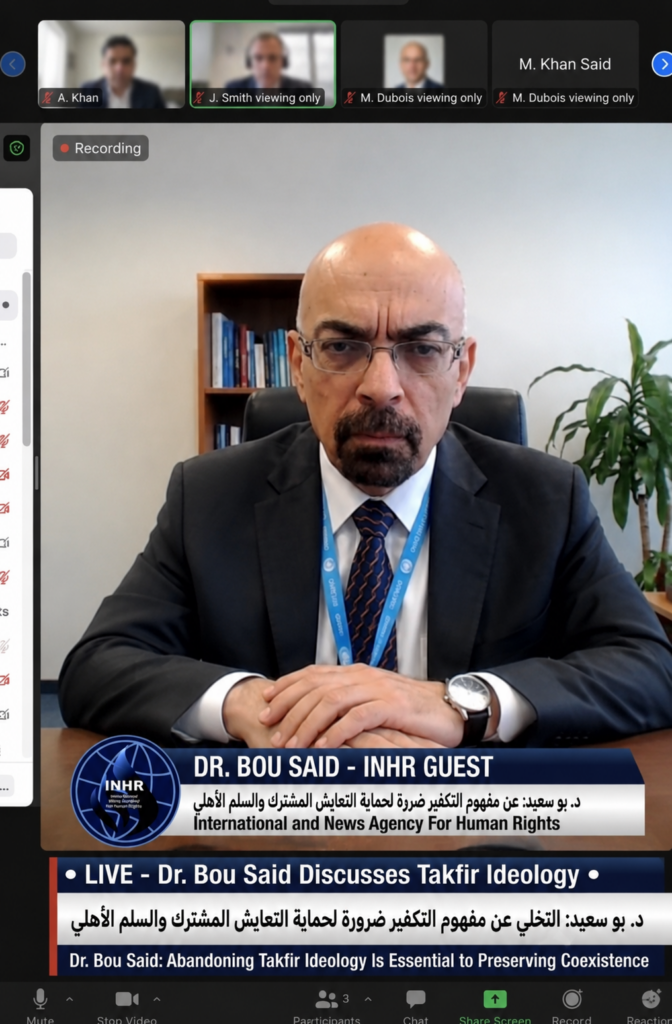
د. بو سعيد: التخلي عن مفهوم التكفير ضرورة لحماية التعايش المشترك والسلم الأهلي
Dr. Bou Said: Abandoning Takfir Ideology Is Essential to Preserving Coexistence and Civil Peace
رأى الممثل الأعلى للشؤون الخارجية للمجلس الدولي لحقوق الإنسان (IHRC) المعتمد لدى الأمم المتحدة بصفة خاصة إيكوسوك ورئيس بعثتها إلى جنيف، الدكتور هيثم بو سعيد، أنه بات لزاماً اليوم، ومن أجل الحفاظ على التعايش المشترك والسلم الأهلي، ولا سيما في الدول التي تتميز بتعددية دينية وطائفية وفكرية، التخلي عن مفهوم التكفير والإقصاء كلما لم تسر الأمور وفق توجهات أو قناعات فئة معينة، والعمل بما يتوافق مع مبادئ الشرعة الدولية لحقوق الإنسان التي التزمت بها جميع الدول الأعضاء في الأمم المتحدة.
وجاء كلام الدكتور بو سعيد خلال مداخلة مع وكالة الأنباء الدولية صباح اليوم، حيث أوضح أن أي جهة تسعى إلى إقامة دولة قائمة على مرجعية دينية أحادية، إسلامية كانت أو غيرها، يجب أن تدرك أن المجتمع الدولي والدول التي تحترم القوانين والمواثيق الدولية لن تتعامل مع هذه الطروحات بمعزل عن انعكاساتها على الحقوق والحريات والتعددية المجتمعية.
وأشار إلى أن مثل هذه التوجهات قد تؤدي إلى تحديات وإشكاليات متعددة، بعضها ظاهر للعيان وبعضها الآخر يتم في إطار العلاقات الدولية والسياسات العامة، لافتاً إلى أن المؤشرات بدأت تظهر من خلال النقاشات والتعديلات الدستورية المتسارعة في عدد من الدول، ولا سيما تلك المتعلقة بتطبيق الشعائر أو المرجعيات الدينية ضمن البنية القانونية للدولة.
وختم الدكتور بو سعيد بالتأكيد أن فرض شريعة أو منظومة دينية موحدة على مجتمع متعدد المكونات، مهما اختلفت تسميتها أو شكلها، يثير مخاوف مشروعة بشأن احترام التنوع والتعددية، ويعكس نوايا لا تنسجم مع متطلبات بناء دولة المواطنة التي تقوم على المساواة والاحترام المتبادل بين جميع أفراد المجتمع.
The High Representative for Foreign Affairs of the International Human Rights Council (IHRC), accredited by the United Nations with Special Consultative Status under ECOSOC, and Head of its Mission in Geneva, Dr. Haissam Bou Said, stressed that preserving coexistence and civil peace—especially in countries characterized by religious, sectarian, and cultural diversity—requires abandoning the ideology of takfir (excommunication) and exclusion whenever political or social developments do not align with the views of a particular group.
Dr. Bou Said made these remarks during an interview with the International News Agency earlier today, emphasizing that all United Nations member states have committed themselves to the principles and standards enshrined in the Universal Declaration of Human Rights and related international human rights instruments.
He further noted that any movement seeking to establish a state based exclusively on a single religious doctrine, whether Islamic or otherwise, must recognize that nations committed to international law and democratic principles are unlikely to endorse such a model without considering its implications for fundamental rights, freedoms, and societal pluralism.
Dr. Bou Said explained that such approaches often lead to a range of challenges, some visible and others less apparent, particularly in the sphere of international relations and state governance. He pointed out that these concerns are increasingly reflected in constitutional debates and legislative reforms taking place in various countries regarding the role of religious practices and doctrines within state institutions.
In conclusion, Dr. Bou Said stated that imposing a unified religious legal framework on a diverse and multi-faith society, regardless of its form or denomination, raises legitimate concerns about respect for diversity and pluralism. He added that such policies may undermine the foundations of a modern citizenship-based state built upon equality, mutual respect, and the protection of the rights of all members of society.
Leave a Reply