
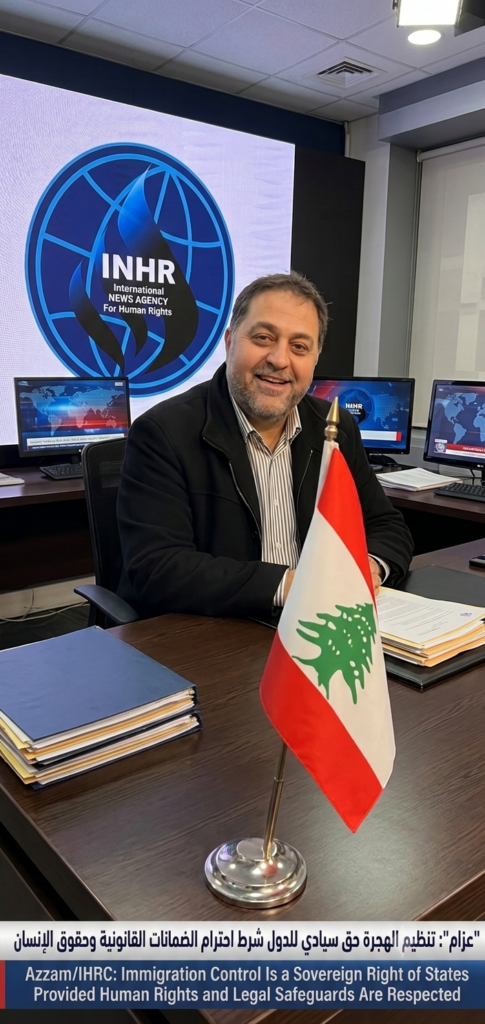
“عزام”: تنظيم الهجرة حق سيادي للدول شرط احترام الضمانات القانونية وحقوق الإنسان
Azzam/IHRC: Immigration Control Is a Sovereign Right of States Provided Human Rights and Legal Safeguards Are Respected
أكد المنسق المرشح لليونان لدى وكالة الأنباء الدولية لحقوق الإنسان والمجلس الدولي لحقوق الإنسان (IHRC) فادي عزام أن موقف المجلس الدولي لحقوق الإنسان، والمتوافق مع المبادئ العامة للقانون الدولي لحقوق الإنسان، لا يتمثل في منع الدول من تنظيم الهجرة أو ترحيل الأشخاص الموجودين على أراضيها بصورة غير نظامية، بل في ضرورة أن تتم هذه الإجراءات بما يضمن احترام الحقوق الأساسية للإنسان.
وأوضح أن المعايير الدولية لحقوق الإنسان لا تشجع على تجريم المهاجرين لمجرد الدخول أو الإقامة غير النظامية، لا سيما عندما يؤدي ذلك إلى فرض عقوبات جنائية غير متناسبة مع طبيعة المخالفة. وفي المقابل، يبقى من حق الدول وضع وتنفيذ سياسات الهجرة الخاصة بها واتخاذ قرارات الترحيل وفقًا لقوانينها الوطنية والتزاماتها الدولية.
وأضاف أن أي إجراءات تتعلق بالترحيل يجب أن تراعي الضمانات القانونية الواجبة، بما في ذلك حق الشخص في مراجعة القرار والطعن فيه، وعدم التعرض للترحيل التعسفي، واحترام مبدأ عدم الإعادة القسرية إلى أماكن قد يتعرض فيها الفرد للاضطهاد أو التعذيب أو غير ذلك من الانتهاكات الجسيمة لحقوق الإنسان.
وأشار إلى أن الدعوات الرامية إلى تسريع إجراءات الترحيل لا تُعد في حد ذاتها مخالفة لحقوق الإنسان، طالما أنها لا تؤدي إلى انتهاك الضمانات القانونية الأساسية أو حرمان الأفراد من حقوقهم الإجرائية المكفولة بموجب القانون الدولي.
وختم بالقول إن منظور حقوق الإنسان لا يعارض السياسات الصارمة في مجال الهجرة من حيث المبدأ، لكنه يرفض أي سياسات أو ممارسات تؤدي إلى تجريم المهاجرين بصورة غير متناسبة أو إلى ترحيلهم دون احترام حقوقهم القانونية والإنسانية الأساسية.
The nominated coordinator for Greece at the International Human Rights News Agency and the International Human Rights Council (IHRC) Fadi Azzam stated that, from the perspective of the International Human Rights Council and in line with the general principles of international human rights law, states are not prohibited from regulating migration or deporting individuals who are present irregularly within their territories. However, such measures must be carried out in full respect of fundamental human rights.
He explained that international human rights standards do not encourage the criminalization of migrants solely on the basis of irregular entry or residence, particularly when such measures result in disproportionate criminal penalties. At the same time, states retain the sovereign right to establish and enforce immigration laws and to make deportation decisions in accordance with their national legislation and international obligations.
He further emphasized that deportation procedures must comply with due process guarantees, including the right to review and appeal decisions, protection against arbitrary deportation, and adherence to the principle of non-refoulement, which prohibits returning individuals to places where they may face persecution, torture, or other serious human rights violations.
He noted that calls to expedite deportation procedures are not, in themselves, contrary to human rights standards, provided that they do not undermine fundamental legal safeguards or deprive individuals of their procedural rights under international law.
He concluded by stating that the human rights framework does not reject strict immigration policies in principle. Rather, it opposes policies and practices that disproportionately criminalize migrants or result in deportations carried out without respect for their legal and humanitarian rights.
Leave a Reply